Vintage
Unique Russian Lacquer Box - Rostov Velikiy - Highly Sought-After
$410.62
-
DetailsPlease note -TARIFFS PAID! US buyers need not worry about any additional charges! Order with confidence, knowing you won't be surprised with any additional fees.
The following history is almost identical to the other papier-mâché lacquer boxes found on C&K, but does have some added information customized to the piece you see here. For product-specific details, please scroll down to the paragraph break.
Some of you might be familiar with these stunning Russian boxes, but few know the story of their origins. It actually began over 200 years ago...
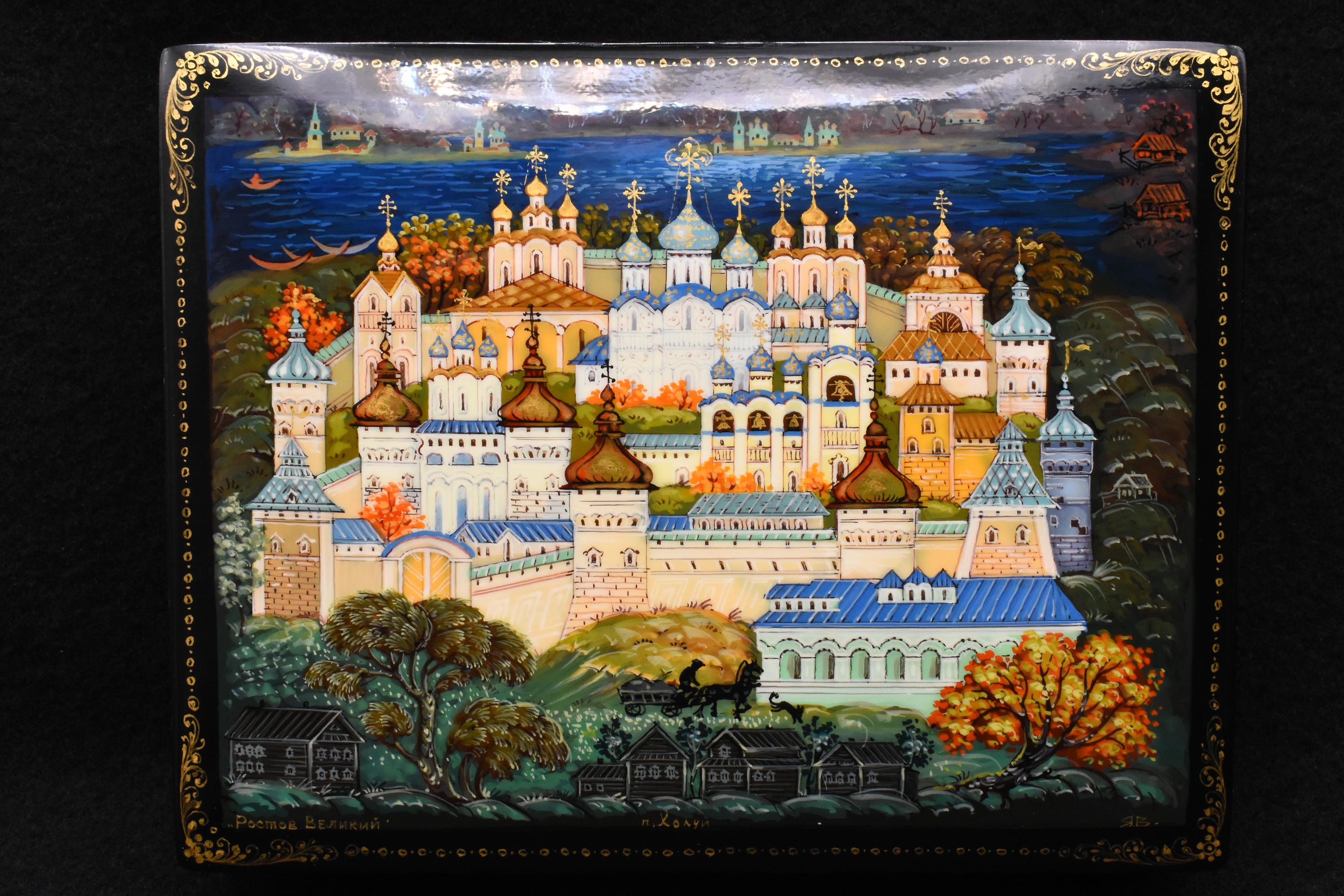
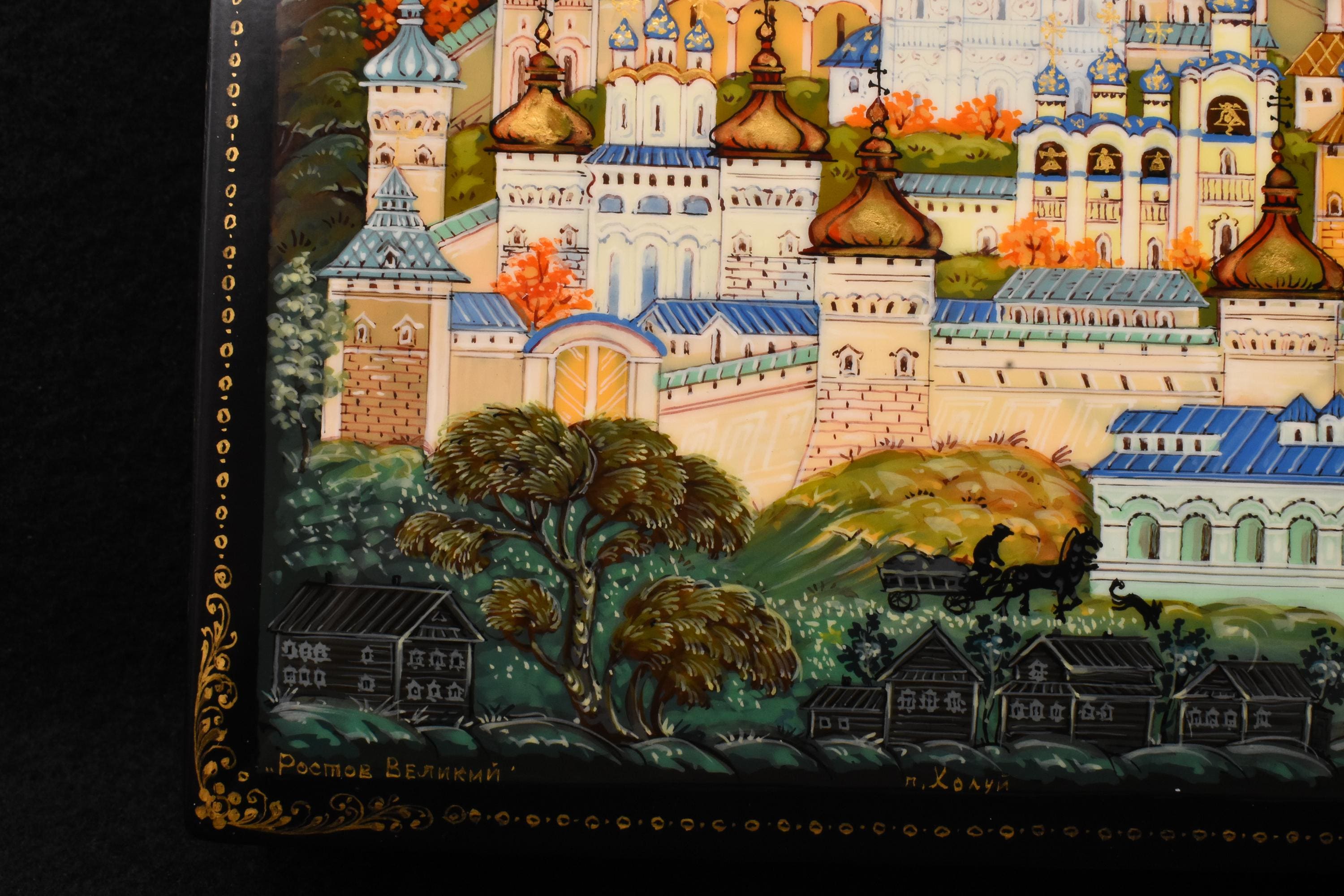
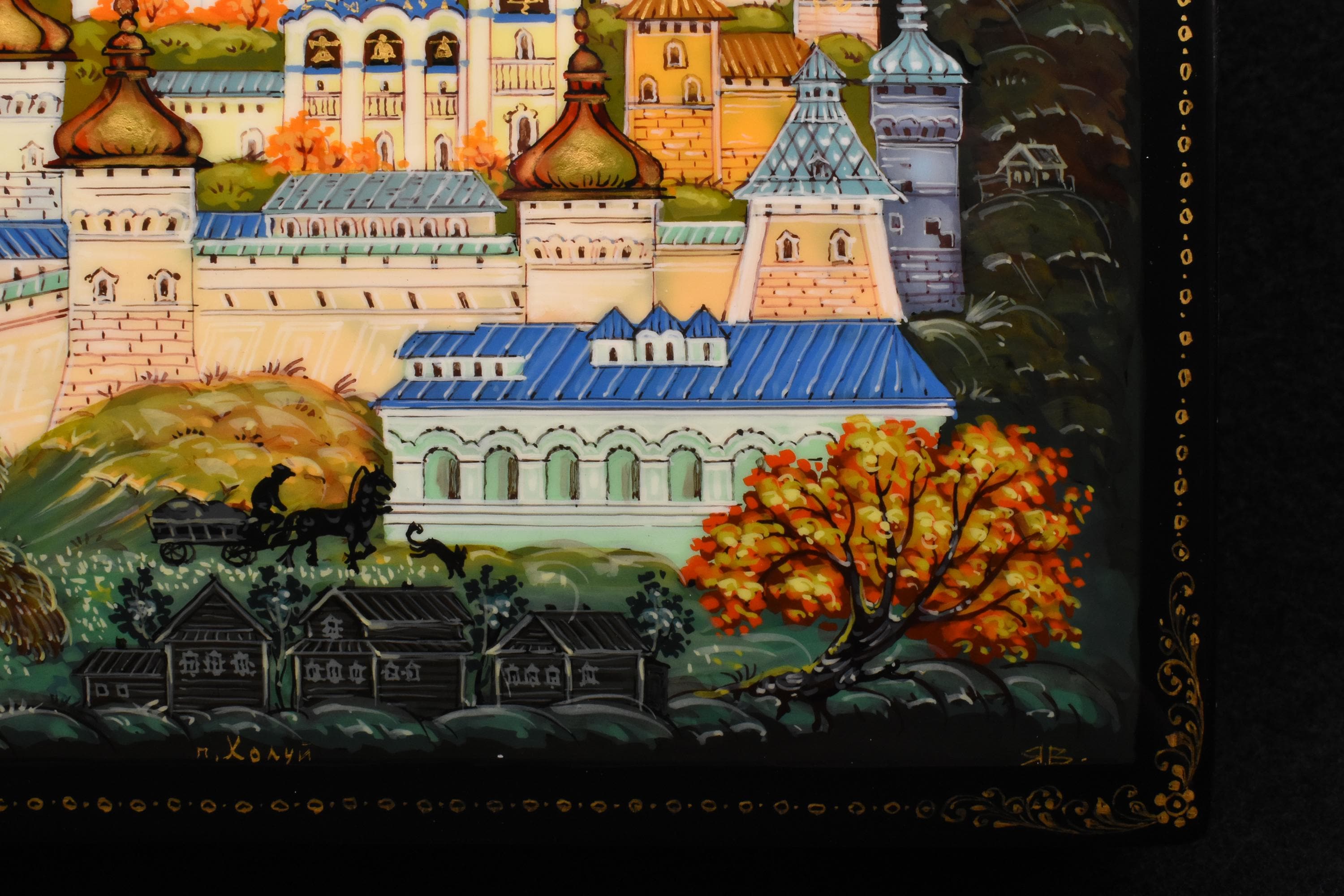
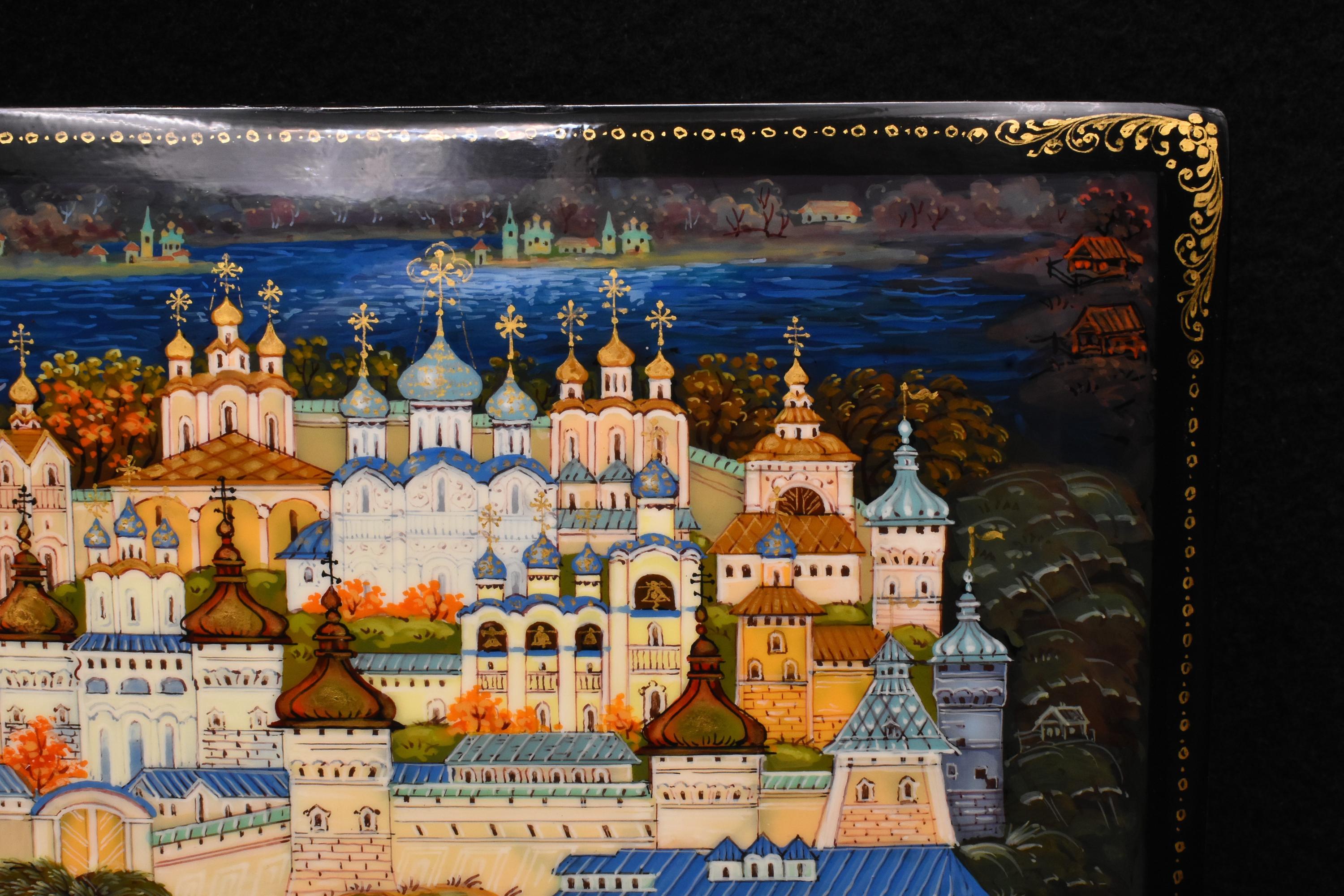
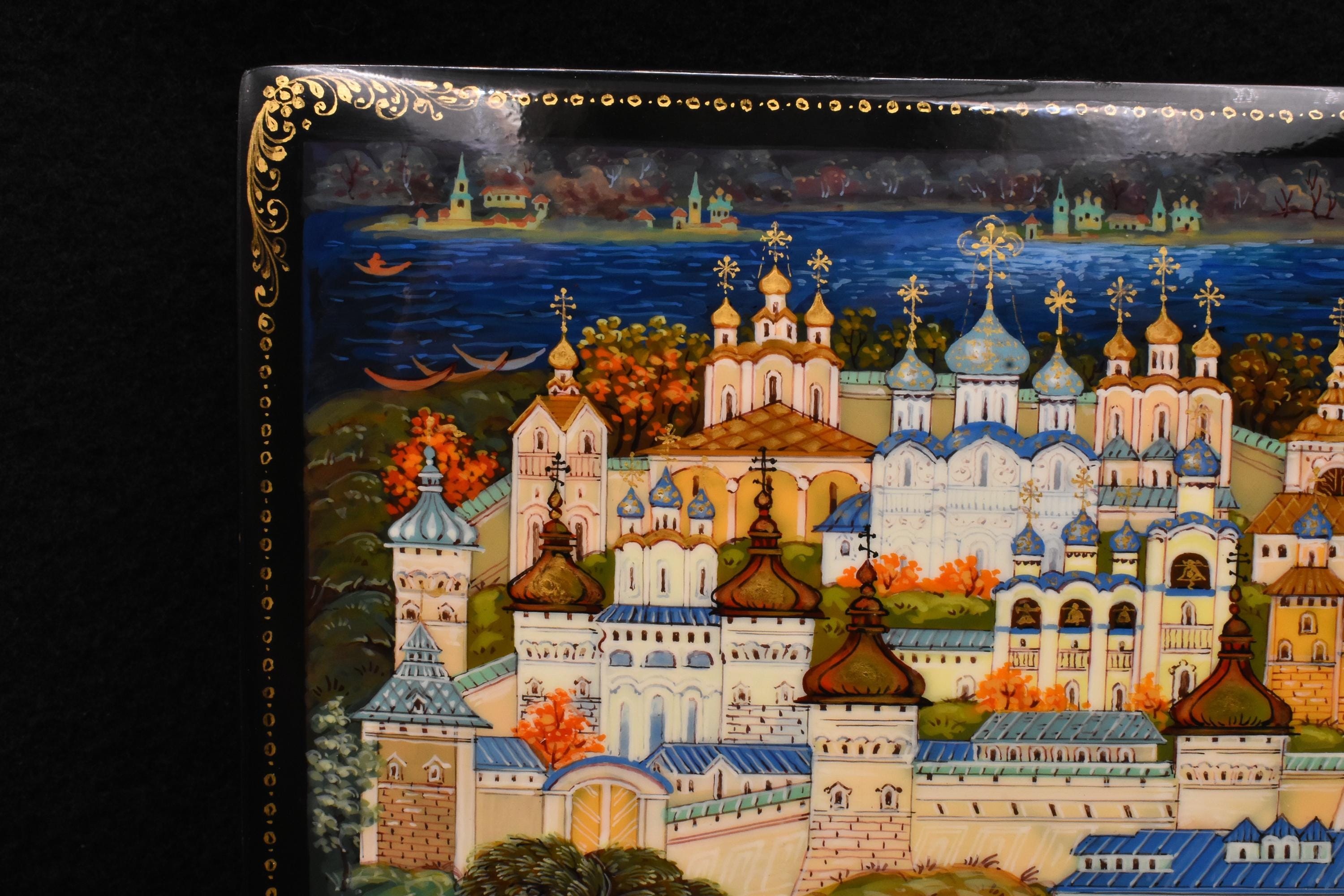
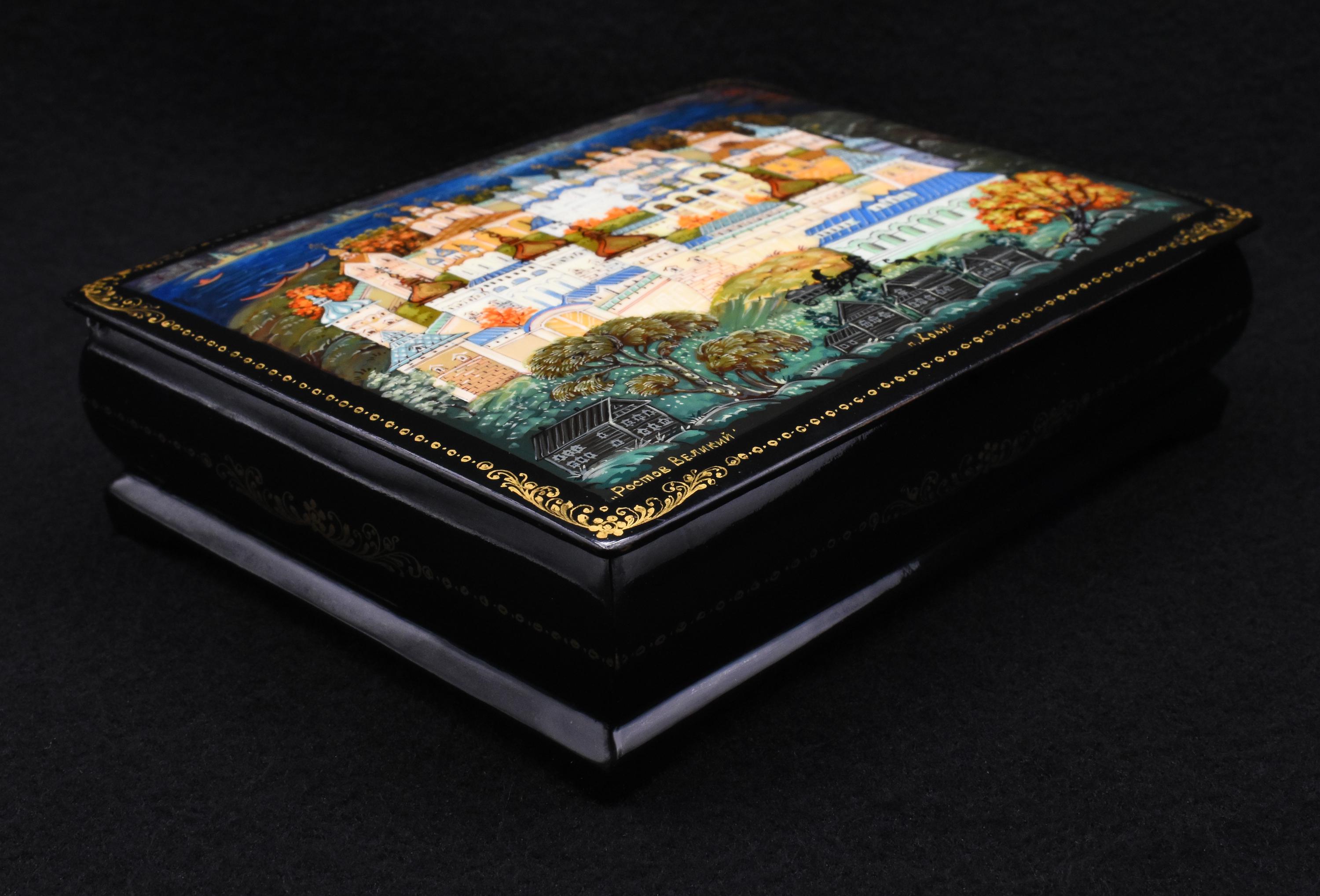
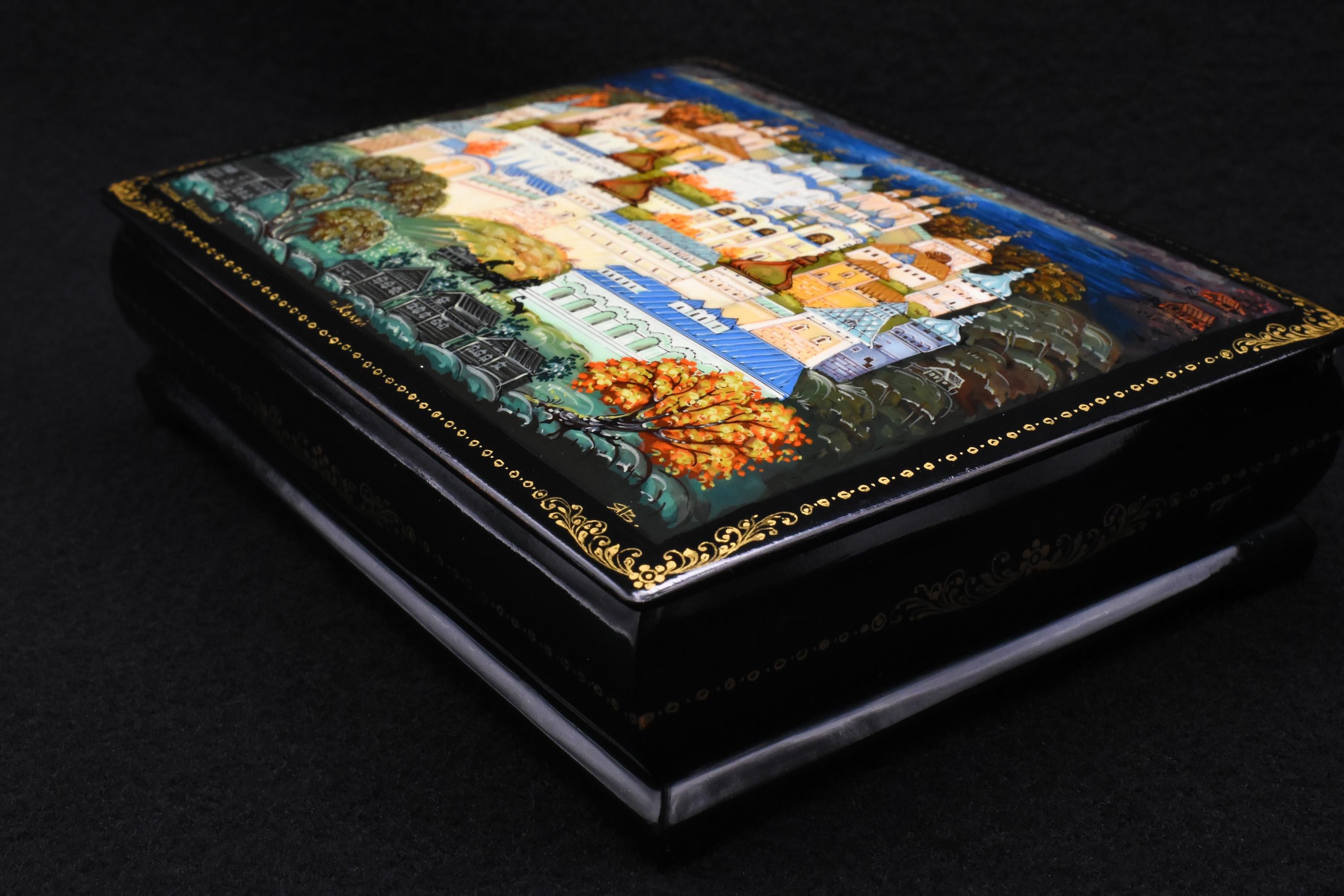
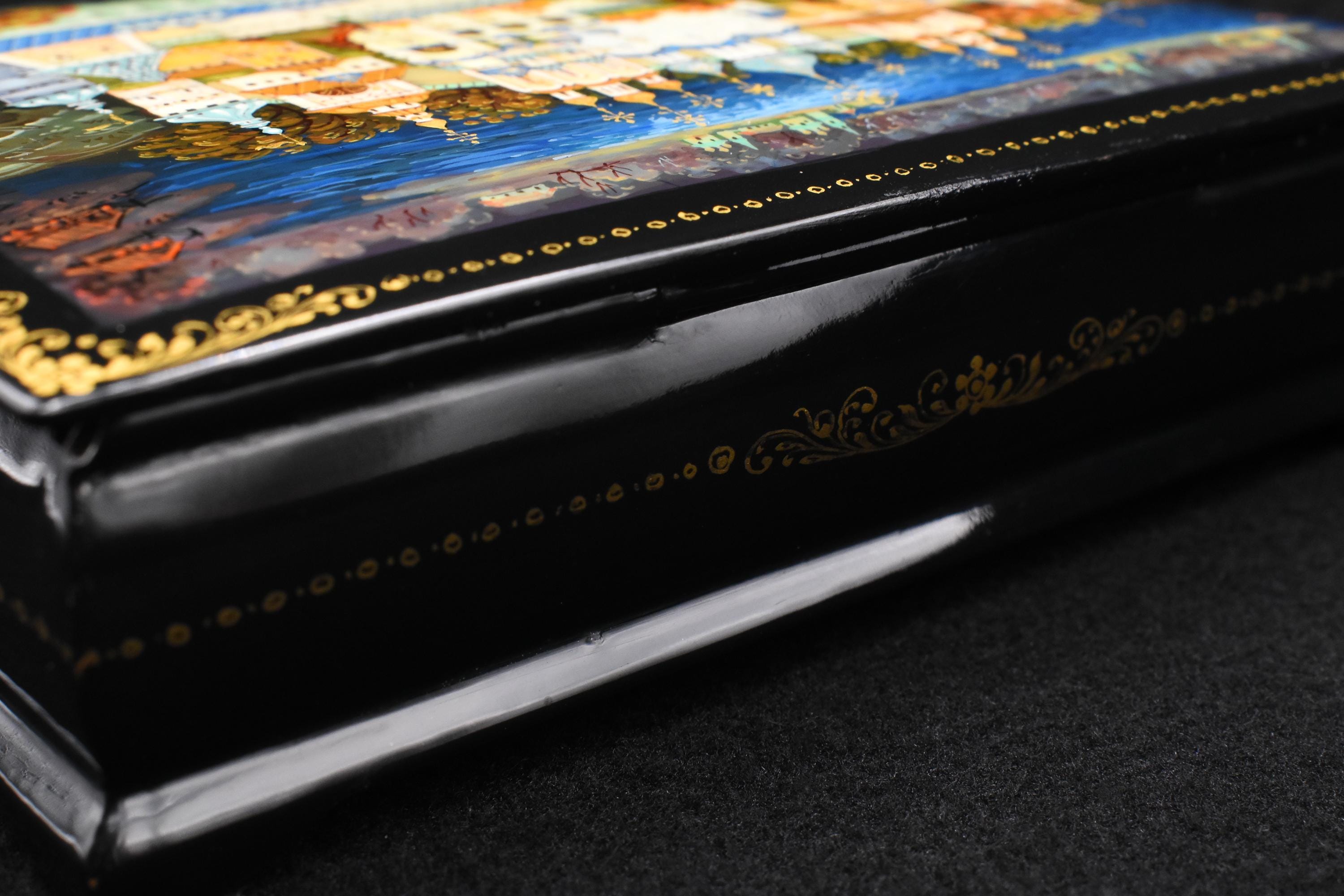
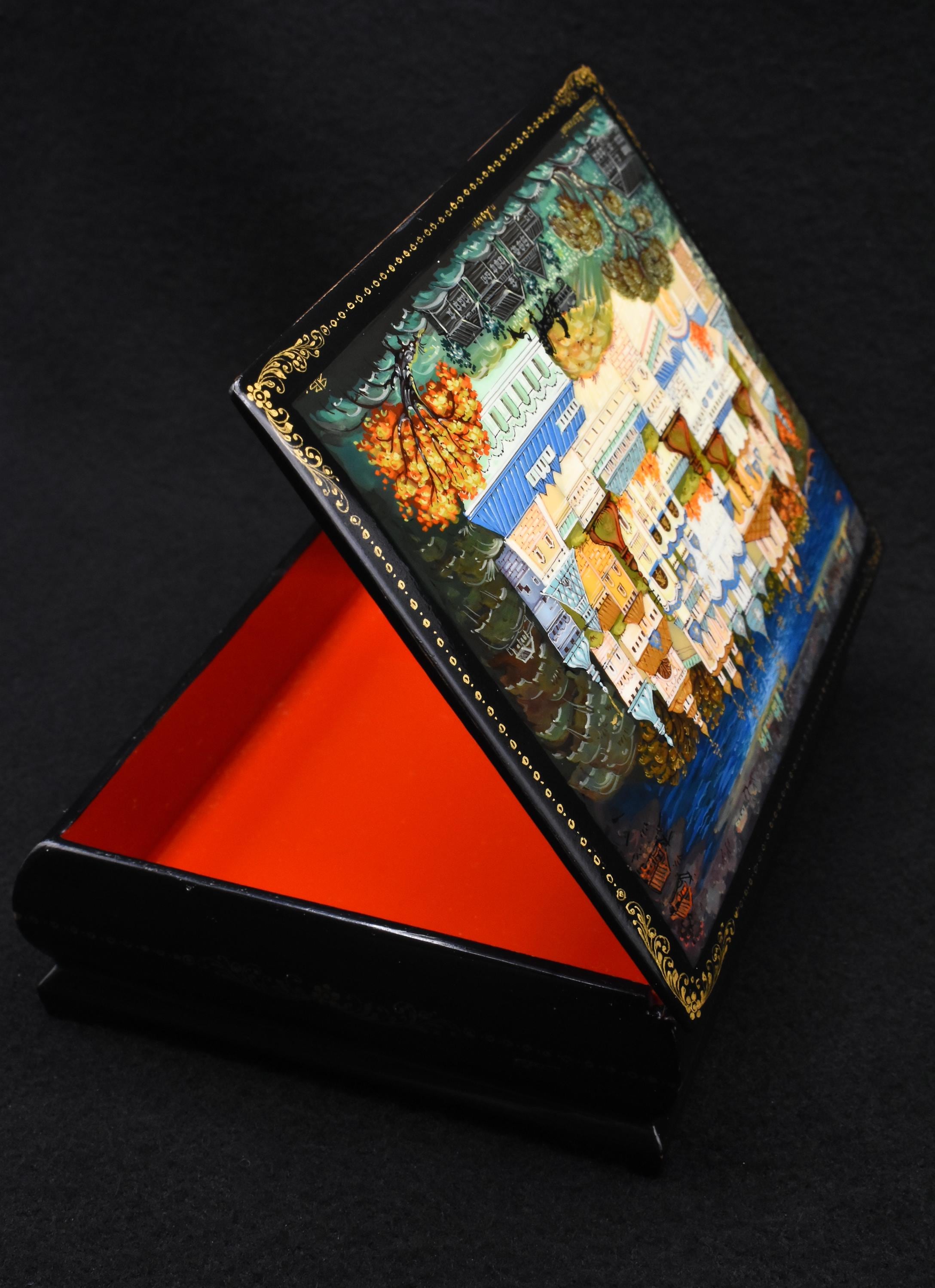
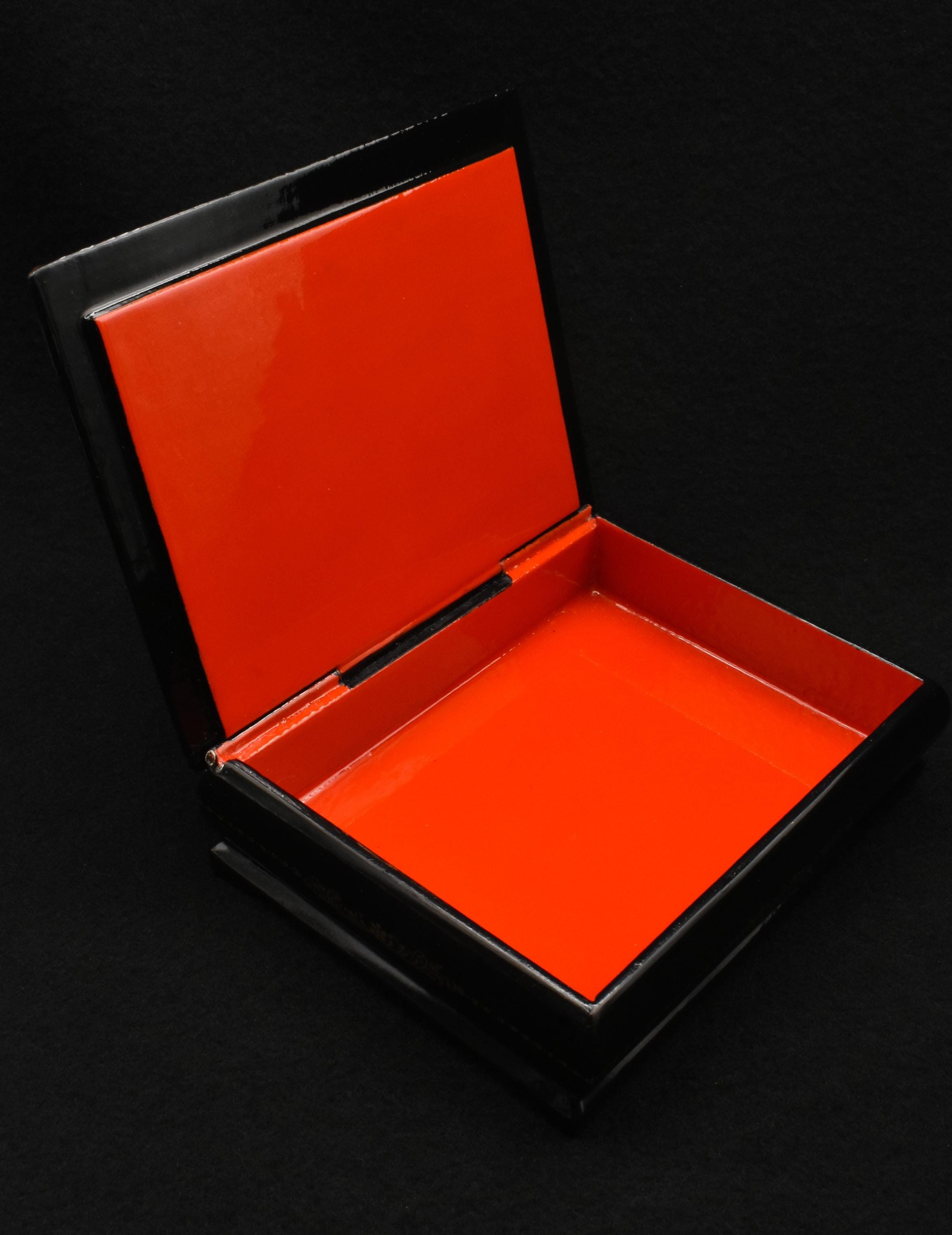
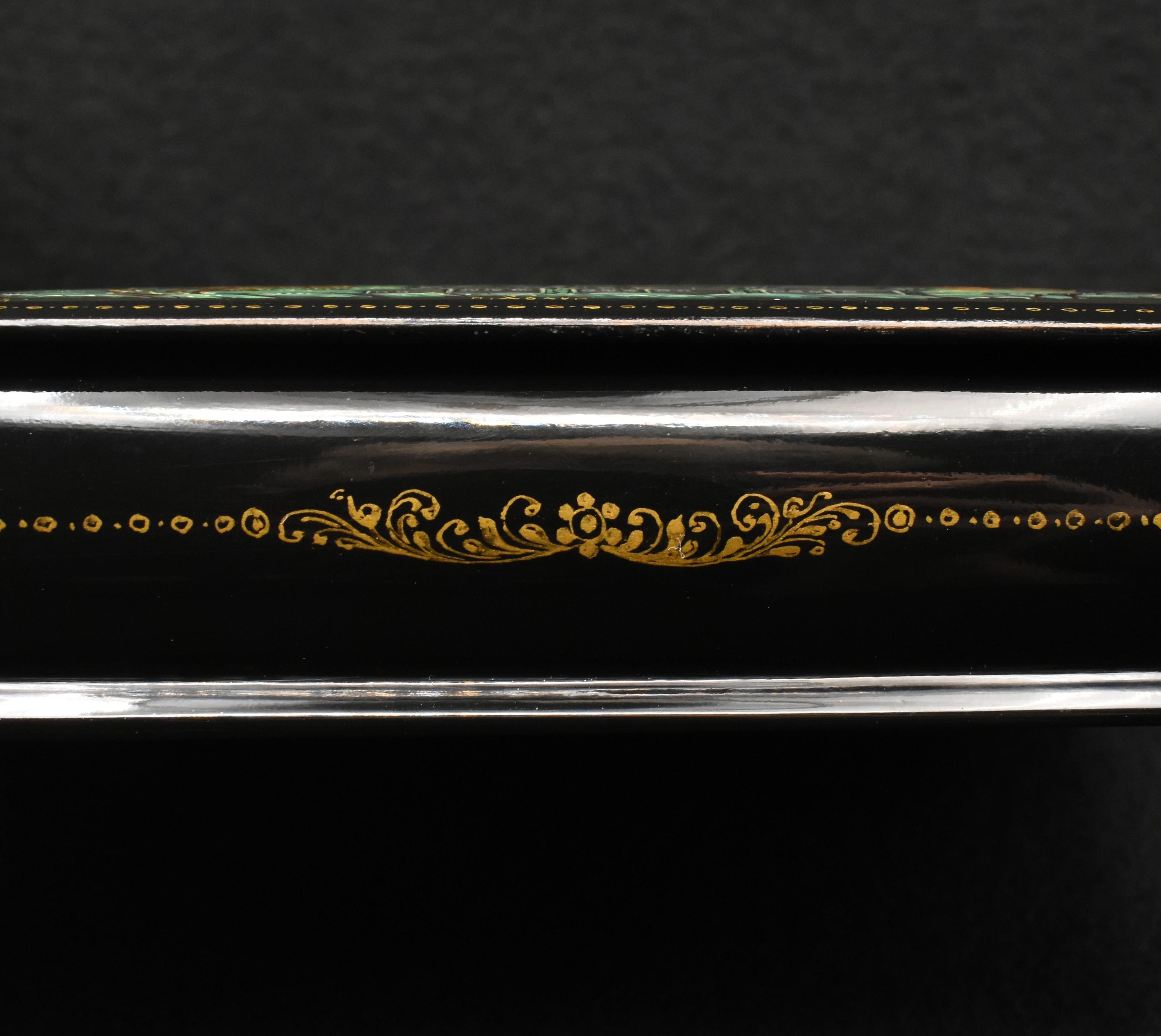
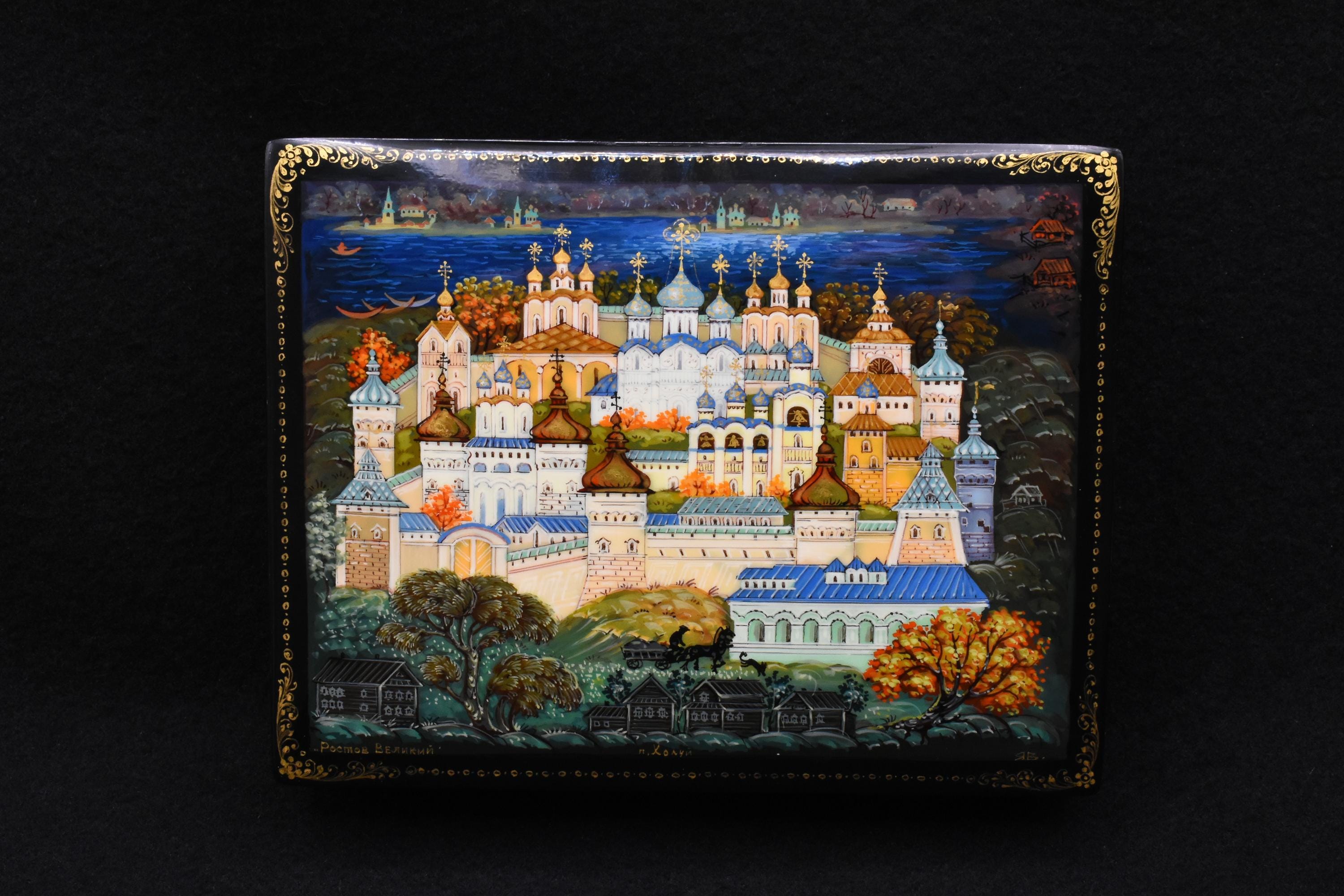
It all started in a town called Fedoskino. Artists in this small town began developing the techniques that would spawn Russian lacquer boxes in the late 1600s. Fedoskino was the center of the art of creating religious icons (highly-sought-after paintings of religious symbols and characters). Having developed some truly breathtaking painting techniques (including using liquified precious metals such as gold and silver and painting with a single hair follicle for some of the most spectacular detail I've ever come across), it was the natural birthplace of these stunningly intricate boxes. Starting in the 1800s, they were made specifically of papier-mâché. These boxes would take approximately 6 weeks to complete and would include a base of linseed oil, rendering them impervious to moisture. This material ensured a stable base that would not warp and does not change size due to temperature fluctuations. Then, the painting process would begin. First, it passes through the hands of an apprentice who ensures a smooth base of colour - the interior is painted bright red and the exterior a deep black. When the masters got their hands on these pieces, however, is when the real magic began. Using a magnifying glass, in many cases, and the richest and brightest pigments available, the master painter applied the stunning colours and textures you see here. The border and signature along the bottom are the most obvious places, but you can see the application of precious metals throughout this staggering piece. Every church's spire, every dome, the tiny circles along the border and the beautifully intricate filigree corners of the border are all obsessively painted with the thinnest of brushes, and applied in a pigment of genuine liquid gold. As is the script along the bottom of the piece and the beautiful pattern running the entire surface of the lower portion of this stunning, lidded box. Along with the gold pigment, a few select locations show silver accents, as well (along the blue roofs). The detail is just staggering, throughout the painting. In many cases, the most minute details were applied using a single squirrel hair, if you can imagine the still hand one must have for such precise application of any medium... However, the piece you see here wasn't made in Fedoskino, the most recognized of the 4 artistic schools - it was crafted in Kholui. In the 1800s, 4 towns emerged as the leaders of papier-mâché lacquer boxes, each of which specialized in their own methods and styles. As such, one can tell apart the pieces based on their colours and textures, as well as the methods of applying these magnificent pigments. Kholui miniatures are more realistic, compared to Palekh's and Mstera's pieces, yet more decorative than those of Fedoskino. Kholui's pieces are best known for their landscapes and buildings. Kholui, Palekh, Fedoskino and Mstyora (or Mstera) are the 4 towns in question and they still produce these stunning pieces, although after the fall of the USSR in 1991, their quality waned. Not only the materials and obsessive techniques of construction fell by the wayside, but even the quality of the painting took a painful turn. Artists of inferior skill began painting their own boxes, due to the sudden international audience for an unexpectedly-open Russian free market. One can see some of the faces and scenes in these lesser examples, lacking the depth and true artistic brilliance of true masterpieces, easily indicating a substandard piece. The popularity of these boxes skyrocketed with international recognition and, naturally and most-unfortunately, resulted a ton of counterfeits and fakes. Luckily, manufacturers of fake pieces are not patient, so the box itself doesn't go through the rigours of proper papier-mâché manufacture. The fakes are made of plastic or resin, so they're easily identified. Equally, the lower-quality-painted genuine articles are able to be identified, with close attention to a given box. Firstly, one could find a slight grid pattern on the base, when viewed at a certain light, indicating a machine-made box. The linseed oil base of a true genuine piece would start to settle after 6 months or so, releasing a distinct odour, so the interior has a definite 'antique' smell to it, nearly impossible to replicate with a resin box. The weight of these fake boxes would be significantly heavier, as well - papier-mâché is very light. The texture of the box would easily reveal the content, as well. One must simply tap or flick the bottom of the box. If there's a sharp sound or a click, it's not the genuine article. Papier-mâché boxes sound muted, almost soft, when tapped. Lastly and most-importantly, we must examine the image itself. Does it look like a sticker? Is there an 'edge' to the painting, indicating a separate medium affixed to the box? Is there the depth that comes with layers of meticulous application of lacquer? A magnifying glass is very useful in finding these imperfections and identifying a fake. Luckily, our box checks all the right boxes and it's originality is not in question. But not simply because it stands up to the rigours of close scrutiny... The boxes you'll find on C&K were imported by my family over 30 years ago, brought to this country by my grandfather's own hands, from the original artisans. Born in Odessa in the late-1920s, he took trips to the former Soviet Union to visit old friends and their families, for decades after his emigration, who had been painting in these small towns for generations.
The quality of these pieces are as varied as the designs. The artists range from apprentices to masters and everything in between. Today, you'll find many pieces that are of lower quality - the colours not as deep or diverse, the faces seemingly 'copied and pasted' among all the individuals in the image, the detail of landscape and character, in many cases, sadly wanting. The boxes, as well, are as varied, coming in several shapes and sizes. However, you'll notice that C&K pieces are only of the utmost quality and crafted by true masters of their art. Luckily, my grandfather ensured as much.
The artistic merit of the piece is no longer in question, nor is the origins of this stunning box, but what is this town? Why are there so many churches and spires? Why is it walled?
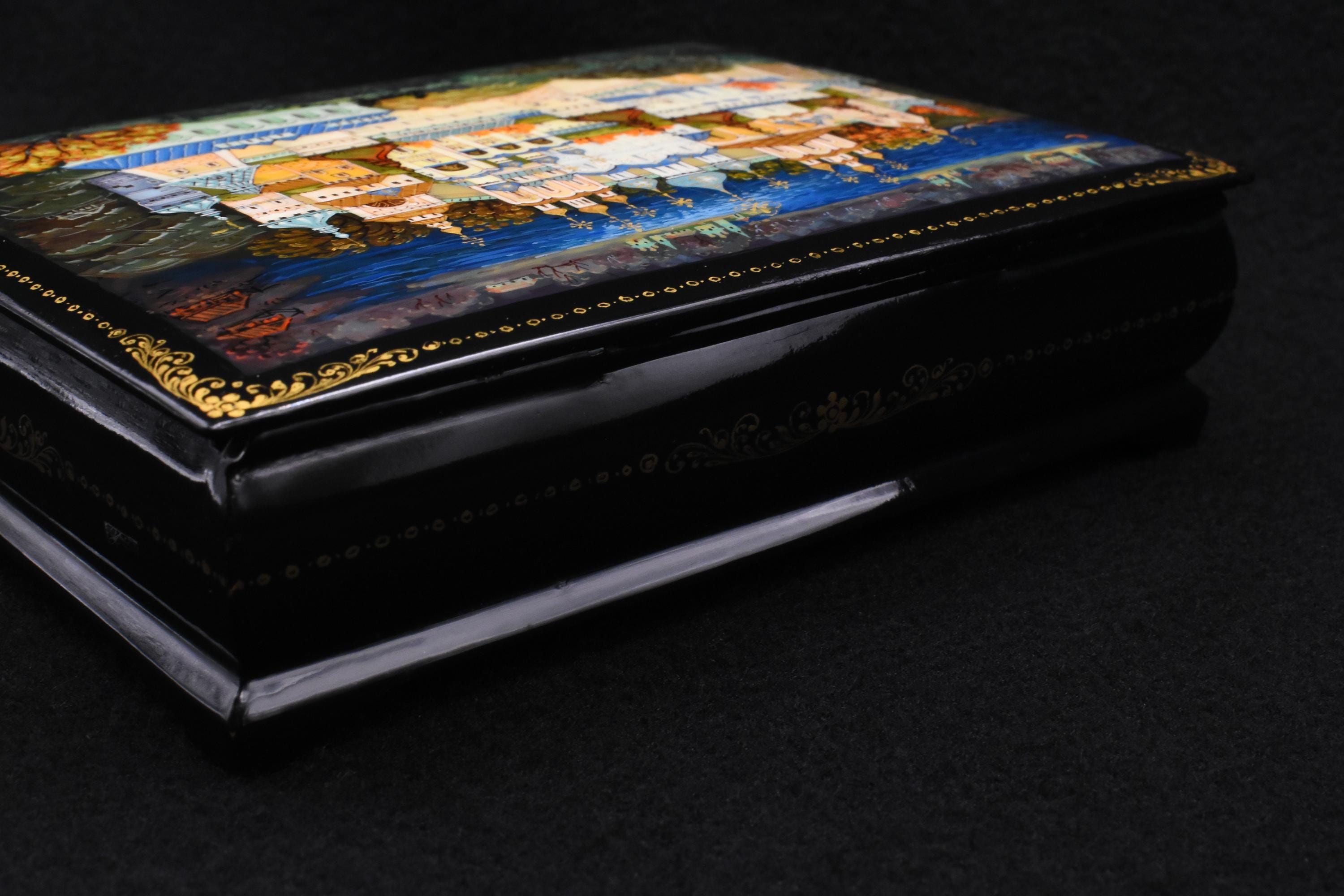
The history of this particular town extends nearly 3 centuries before Moscow was even established. It is called Rostov Velikiy and holds a great deal of importance in the history of the country. It is located about 200 kilometers north of Moscow, along the vast Lake Nero (seen at the top of the painting). As early as the 10th century, it was already the capital city of the Principality of Rostov, and later became one of the most prominent principalities in Rus. It was considered an ecclesiastic center - from 988, it was the see of the Diocese of Yaroslavi, one of the first Russian bishoprics. In the 14th century, the bishops of Rostov became archbishops, and by the 16th century, metropolitans. Although destroyed by Poles during the Polish Invasion of 1608, it never lost the status of a religious center. In the 1660s, the town's main landmark was commissioned - the Rostov Kremlin (a kremlin is simply a citadel within a Russian town, not just a seat of political power), along with the fortified towers and walls which surround it - regarded by many as the finest outside of Moscow. The beautifully ornate Cathedral of the Assumption stands within those walls, as does the Museum of the Frog Princess, dedicated to Russian fairy tales. Given the nature of some of the themes found among traditional folk art pieces (including many lacquer boxes), it is no surprise that Rostov Velikiy is a popular subject among the artists in the region.
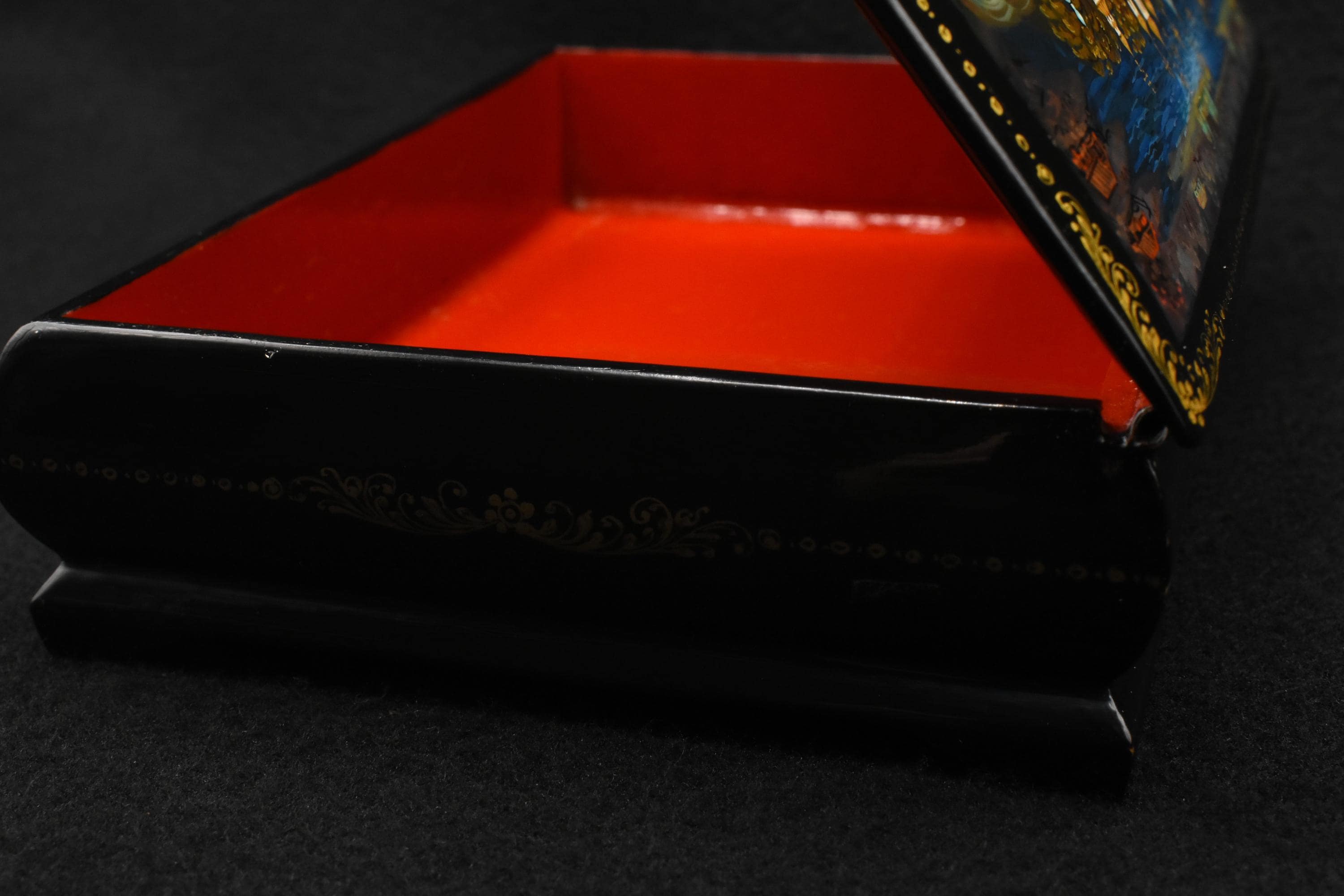
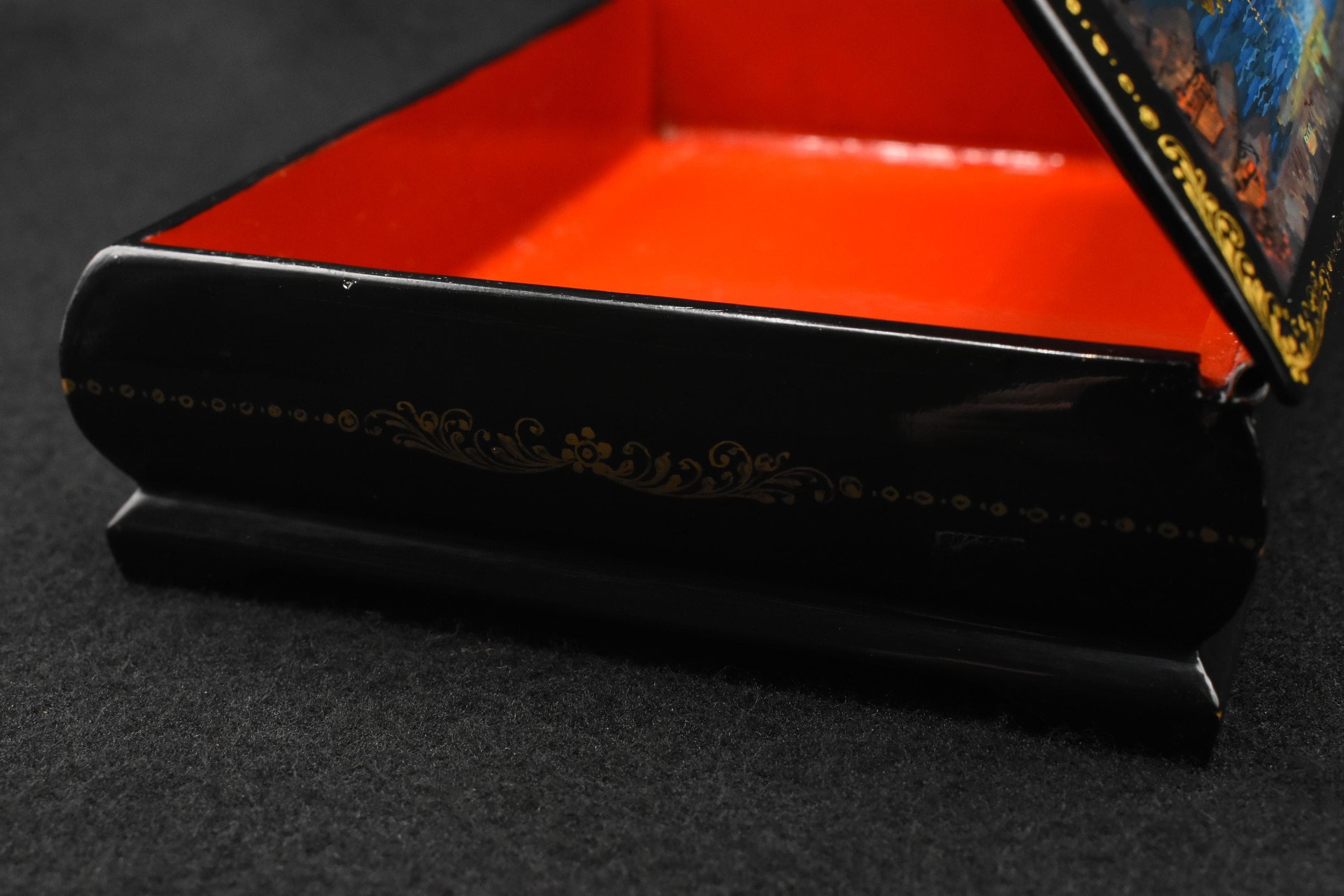
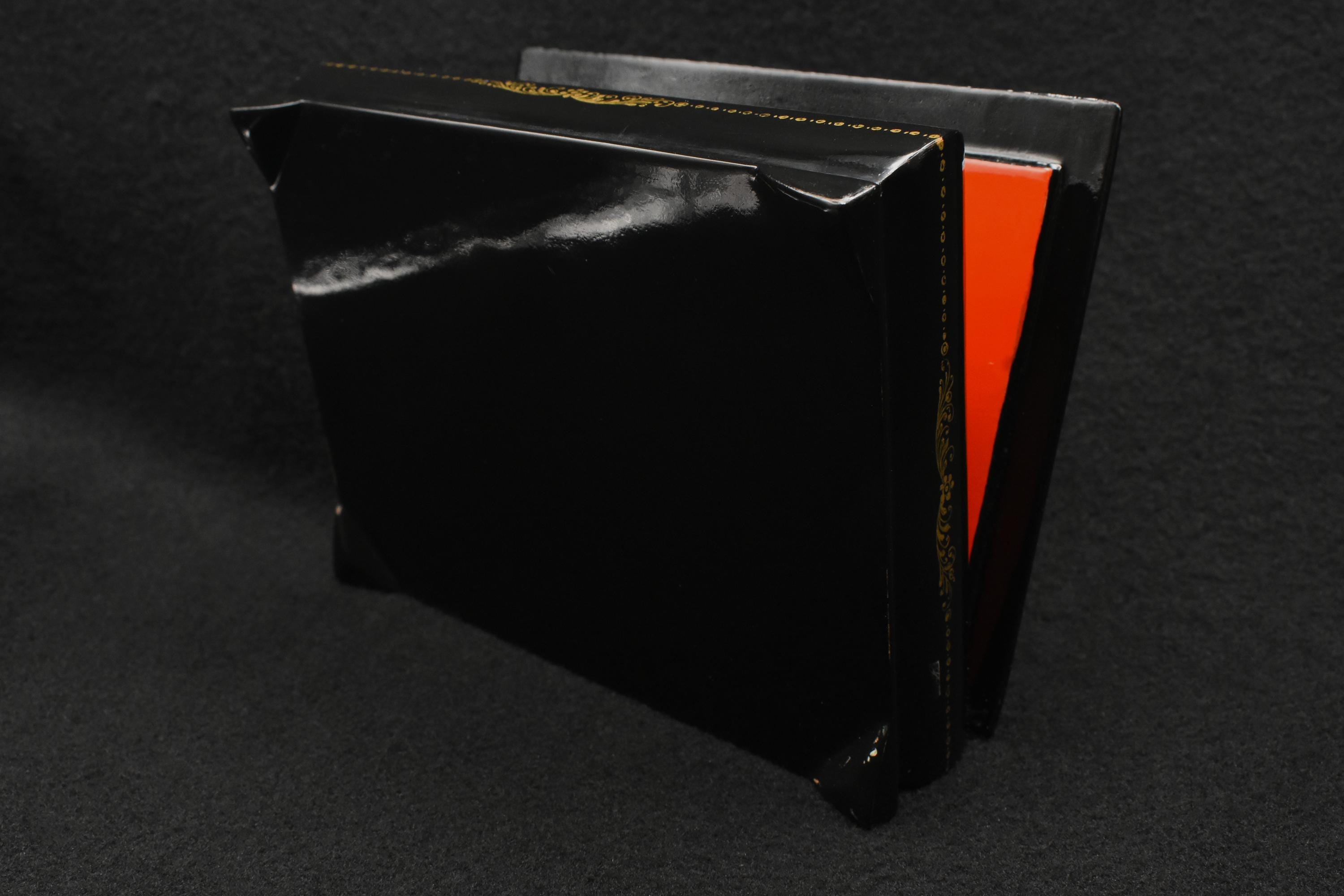
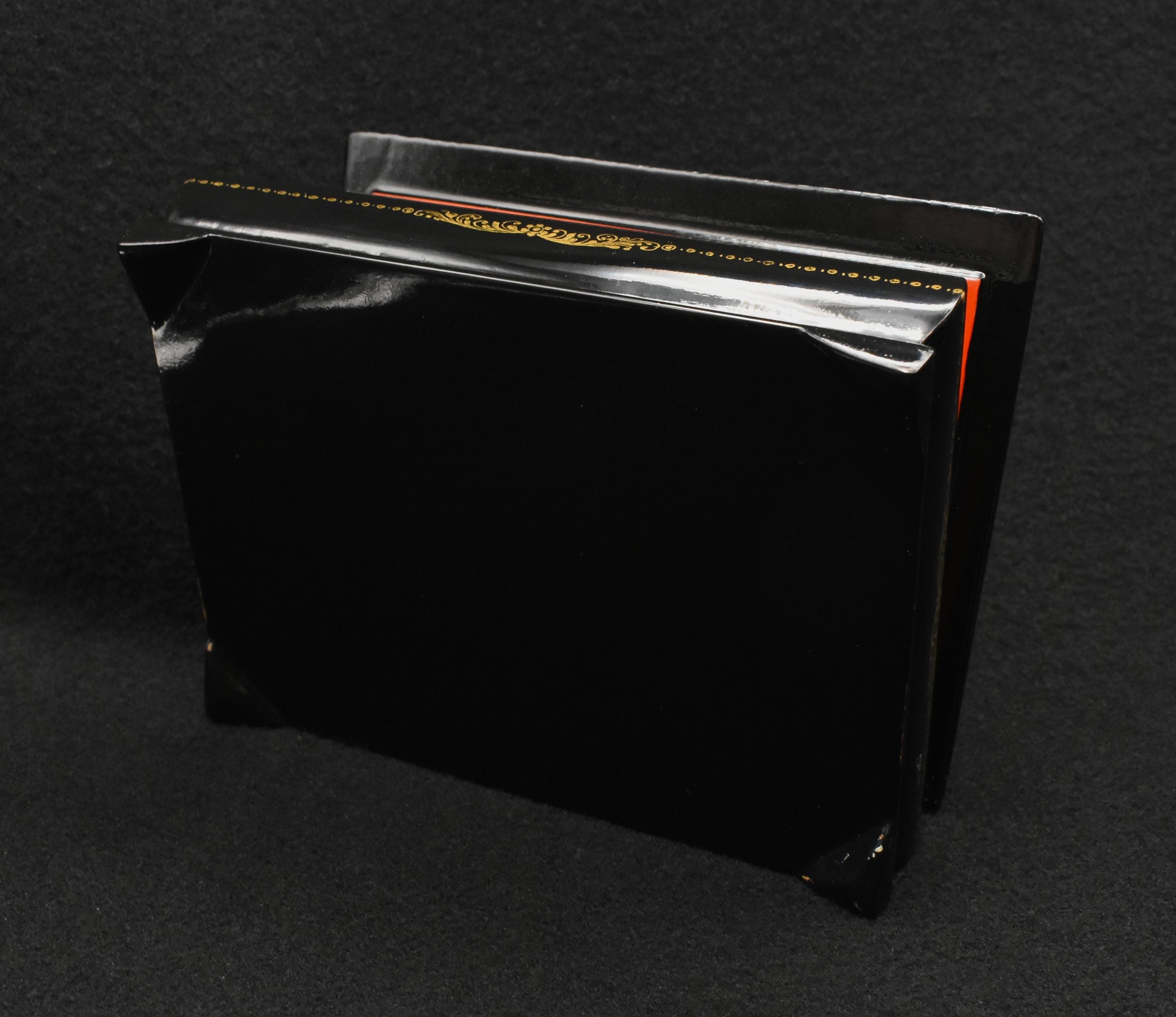
As for our piece, I wish the photos did it justice. This is, by far, my favourite piece left to me. It is a pedestaled piece with 4 feet, a feature reserved for only the most important and unique master's works. It measures 12.6cm in width, 9.8cm in depth and 3.5cm in height. The detail is just spectacular - from the windows among the towers, to the foliage among the surrounding nature - from the working-class housing in the foreground and along the edges, and the horse-drawn carriage scaring away a cat, to the islands seen in the lake, sprinkled with their own spired buildings and the forest beyond... I'm truly enamoured with the apparent adoration that was poured into this creation. Along the bottom of the piece, we see, written: "Rostov Velikiy," followed by the town in which it was created, "Kholuy." In the bottom-right corner, there is usually the name of the artist. So renown is this particular artist among those familiar with these pieces that they see fit to only write their stylistic initials: "Ya Ve." If only my grandfather were still here to enlighten me to their talents... but the detail and skill of the piece speak to the enormous ability of this particular master craftsman. It is truly a thing of astonishing beauty.
The condition of the piece is excellent. Yes, there are a few blemishes here and there... a small scratch on the right side of the box and a touch of lacquer missing from the bottom of one of the pedestal feet are the most prominent. However, when viewing and handling this beautiful piece, those small imperfections melt away to the beauty of the image and the smoothness of 99.9% of the perfectly-applied lacquer. In the photos, you may notice a small speck or two... forgive me. Black lacquered pieces have a way of attracting dust that then shows up as dots on a detailed and well-lit photograph. Equally, any small blemish reflects LED lights to exaggerate its presence... the piece really is in excellent condition. The video will give a better indication of condition. -
Shipping & Policies
Shipping from Canada
Processing time
1-2 business days
Customs and import taxes
Buyers are responsible for any customs and import taxes that may apply. I'm not responsible for delays due to customs.
Payment Options
Returns & Exchanges
I gladly accept returns and exchanges
Just contact me within: 3 days of delivery
Ship items back to me within: 7 days of delivery
I don't accept cancellations
But please contact me if you have any problems with your order.
The following items can't be returned or exchanged
Because of the nature of these items, unless they arrive damaged or defective, I can't accept returns for:
- Custom or personalized orders
- Perishable products (like food or flowers)
- Digital downloads
- Intimate items (for health/hygiene reasons)
Conditions of return
Buyers are responsible for return shipping costs. If the item is not returned in its original condition, the buyer is responsible for any loss in value.
Frequently Asked Questions
Can I combine delivery on multiple items?
Of course! We'd be happy to assist. Just send us a quick message and we'll make sure to combine your items into a single package to reduce the shipping costs.