Vintage
Very Rare Bright Red Russian Lacquer Box - "Parochka" (Pair)
$253.26
-
DetailsPlease note -TARIFFS PAID! US buyers need not worry about any additional charges! Order with confidence, knowing you won't be surprised with any additional fees.
The following history is almost identical to the other Papier Mache boxes found on C&K, but does have some added information customized to the piece you see here... You'd be hard-pressed to find another Xholuy, bright red box... For product-specific details, please scroll down to the paragraph break.
Some of you might be familiar with these stunning Russian boxes, but few know the story of their origins. It actually began over 200 years ago...
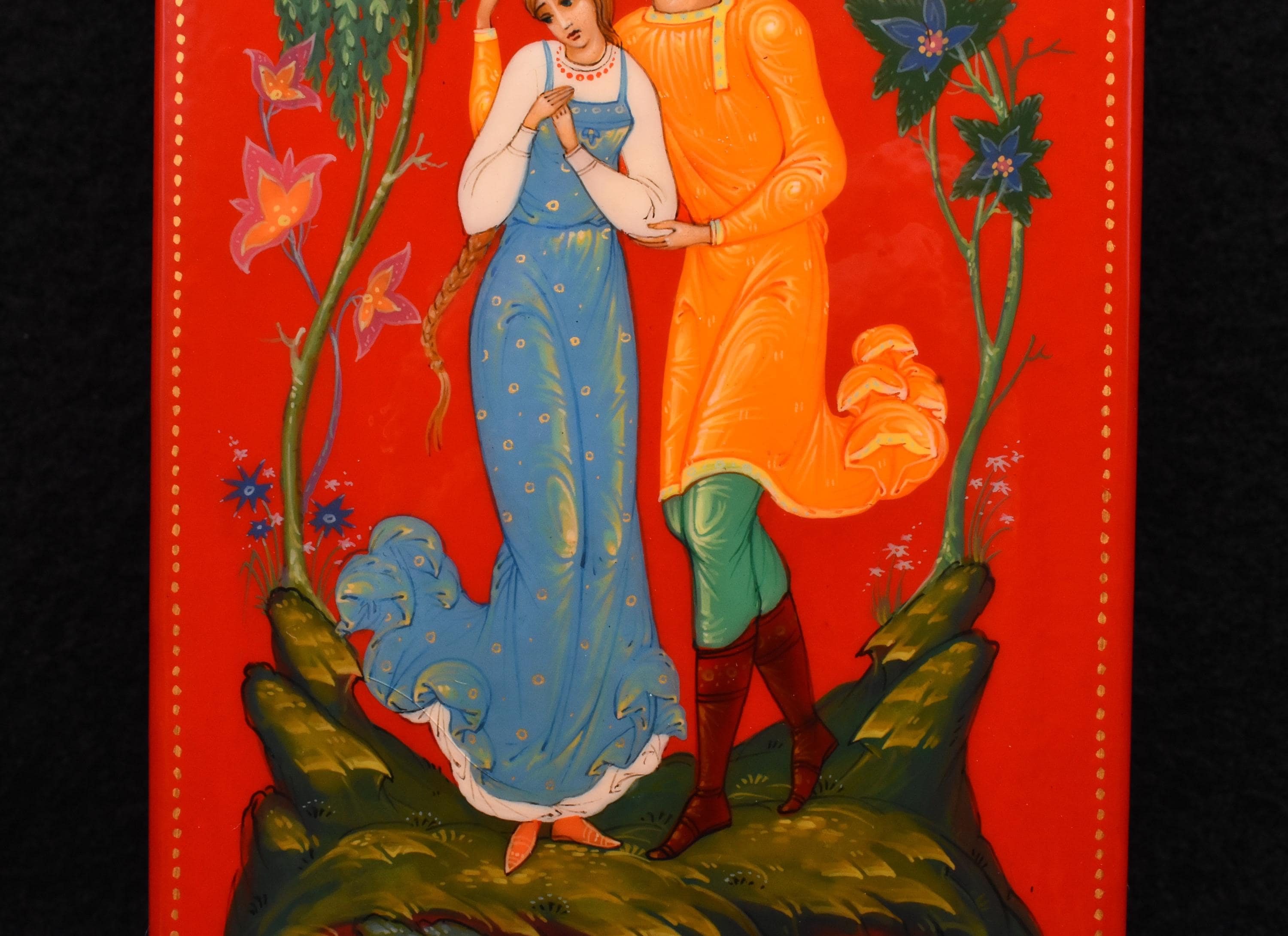
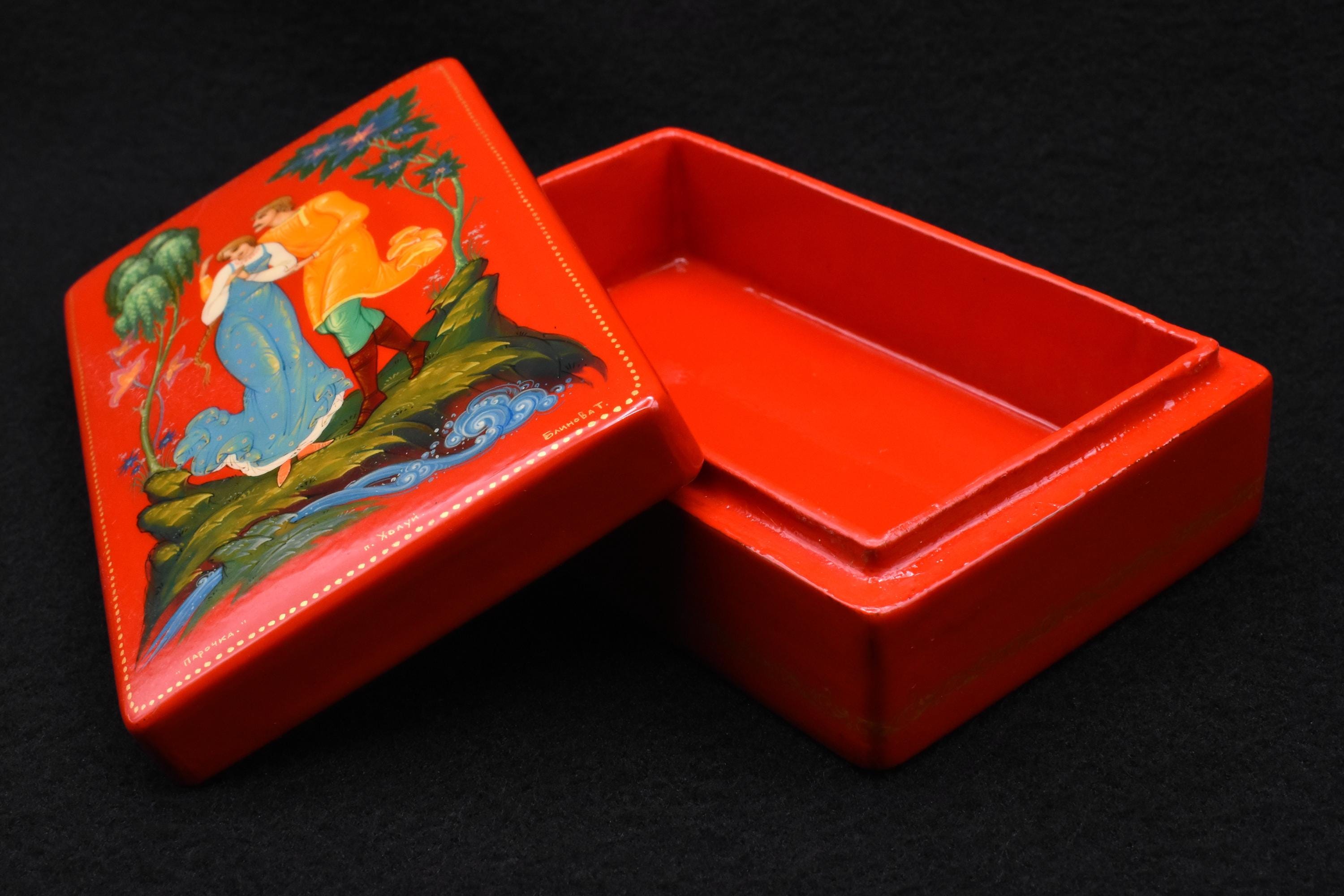
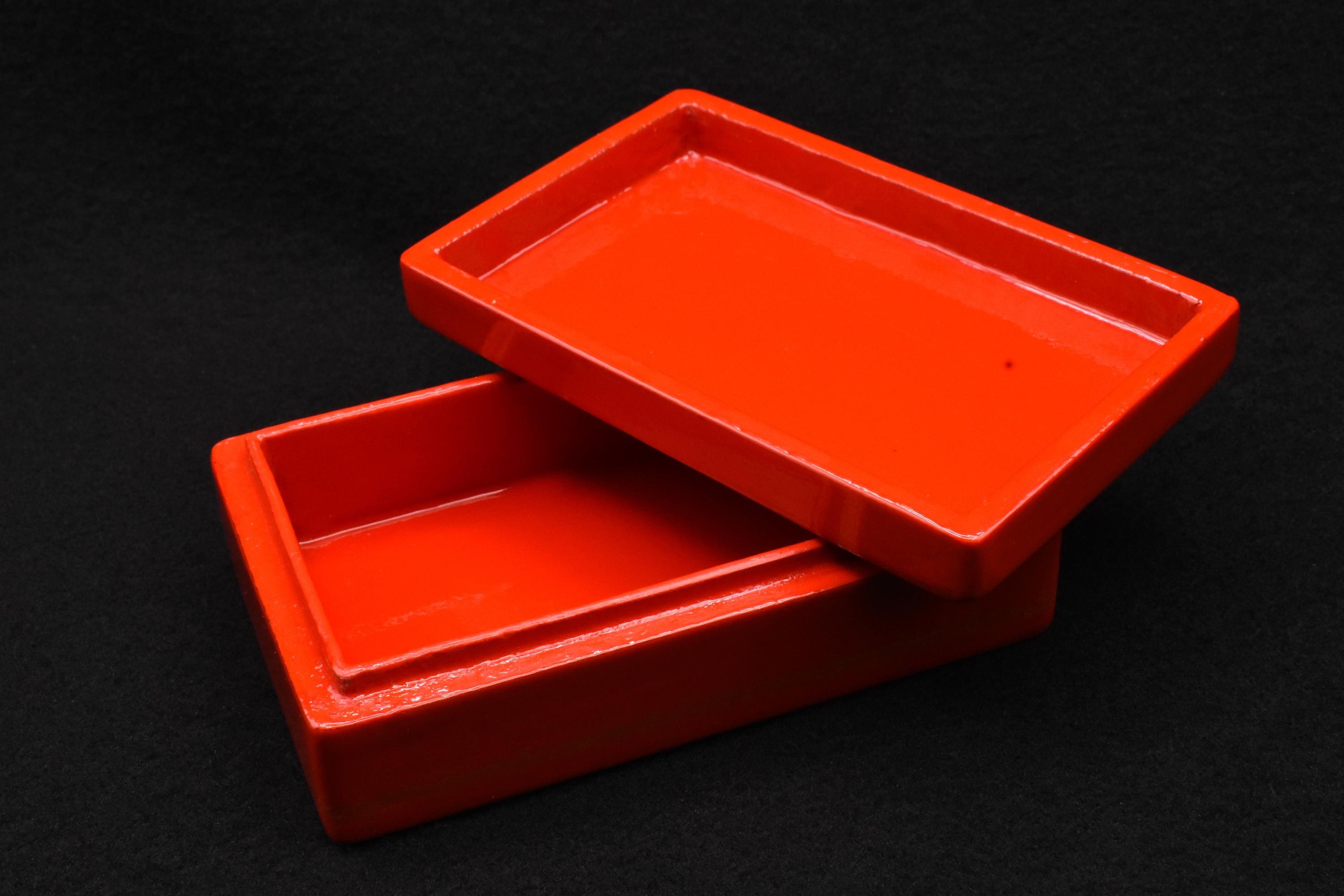
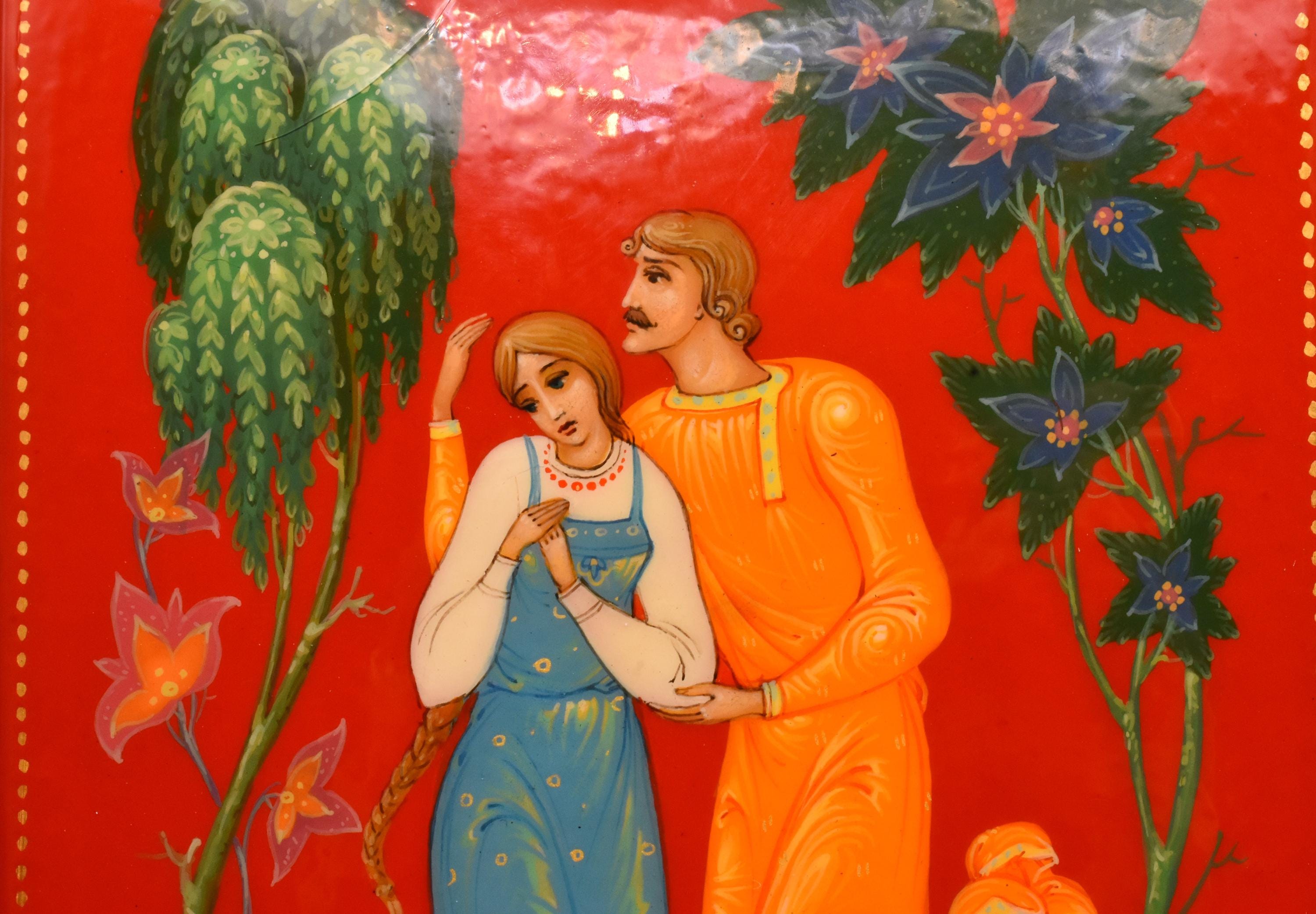
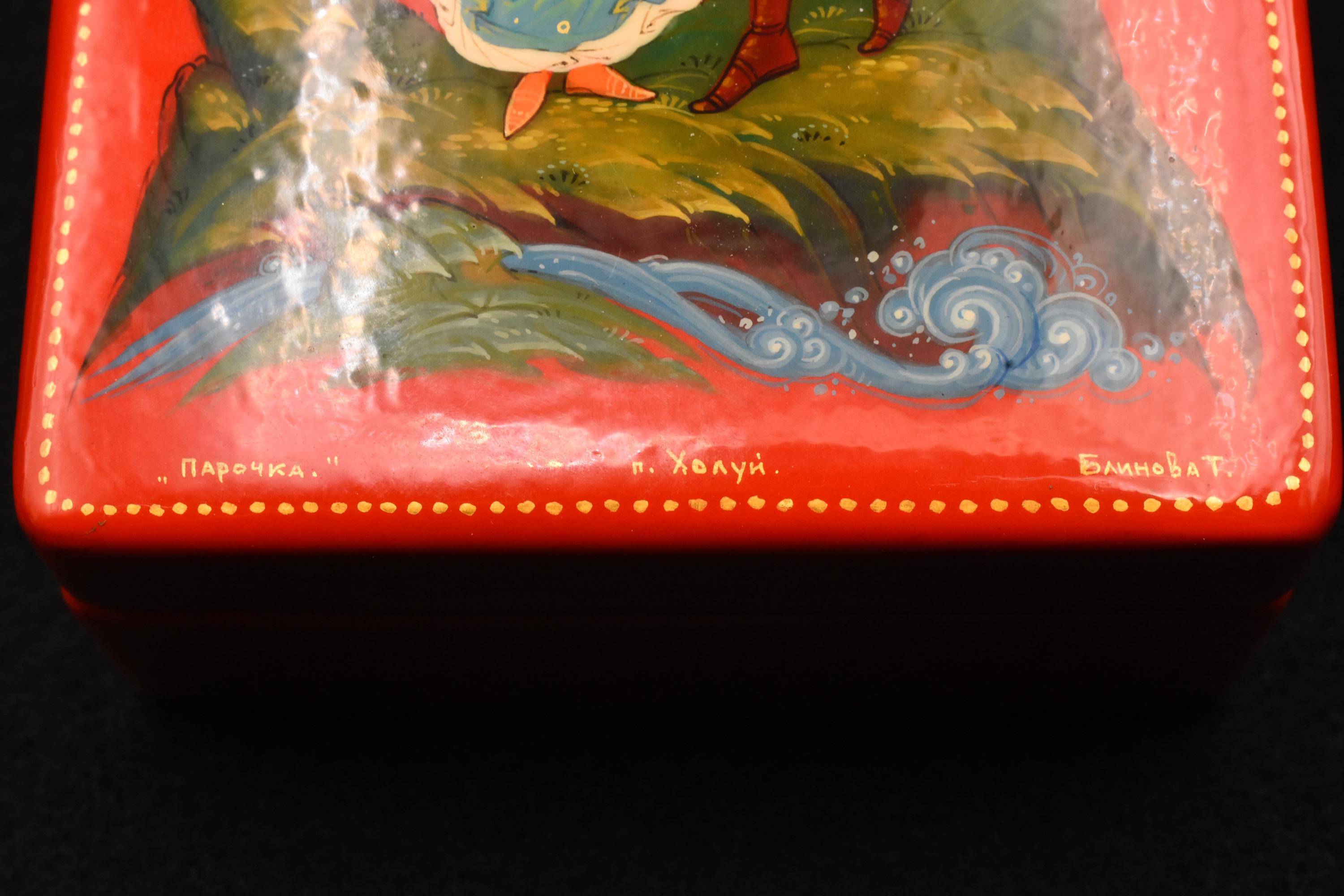
It all started in a town called Fedoskino. Artists in this small town began developing the techniques that would spawn Russian lacquer boxes in the late 1600s. Fedoskino was the center of the art of creating religious icons (highly-sought-after paintings of religious symbols and characters). Having developed some truly breathtaking painting techniques (including using liquified precious metals such as gold and silver and painting with a single hair follicle for some of the most spectacular detail I've ever come across), it was the natural birthplace of these stunningly intricate boxes. Starting in the 1800s, they were made specifically of papier-mâché. These boxes would take approximately 6 weeks to complete and would include a base of linseed oil, rendering them impervious to moisture. This material ensured a stable base that would not warp and does not change size due to temperature fluctuations. Then, the painting process would begin. First, it passes through the hands of an apprentice who ensures a smooth base of colour - the interior is painted bright red and the exterior a deep black (although rarely, another base colour was used... more on that later). When the masters got their hands on these pieces is when the magic appeared. Using a magnifying glass, in many cases, and the richest and brightest pigments available, the master painter applied the stunning colours and textures you see here. The border and signature along the bottom are the most obvious places, but you can see the application of precious metals throughout the piece. There are tiny, almost imperceptible golden circles adorning her dress. As well, the dots bordering the painting and the filigree border along the base portion of the box, so obsessively painted with the thinnest of brushes, is applied in a pigment of genuine liquid gold. The detail is just staggering, throughout the painting. However, the piece you see here wasn't made in Fedoskino. In the 1800s, 4 towns emerged as the leaders of papier-mâché lacquer boxes, each of which specialized in their own methods and styles. As such, one can tell apart the pieces based on their colours and textures, as well as the methods of applying these magnificent pigments. Kholui, Palekh, Fedoskino and Mstyora (or Mstera) are the 4 towns in question and they still produce these stunning pieces, although after the fall of the USSR in 1991, their quality waned. Not only in the materials and obsessive techniques of construction fell by the wayside, but even the quality of the painting took a painful turn. Artists of inferior skill began painting their own boxes, due to the sudden international audience for a suddenly-open Russian market. One can see some of the faces and scenes in these lesser examples, easily indicating a substandard piece. The popularity of these boxes skyrocketed with international recognition and, naturally and most-unfortunately, resulted a ton of counterfeits and fakes. Luckily, manufacturers of fake pieces are not patient, so the box itself doesn't go through the rigours of proper papier-mâché manufacture. The fakes are made of plastic or resin, so they're easily identified. Equally, the lower-quality-painted genuine articles are able to be identified, with close attention to a given box. Firstly, one could find a slight grid pattern on the base, when viewed at a certain light, indicating a machine-made box. The linseed oil base of a true genuine piece would start to settle after 6 months or so, releasing a distinct odour, so the interior has a definite 'antique' smell to it, nearly impossible to replicate with a resin box. The weight of these fake boxes would be significantly heavier, as well. Papier-mâché is very light. The texture of the box would easily reveal the content, as well. One must simply tap or flick the bottom of the box. If there's a sharp sound or a click, it's not the genuine article. Papier-mâché boxes sound muted, almost soft, when tapped. Lastly and most-importantly, we must examine the image itself. Does it look like a sticker? Is there the depth that comes with layers of meticulous application of lacquer? A magnifying glass is very useful in finding these imperfections and identifying a fake. Luckily, our box checks all the right boxes and it's originality is not in question. But not simply because it stands up to the rigours of close scrutiny... The boxes you'll find on C&K were imported by my family over 30 years ago, brought to this country by my grandfather's own hands, from the original artisan. Born in Odessa in the late-1920s, he took trips to the former Soviet Union to visit old friends and their families, for decades after his emigration, who had been painting in these small towns for generations.
The quality of these pieces are as varied as the designs. The artists range from apprentices to masters and everything in between. Today, you'll find many pieces that are of lower quality - the colours not as deep or diverse, the faces seemingly 'copied and pasted' among all the individuals in the image, the detail, in many cases, sadly wanting. The boxes, as well, are as varied, coming in several shapes and sizes. However, you'll notice that C&K pieces are only of the utmost quality and crafted by true masters of their art. Luckily, my grandfather ensured as much.
The artistic merit of the piece is no longer in question, nor is the origins of this stunning box, but who are these attractive people and, most importantly, why is it red?
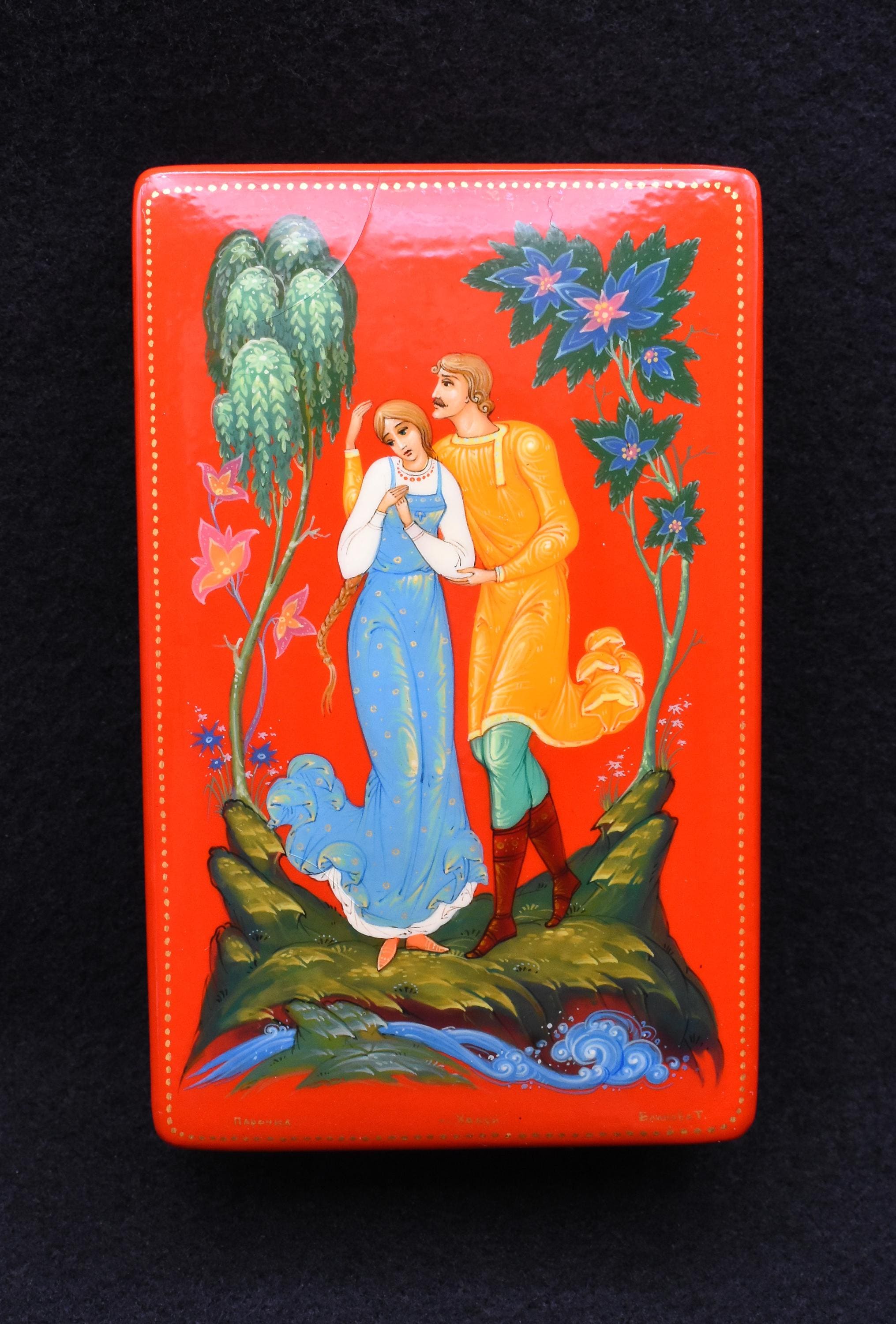
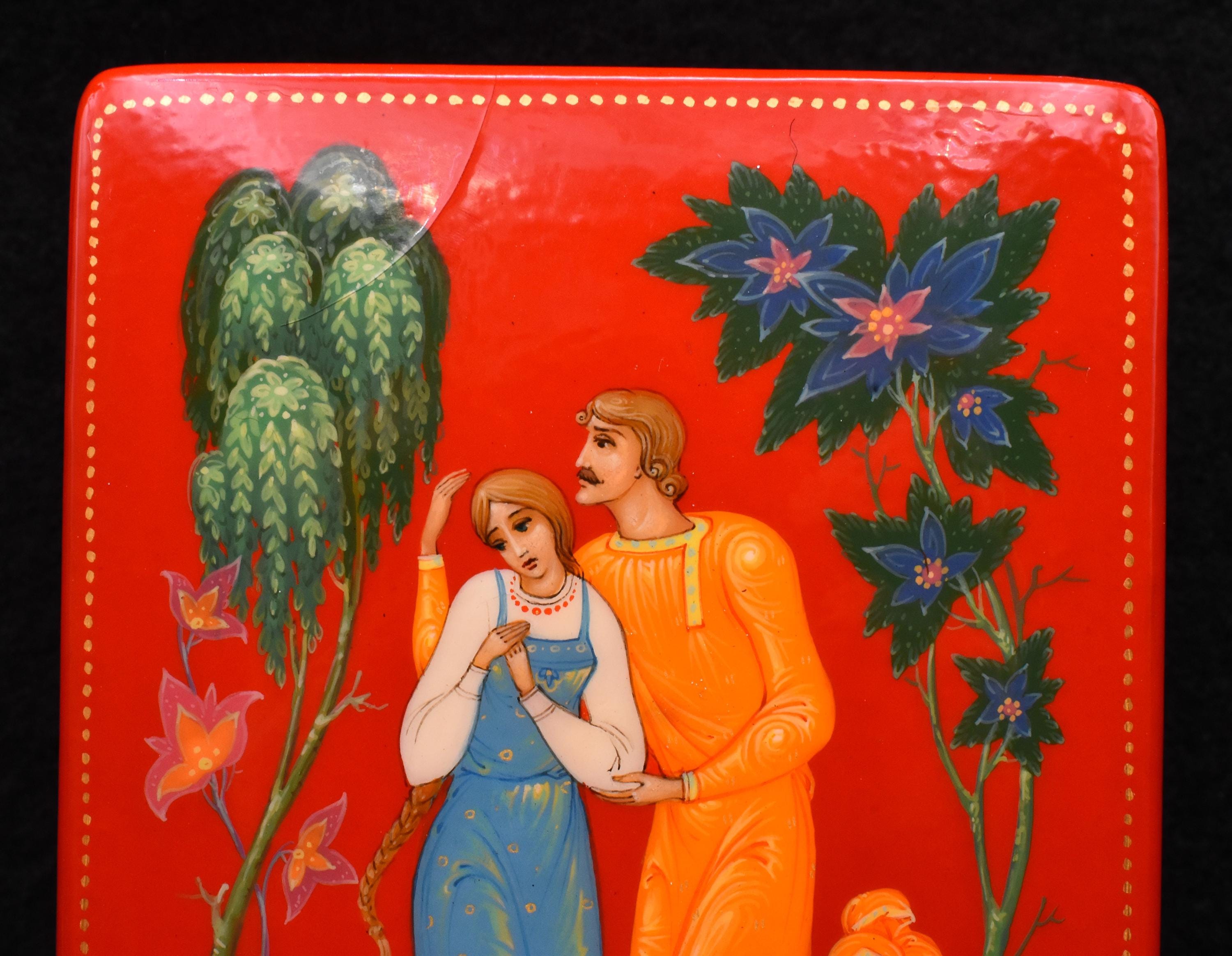
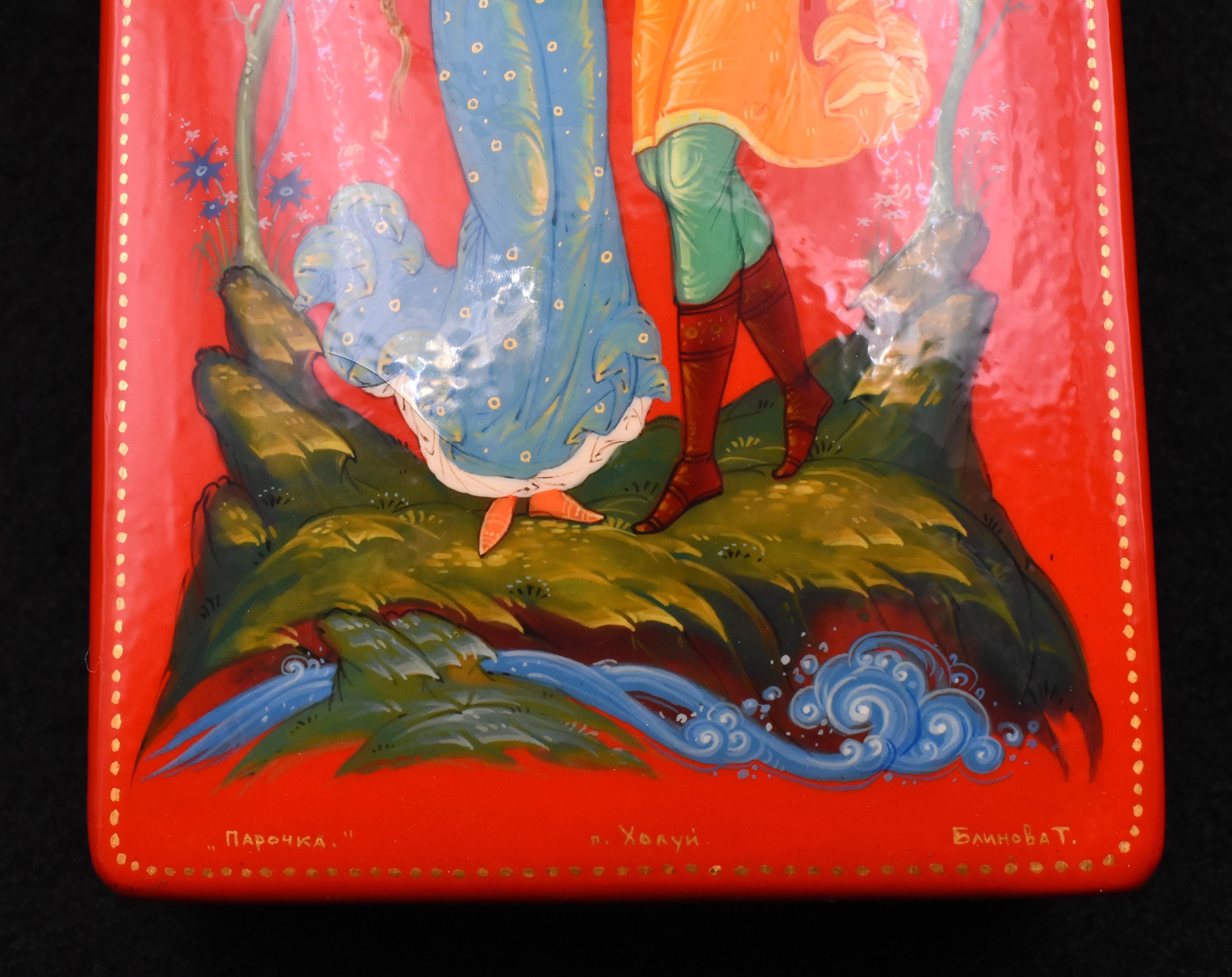
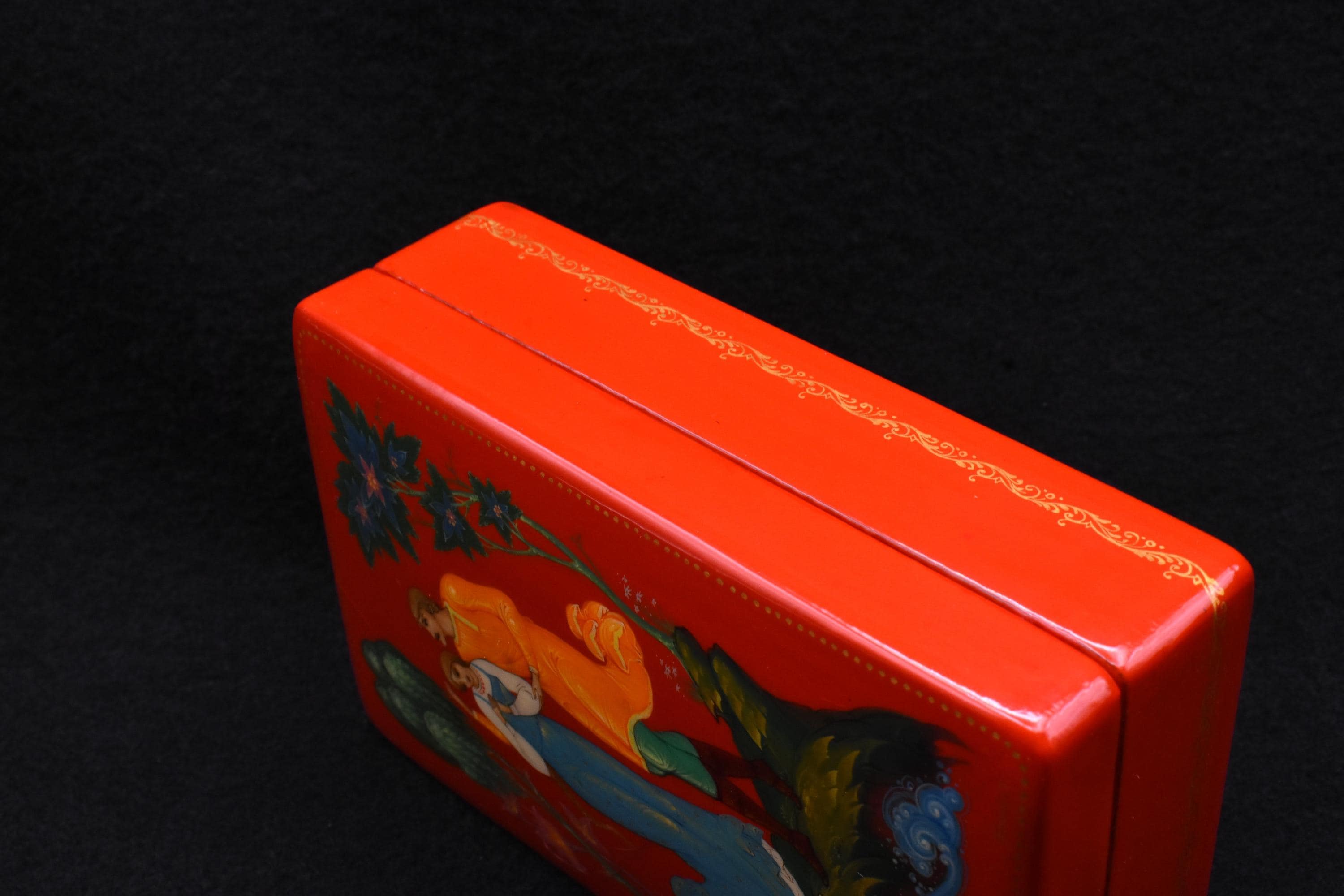
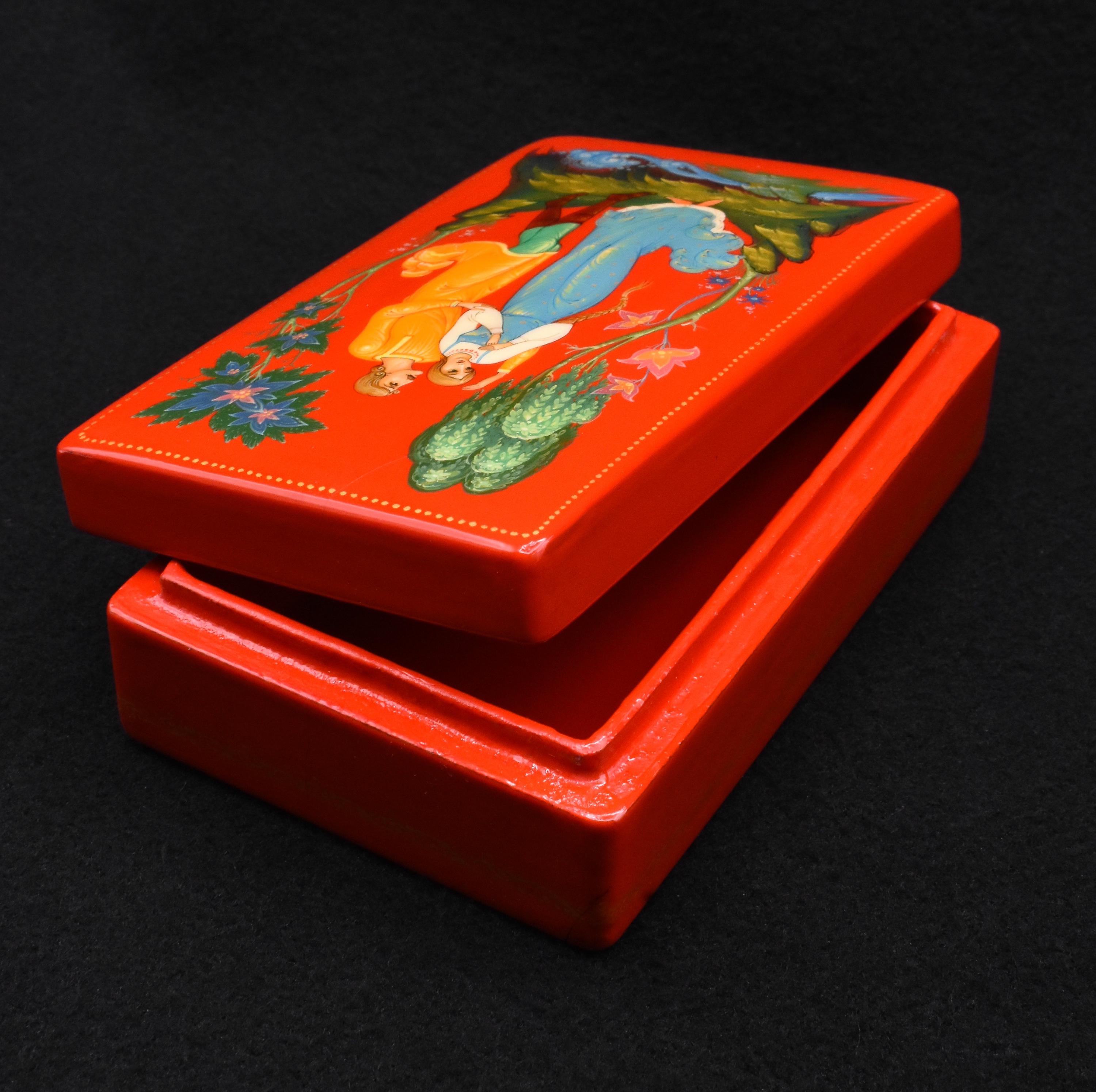
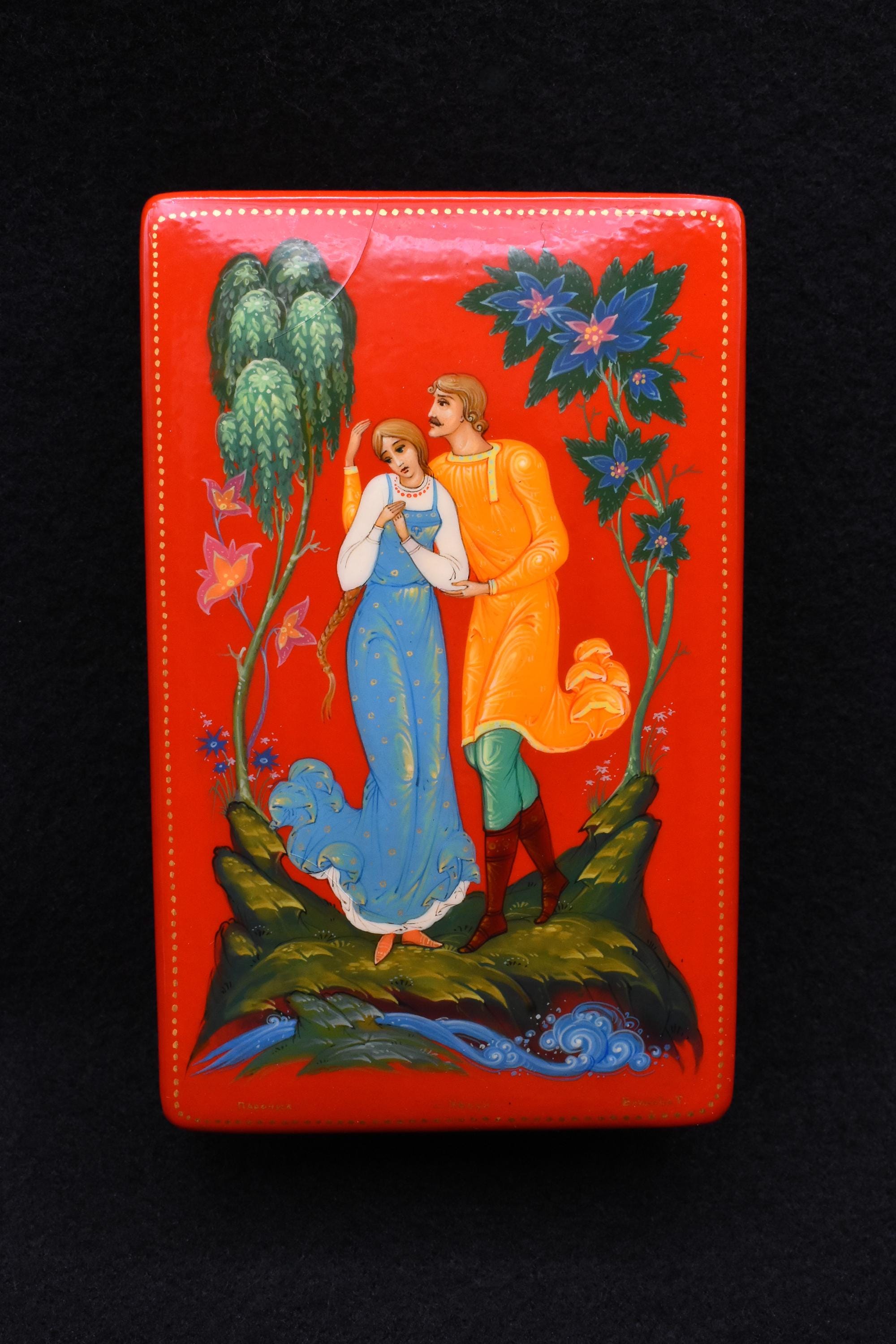
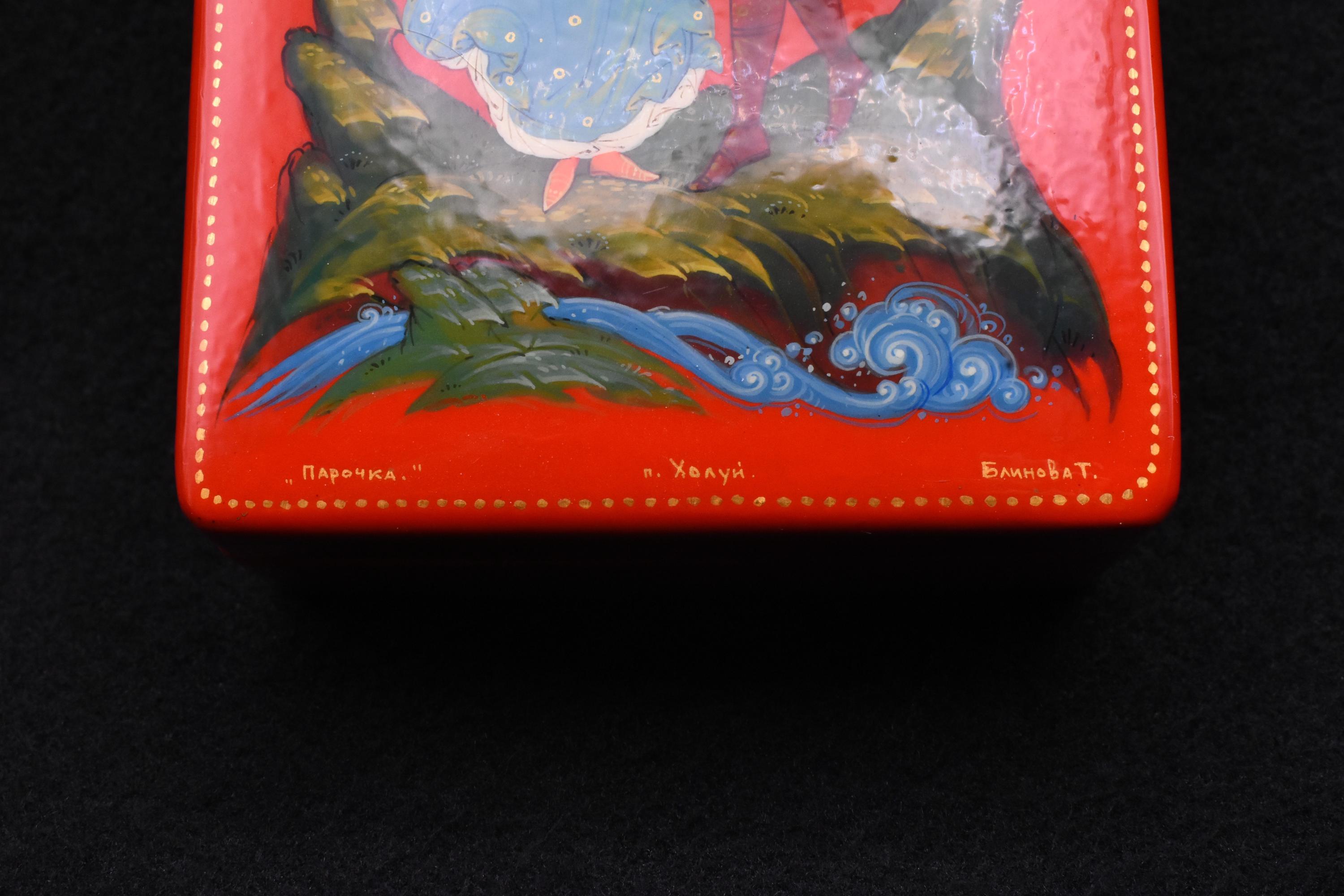
Firstly, the couple. They are nobody special. The title of the piece, written along the bottom left of the image, in gold, says "Parochka," translated simply as "Pair." This is simply a beautiful couple, dressed in traditional folk attire. He is lovingly caressing his partner, as they stand along a river's shore, among trees and flowers. The tiny details are impossibly intricate. There are miniscule variations to the folds of their clothes, beautifully fine additions of white to the rushing river and almost impossible variations and shading among the foliage... it's just stunning. Although some pieces are scenes from classic folk tales, others are simply beautiful scenes reflecting the simple rural moments of an agrarian society. This is one of those examples.
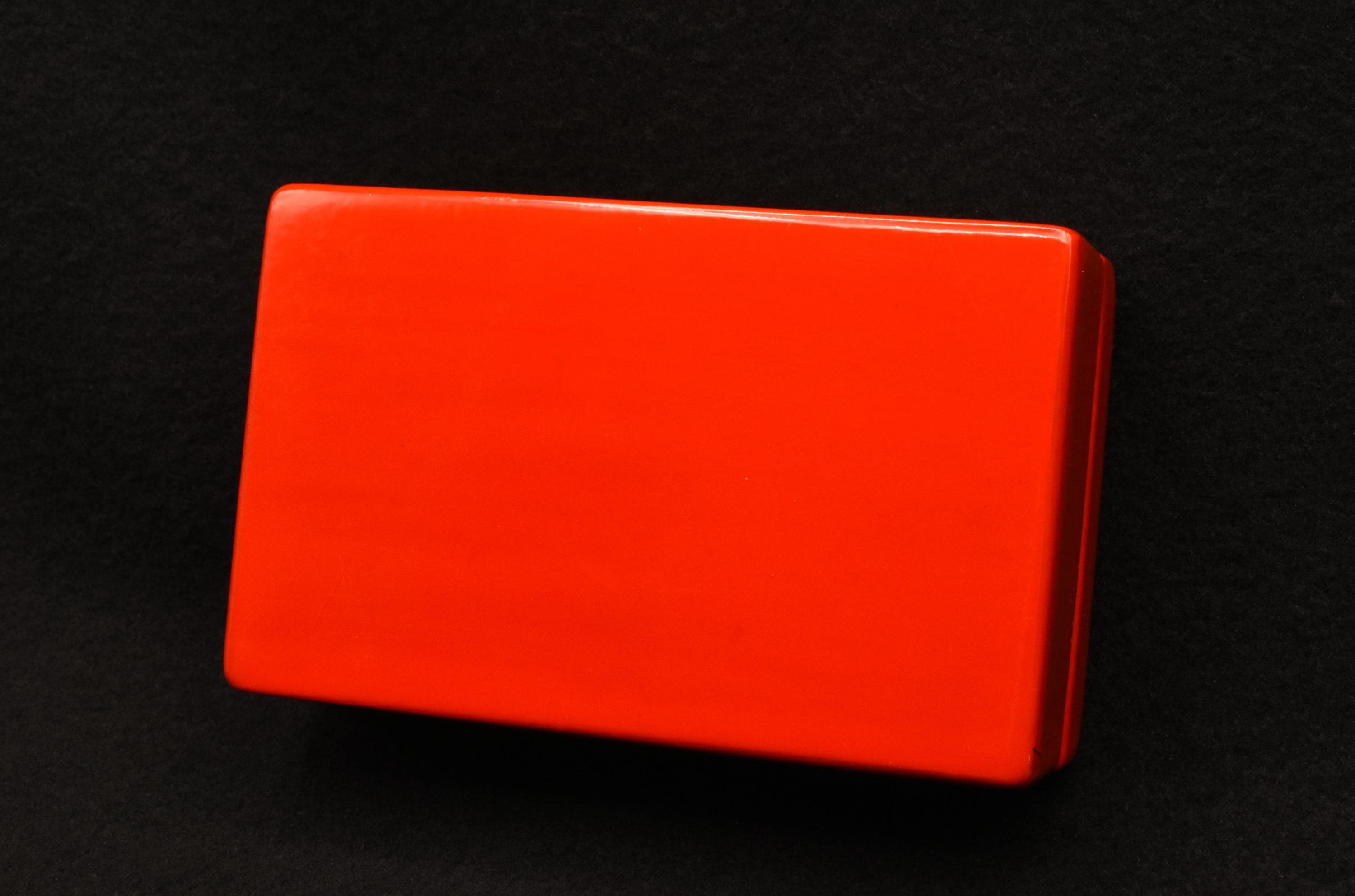
Now, we must discuss the colour of the box. Almost all boxes are black, to begin, but some rare exceptions are painted red in their entirety. Red, in Russian culture, symbolizes beauty, life and honour. The bright red interior traditionally contrasts with the black exterior, which represents mystery, while the red color specifically evokes warmth and is often tied to historical, festive, or folkloric themes. The choice to use red as the external base varies from town to town. Fedoskino pieces are most-commonly red, concentrating on religious scenes. Equally, Palekh boxes, use red to evoke the traditional, bright, and ornate style of the Russian Orthodox church, similar to old and icon painting. However, it is the towns of Mstera and Kholuy who use red more sparingly, particularly to display fairy tales or rural scenes. Along bottom middle is written the word "Kholuy," from which this beautiful box hails. On the bottom right is the name of the artist - "Blinova T."
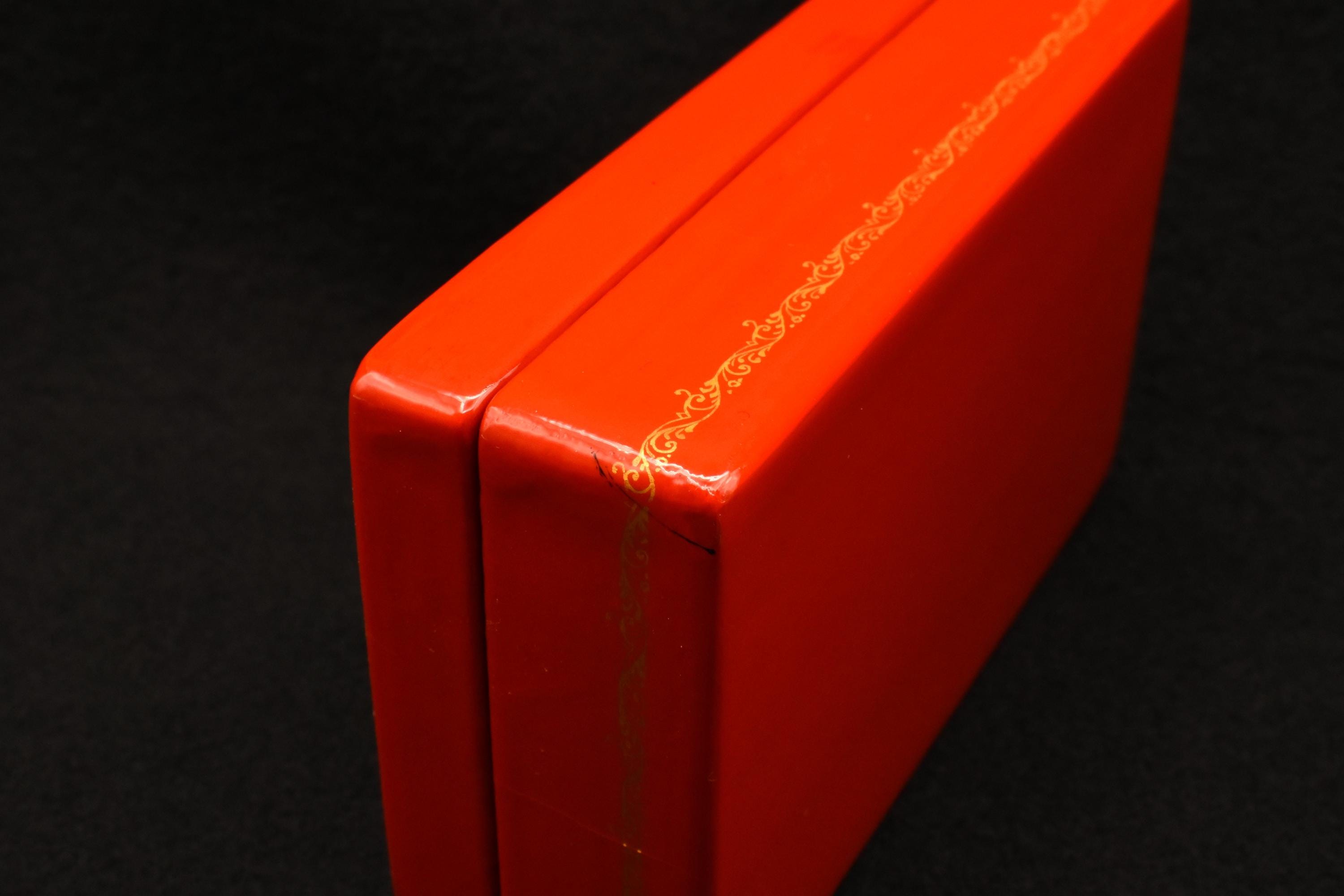
As for condition, it is in fairly good shape. Structurally, it is perfect. The lid closes beautifully and it is very sold. However, under certain environmental conditions, older lacquer is susceptible to cracking, sometimes extending those cracks to the pigments of the painting. When my grandfather was moved into long-term care, his boxes were placed in a storage facility with no environmental controls. With extreme humidity and temperature swings, some of his pieces suffered irreparable damage, while others survived with not a blemish. A few of his boxes are fairly bad, but in this case, the cracks are not severe and the pigments and painting are unaffected. There is one thin crack along the top-left of the image and another two along the sides of the piece. There is also a very small blemish along the bottom left corner, which is hardly visible. I have done my best to highlight any imperfections in the photos. They appear far more prominent in my photography then they do in-person.
The box measures 6.7cm wide by 10.25cm tall and 3.5cm thick.
It is a rare and remarkably beautiful example of a true Kholuy lacquer box.
As always, should you have any questions, I'm always happy to respond to messages almost immediately.
Thank you for visiting C&K! -
Shipping & Policies
Shipping from Canada
Processing time
1-2 business days
Customs and import taxes
Buyers are responsible for any customs and import taxes that may apply. I'm not responsible for delays due to customs.
Payment Options
Returns & Exchanges
Returns & exchanges accepted within 14 days
Buyers are responsible for return shipping costs. If the item is not returned in its original condition, the buyer is responsible for any loss in value.
The following items can't be returned or exchanged
Because of the nature of these items, unless they arrive damaged or defective, I can't accept returns for:
- Custom or personalized orders
- Perishable products (like food or flowers)
- Digital downloads
- Intimate items (for health/hygiene reasons)
Conditions of return
Buyers are responsible for return shipping costs. If the item is not returned in its original condition, the buyer is responsible for any loss in value.
Frequently Asked Questions
Can I combine delivery on multiple items?
Of course! We'd be happy to assist. Just send us a quick message and we'll make sure to combine your items into a single package to reduce the shipping costs.