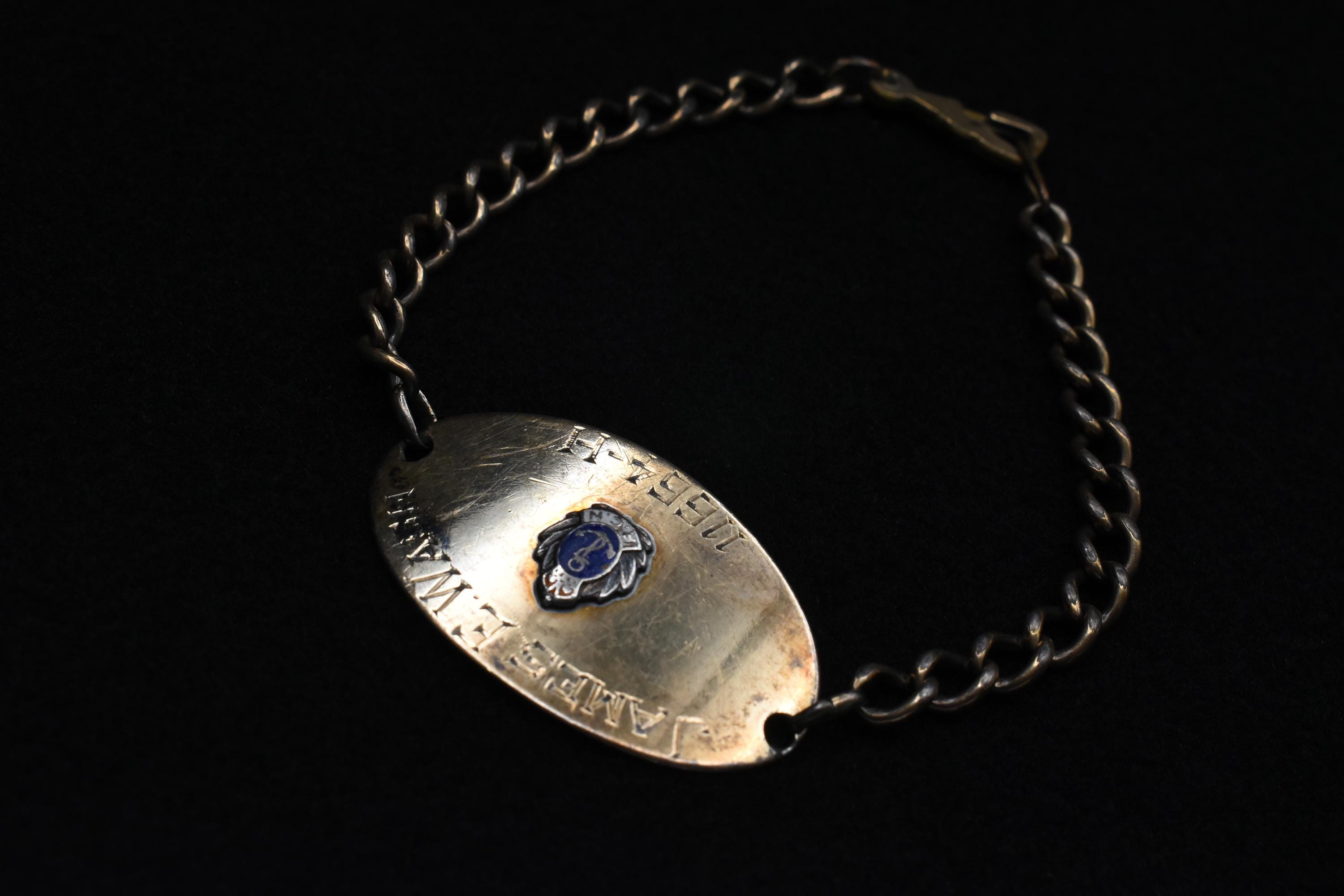
Very Rare post-WW2 Royal Canadian Navy Identification Bracelet
$212.86
-
DetailsPlease note -TARIFFS PAID! US buyers need not worry about any additional charges! Order with confidence, knowing you won't be surprised with any additional fees.
We at C&K have always had a great respect for the soldiers that fought and died for the rights we take for granted today. Selflessly, these young men volunteered their lives and their futures to stand for freedom and justice. Our families honour the sacrifices these brave young men made and remember their selflessness in the world's time of need.
The militaria that surround the Second World War has always held a certain fascination with me. Whether it be the common regalia they wore into battle, the essential kit with which they were saddled or the less common items that reflected their everyday lives - these pieces are an indispensable part of the tale of these soldiers' histories. There are some artifacts, however, that truly bring to light the personal loves and lives these soldiers left behind. We are thrilled to be able to present one of those very items, here.
One of the most necessary pieces of a soldier's equipment was their dog tags. These were single-issued and relayed essential information about the serviceman's person. The tags contained their full names, department identification numbers, their blood type and frequently, their religious preference. They were relied upon to identify a fallen soldier, whether they be injured or had lost their lives in the course of a given conflict. It wasn't uncommon for these tags to go missing, however, resulting in unidentified soldiers and the grief that would follow the insufficient memorial of their passing. When it came to their families back home, it was a crucial element to their uniform, allowing for identification and the informing of those loved ones, waiting with baited breath for their family's return. However, it wasn't the only item that was used to identify these fearless souls...
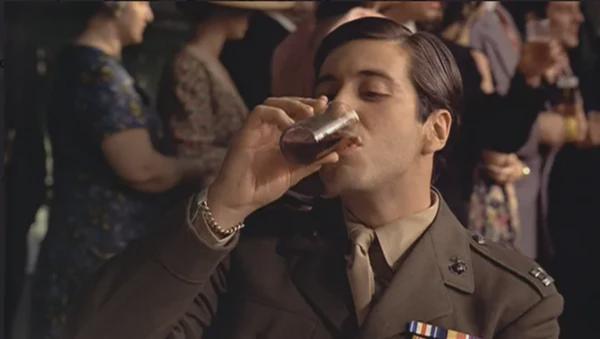
It was common practice for family or loved ones to gift a soldier with a keepsake, upon their deployment. It was frequently a small item - something to remind them of the love they left behind and served as motivation to come back to them. Sometimes, it was a snuff box for tobacco, other times perhaps a flask. In most cases, these treasured pieces were engraved with a short message or a name, evoking memories of warmth and light in an often dark and frightening time. One of those pieces was an identification bracelet. These were more often than not flat pieces of metal, usually bent for comfort on the wearers wrist, and made of almost any metal, from brass and steel to silver and gold. These held a double purpose - one was the identification of the soldier. On the front, it contained the name of the serviceman and their ID number. In some cases, it went further, containing all the information one might find on a dog tag. These bracelets were made with a sturdier chain - of a more substantial material - so as to ensure that even if the tags were lost, the bracelet could serve as a further means of identification. On the reverse, a loved one was free to engrave a short message or name, again, reminding their heroic men of the love to which they could look forward to returning. These pieces were worn with pride and purpose - soldiers frequently recall playing with these small tokens while stranded in a ditch or foxhole, recalling with fondness the person who had gifted it to them, injecting a strength that would so frequently lapse in the cold light of battle. Upon the soldier's return, these bracelets would continue to be worn by them - a reminder of their sacrifice and a source of pride of accomplishment, having trudged through hell to return to the lives they once thought lost to them. In fact, they became a sort of badge of honour, identifying these brave individuals to those back home (see the inserted photograph of Al Pacino wearing his during the filming of The Godfather - he was a GI before he became a made man). In other, more unfortunate cases, these bracelets were sent back to family who were privileged to wear these items in memoriam to their lost loves. Before long, as so many pieces of jewelry do, they became a source of style. They were manufactured blank and worn, in the 70s, as a fashion accessory, along with those that were still being worn to commemorate the lost souls of conflict. So simple and attractive is the design that they continued to gain popularity through the 80s, 90s and nought-ies, being portrayed in fashion magazines the world over. Although slightly diluted by the fashion element, these bracelets hold an important place in the heart of those who still remember the valorous souls for whom we owe so much.
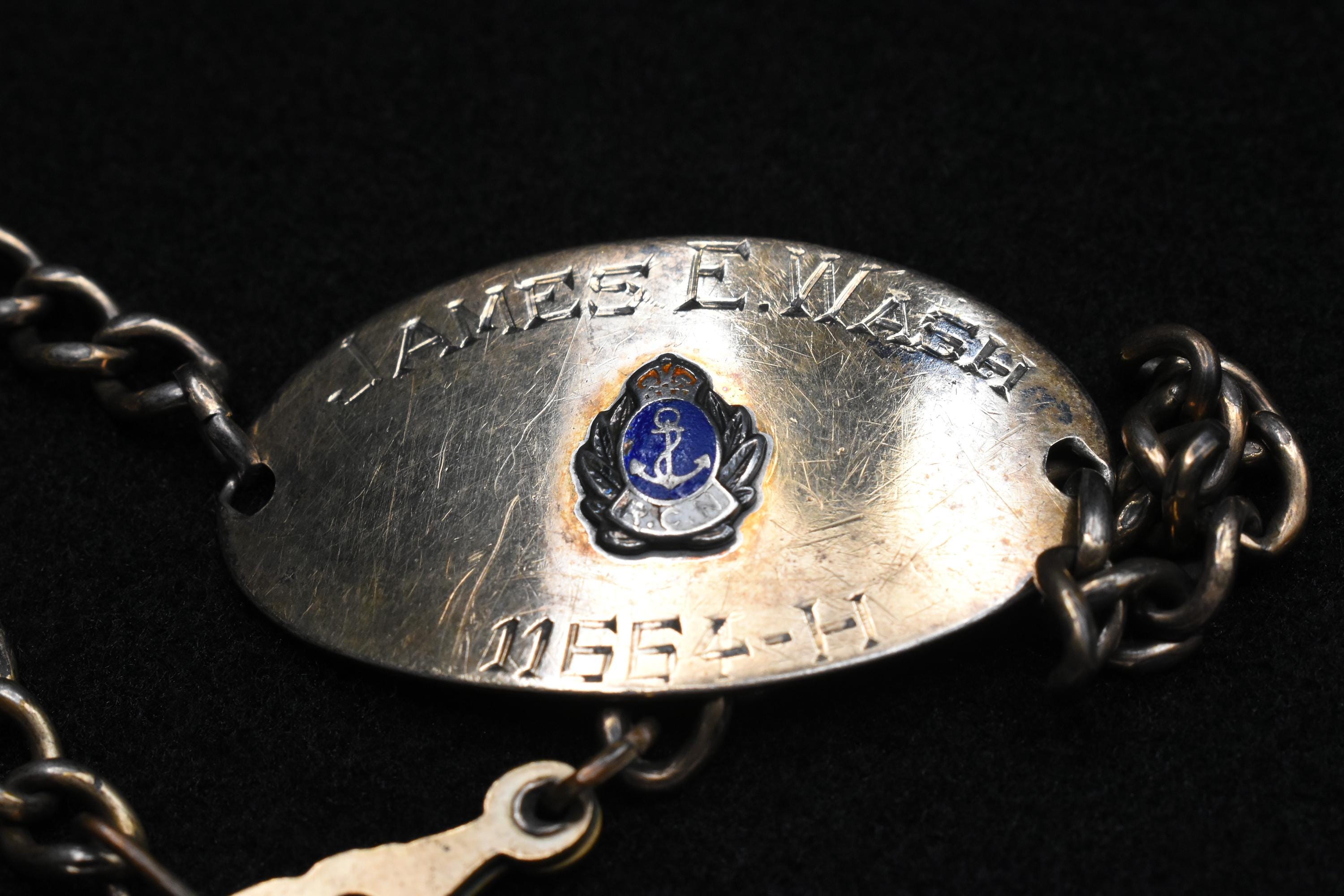
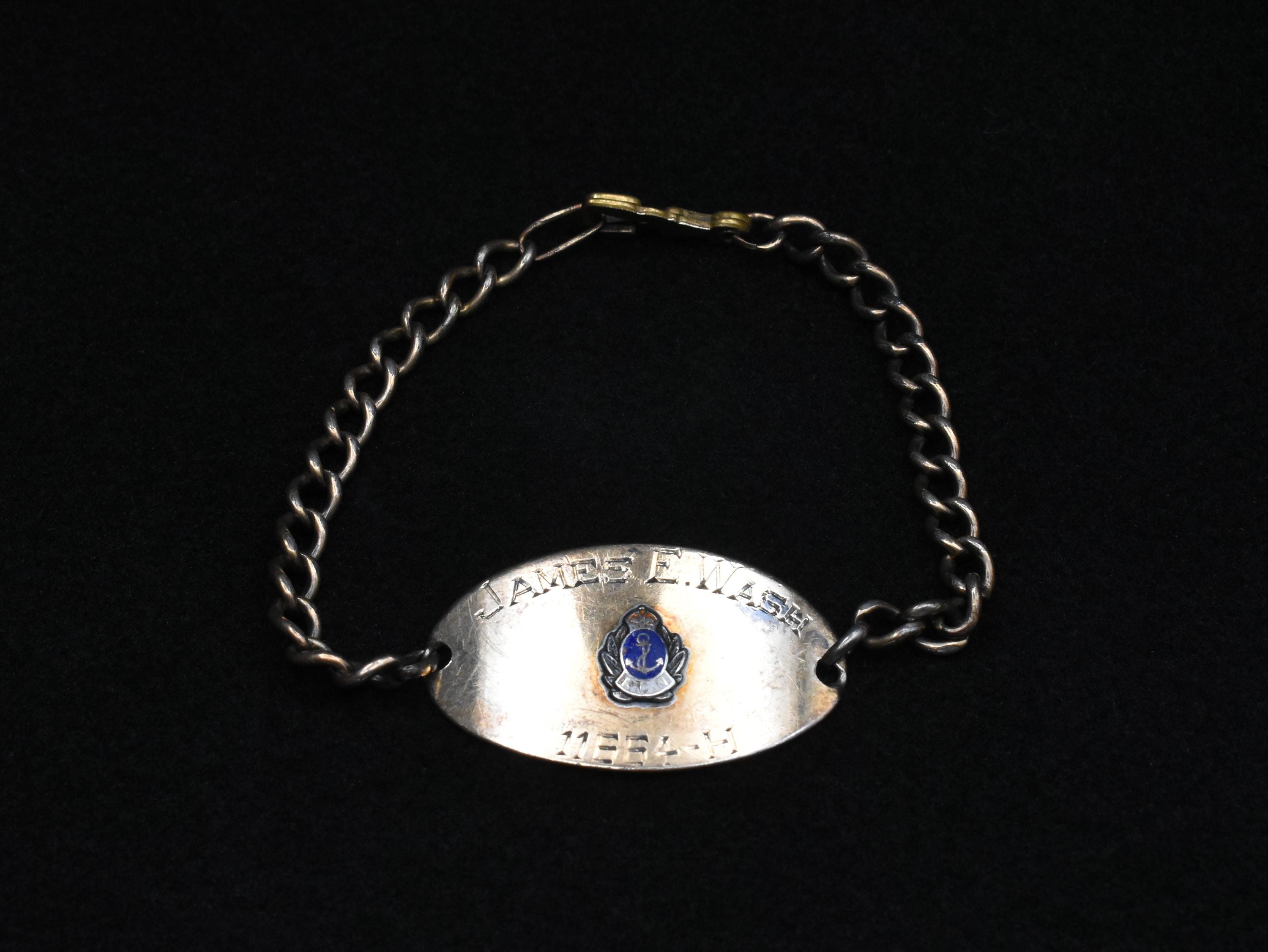
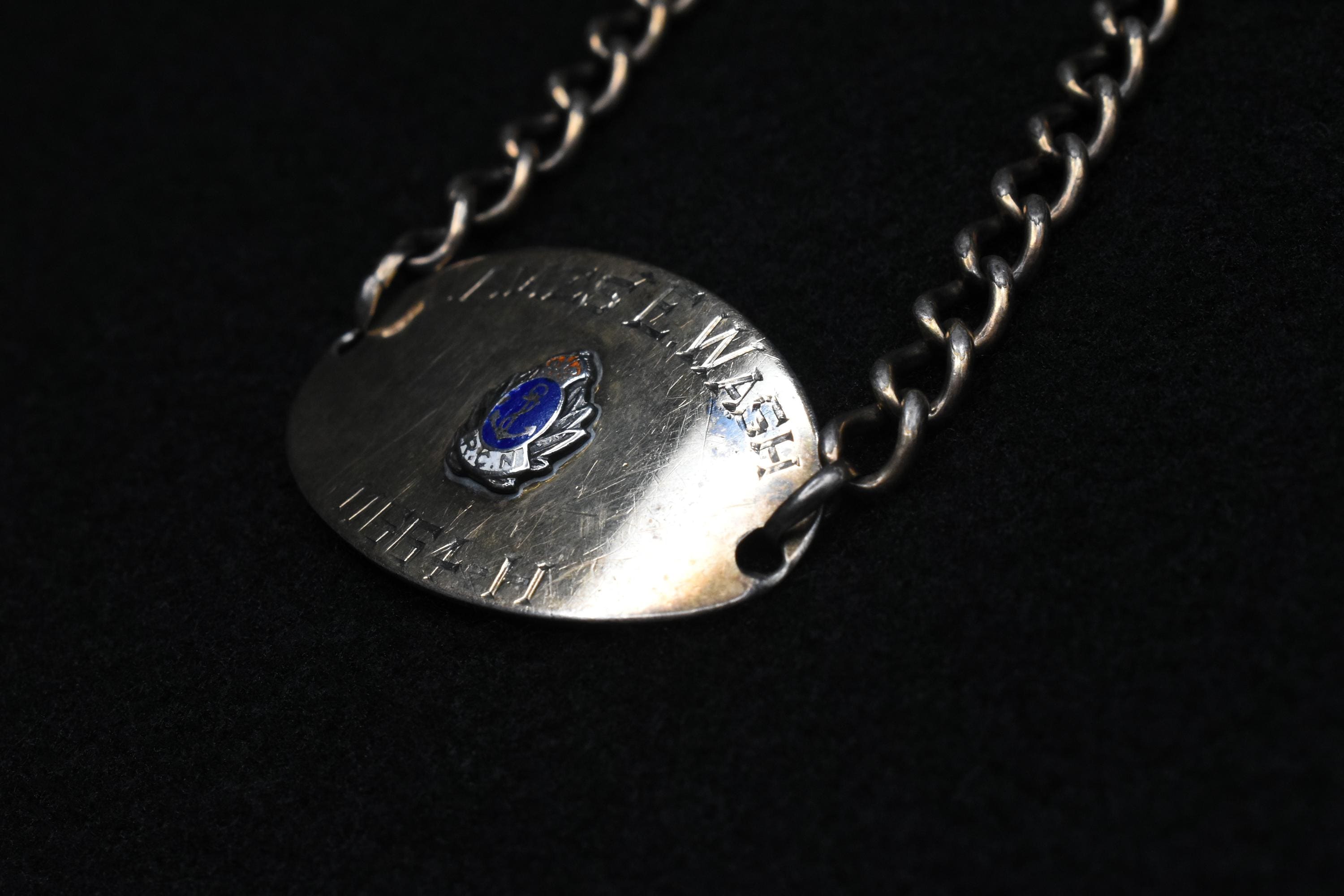
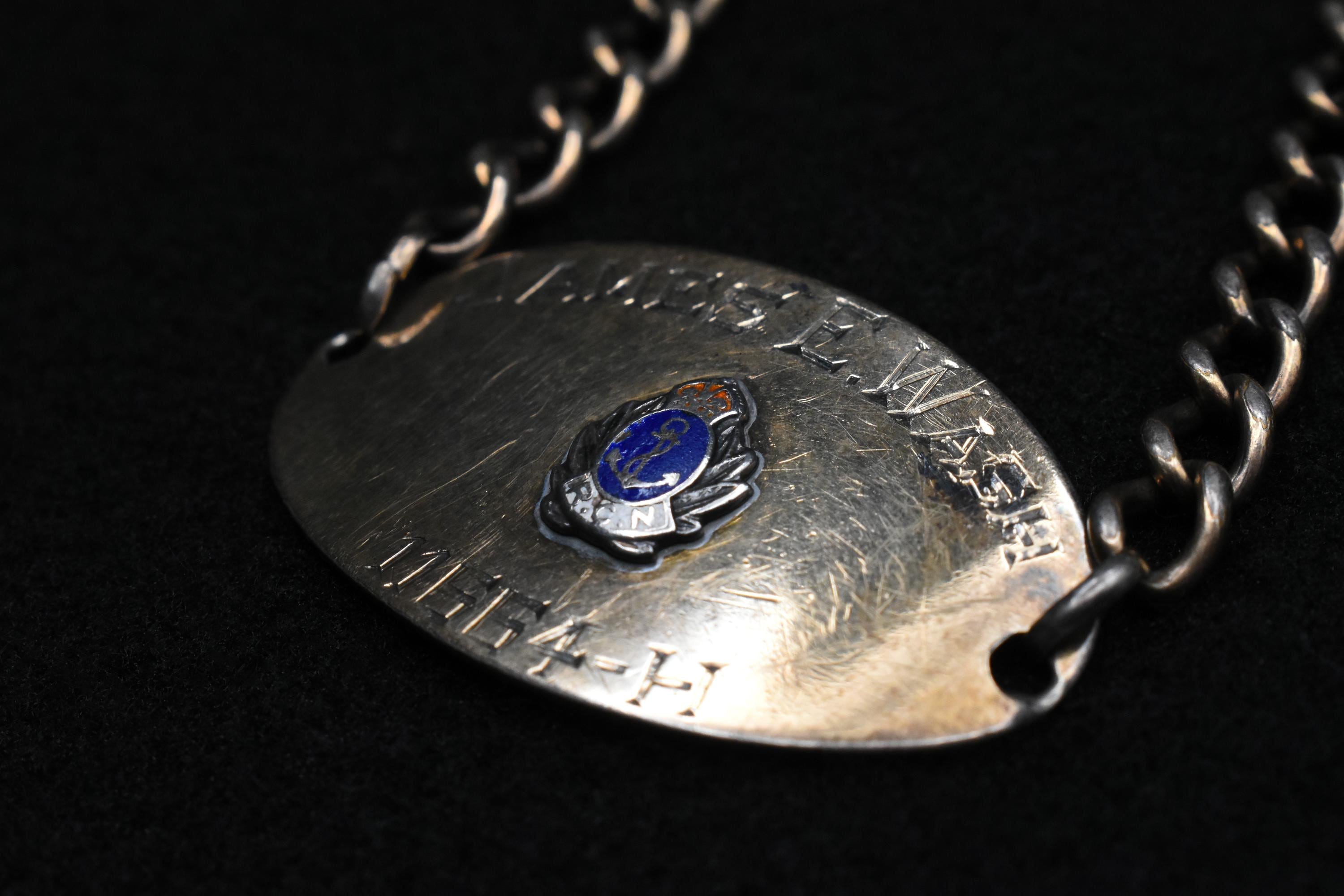
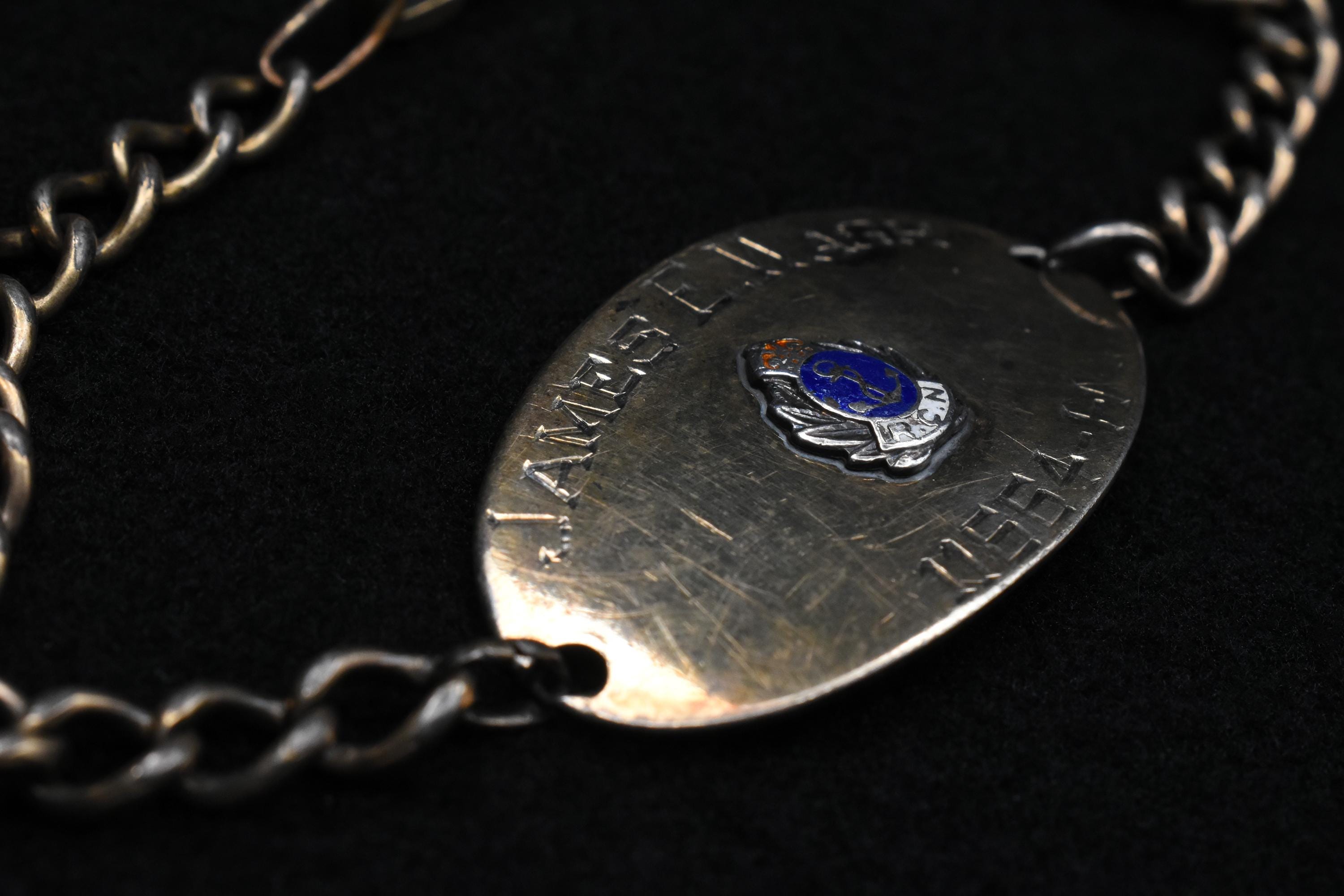
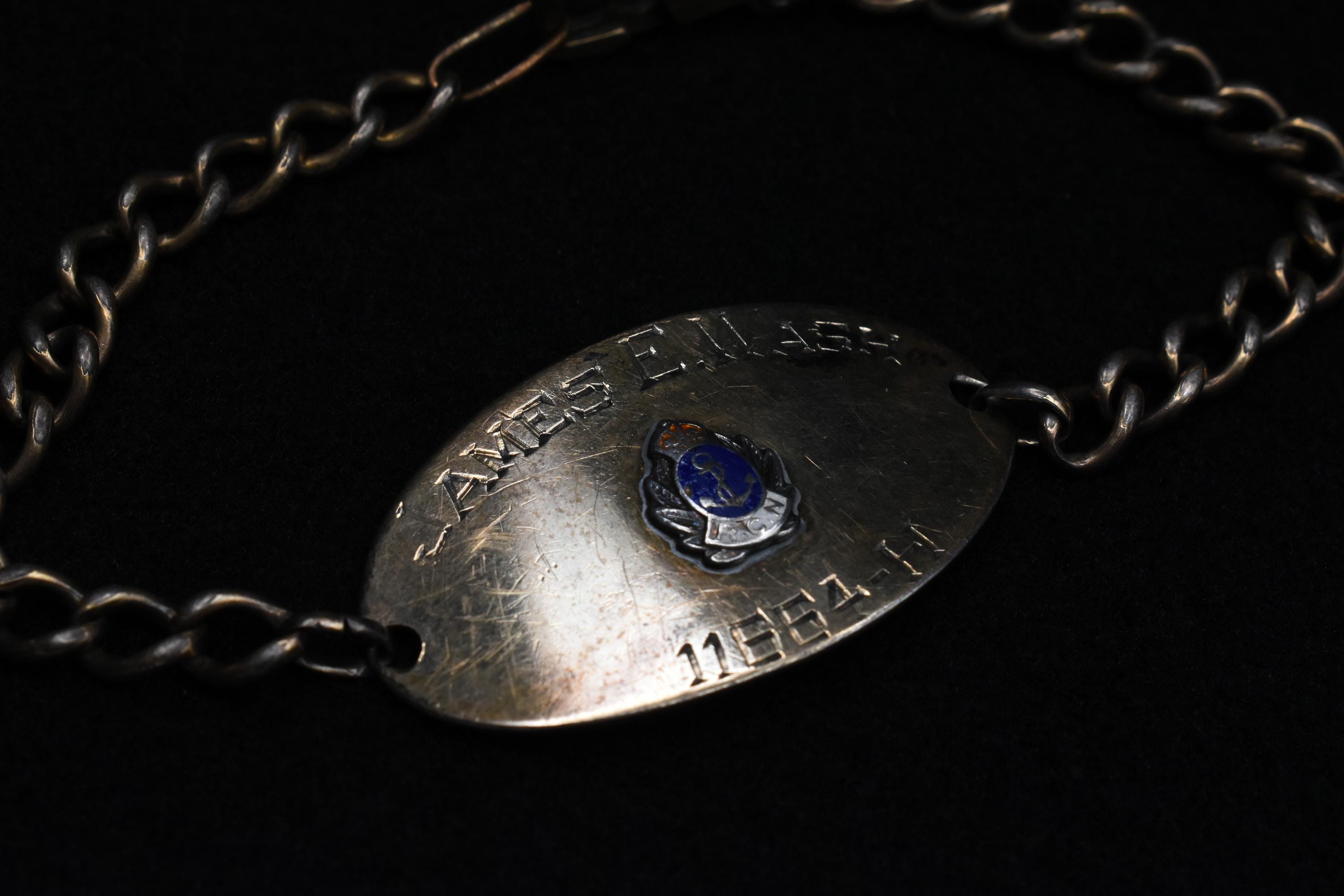
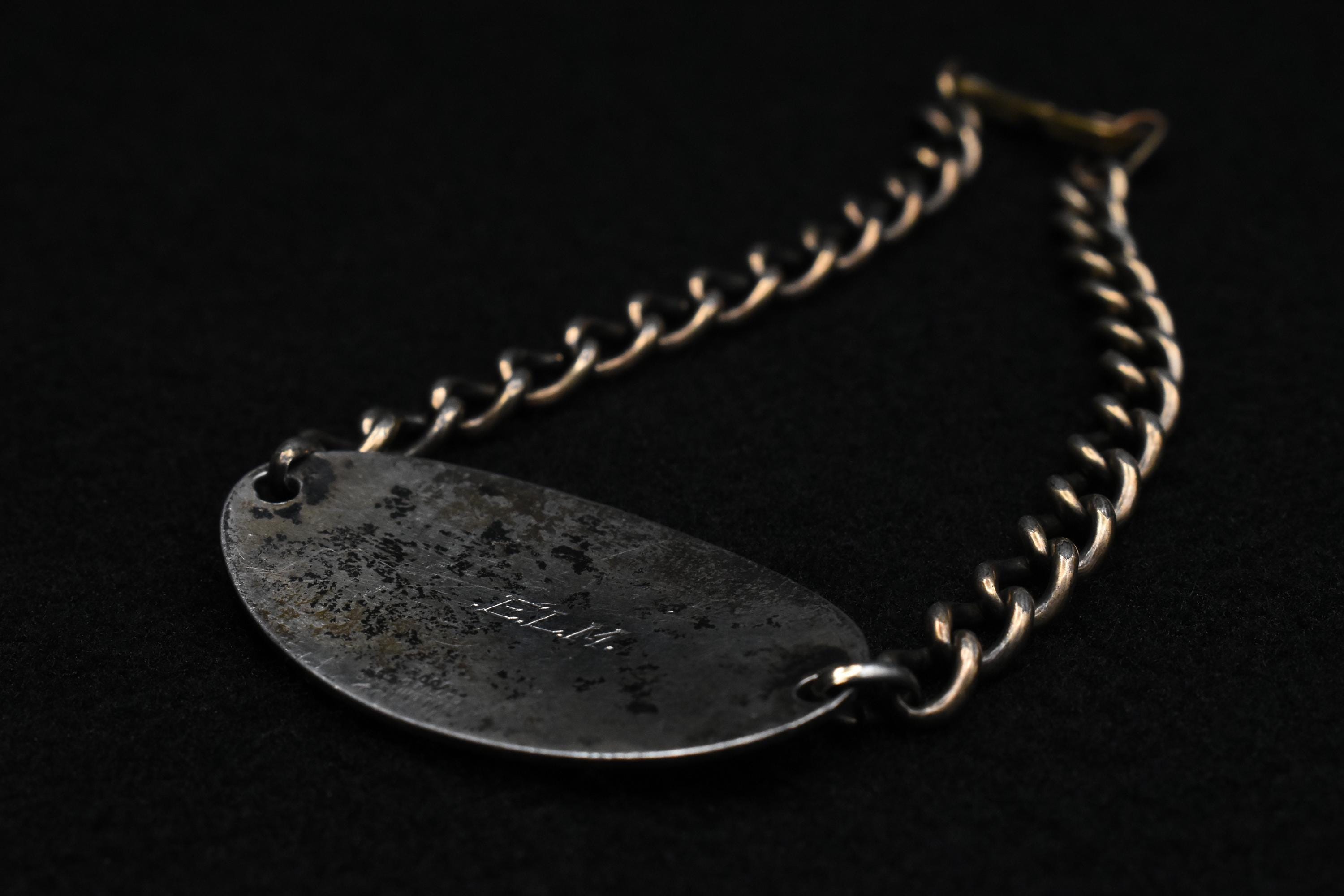
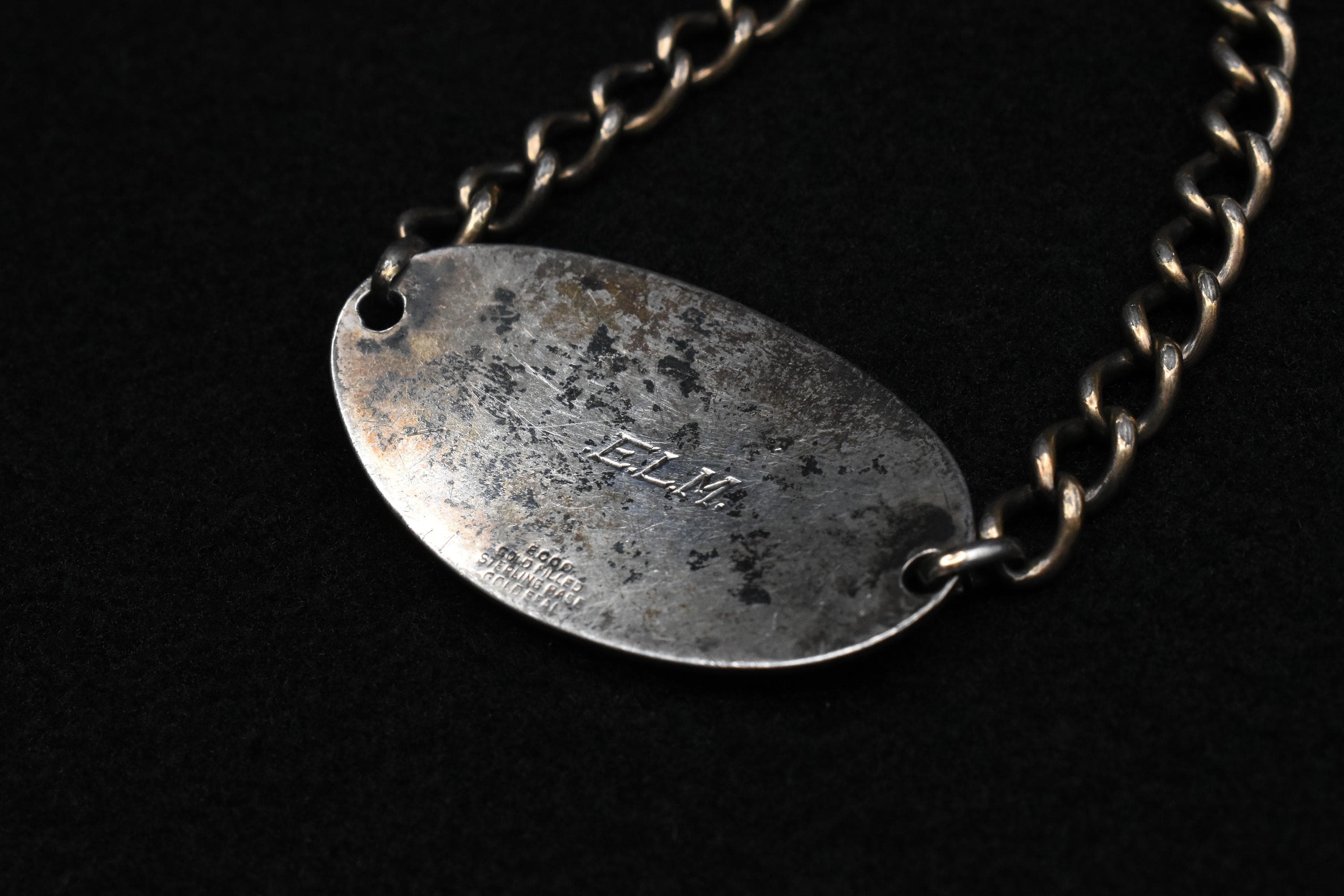
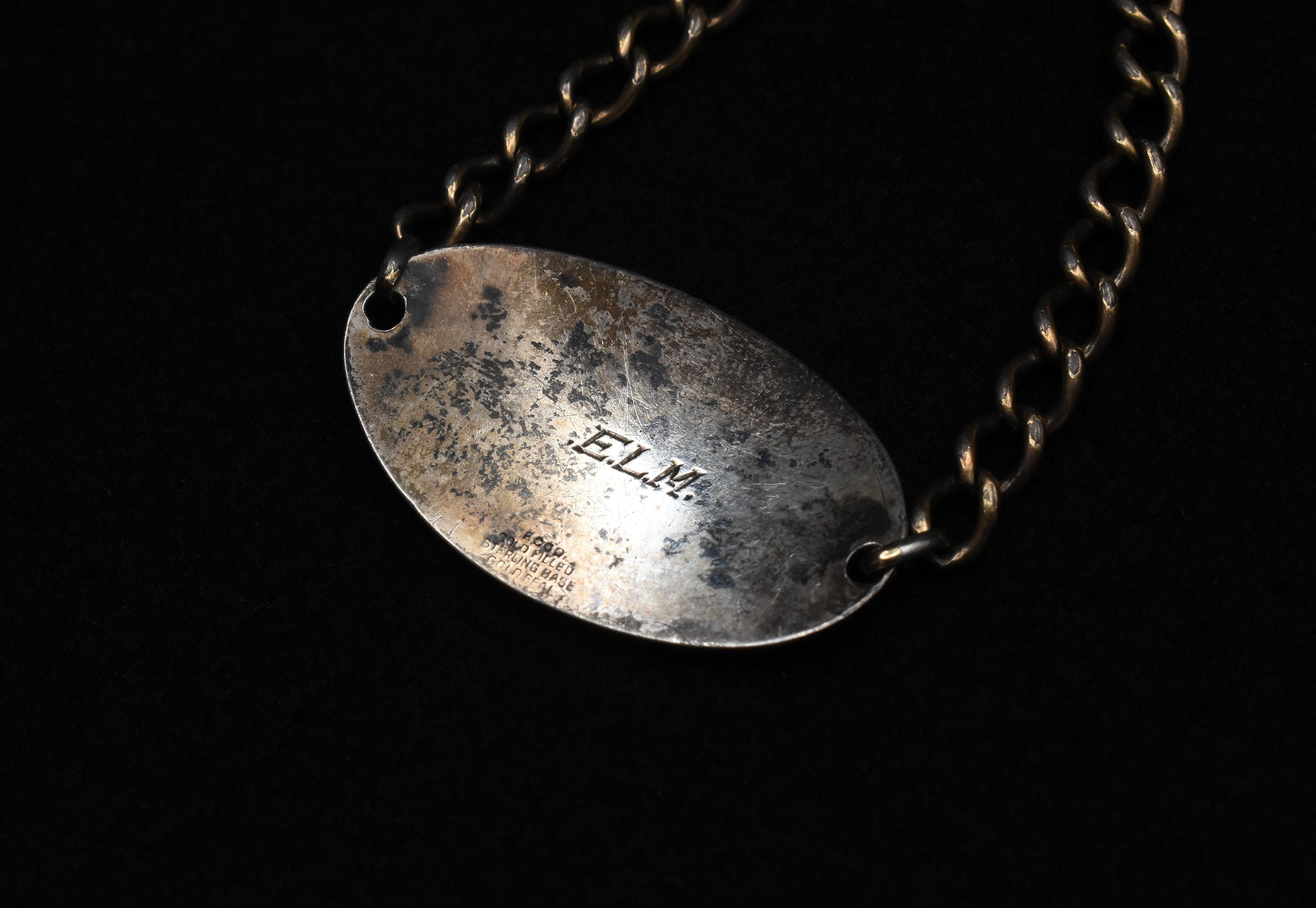
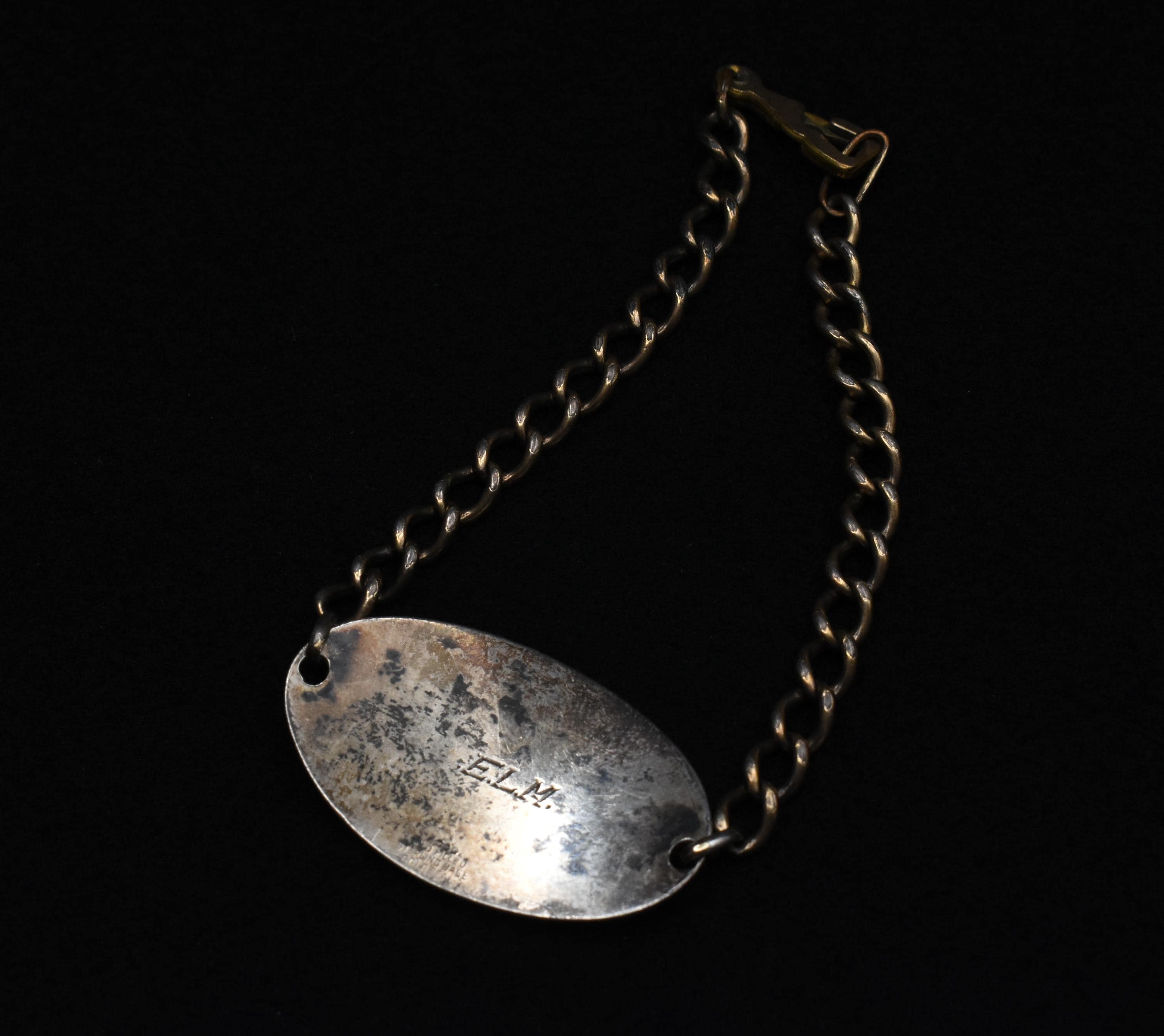
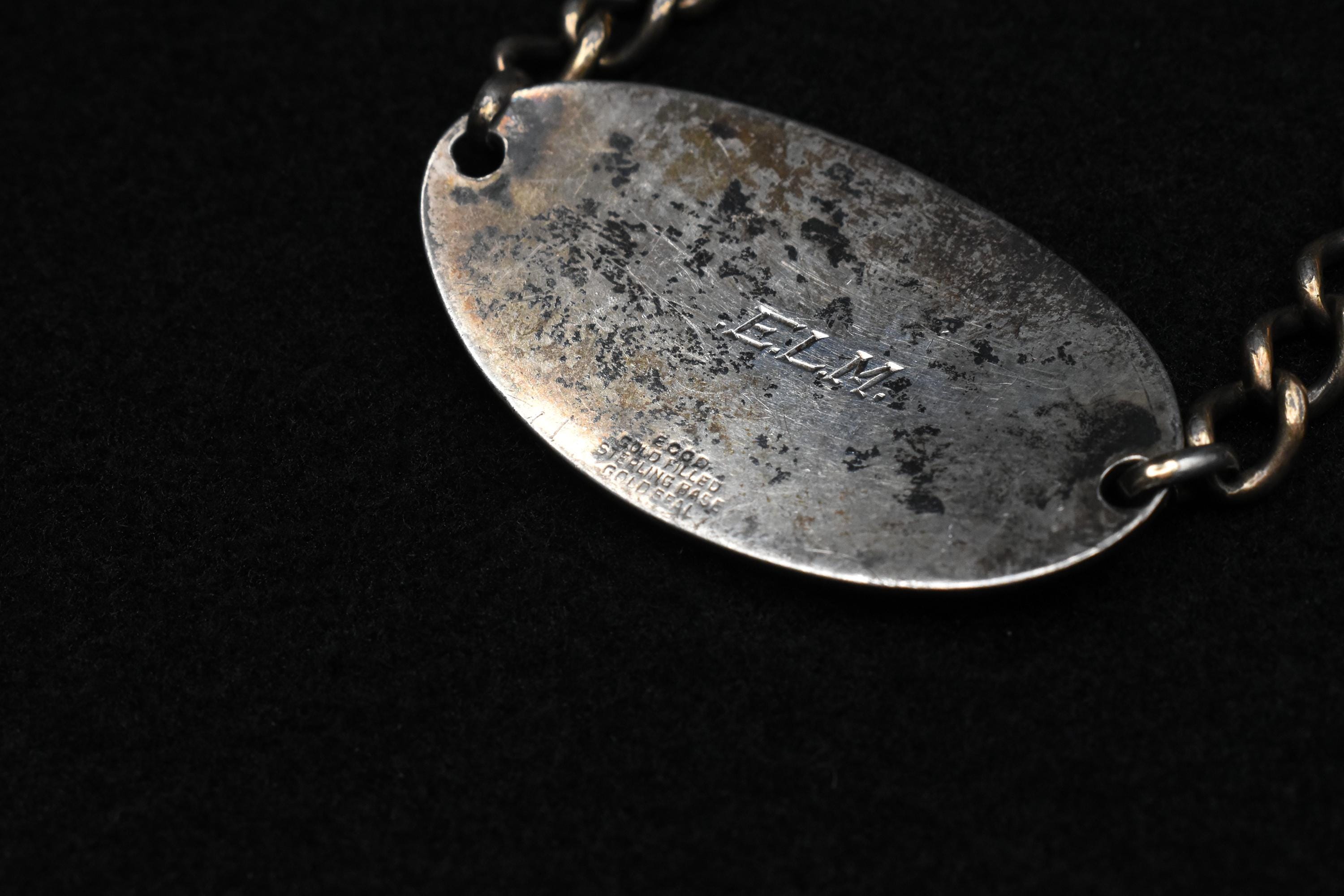
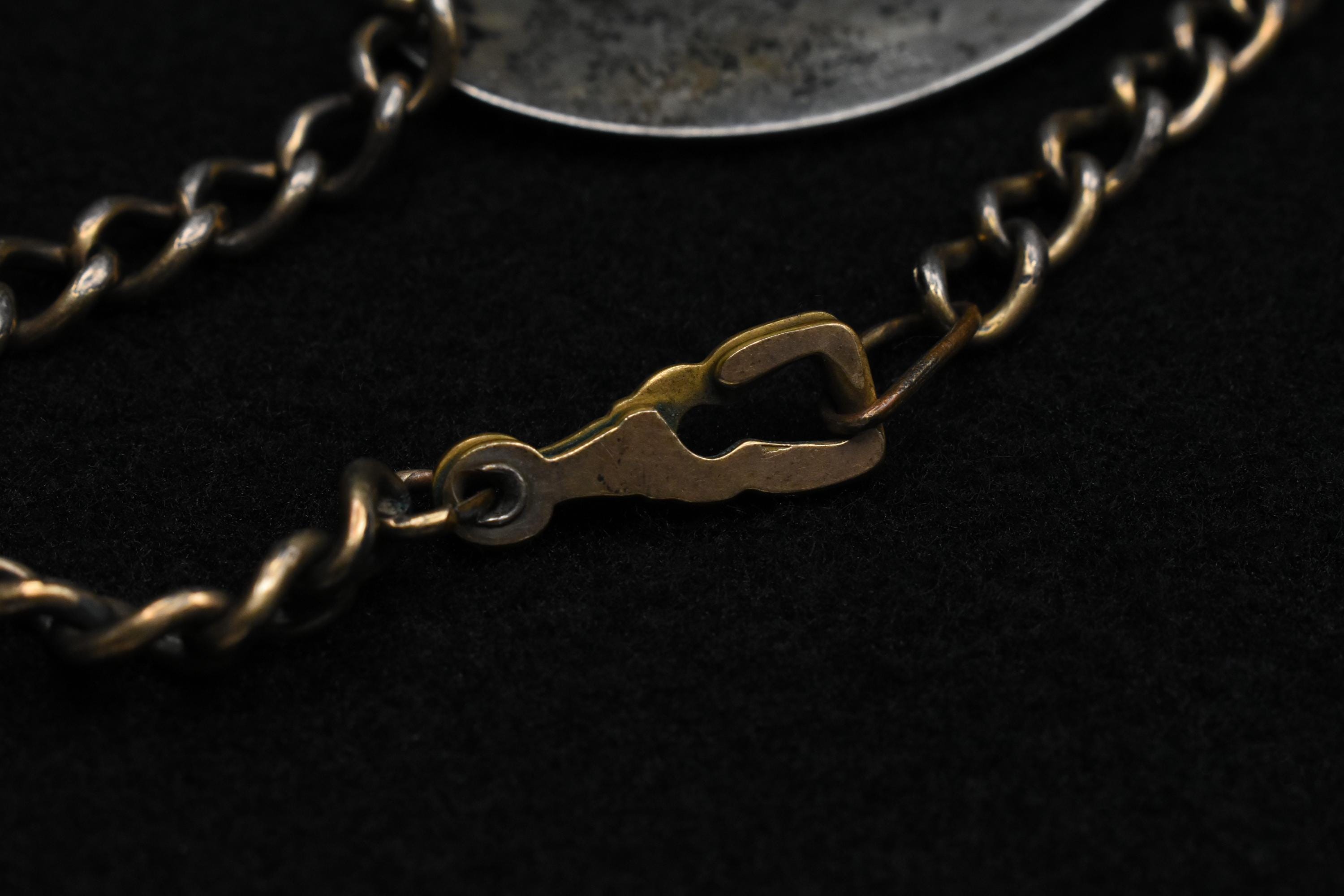
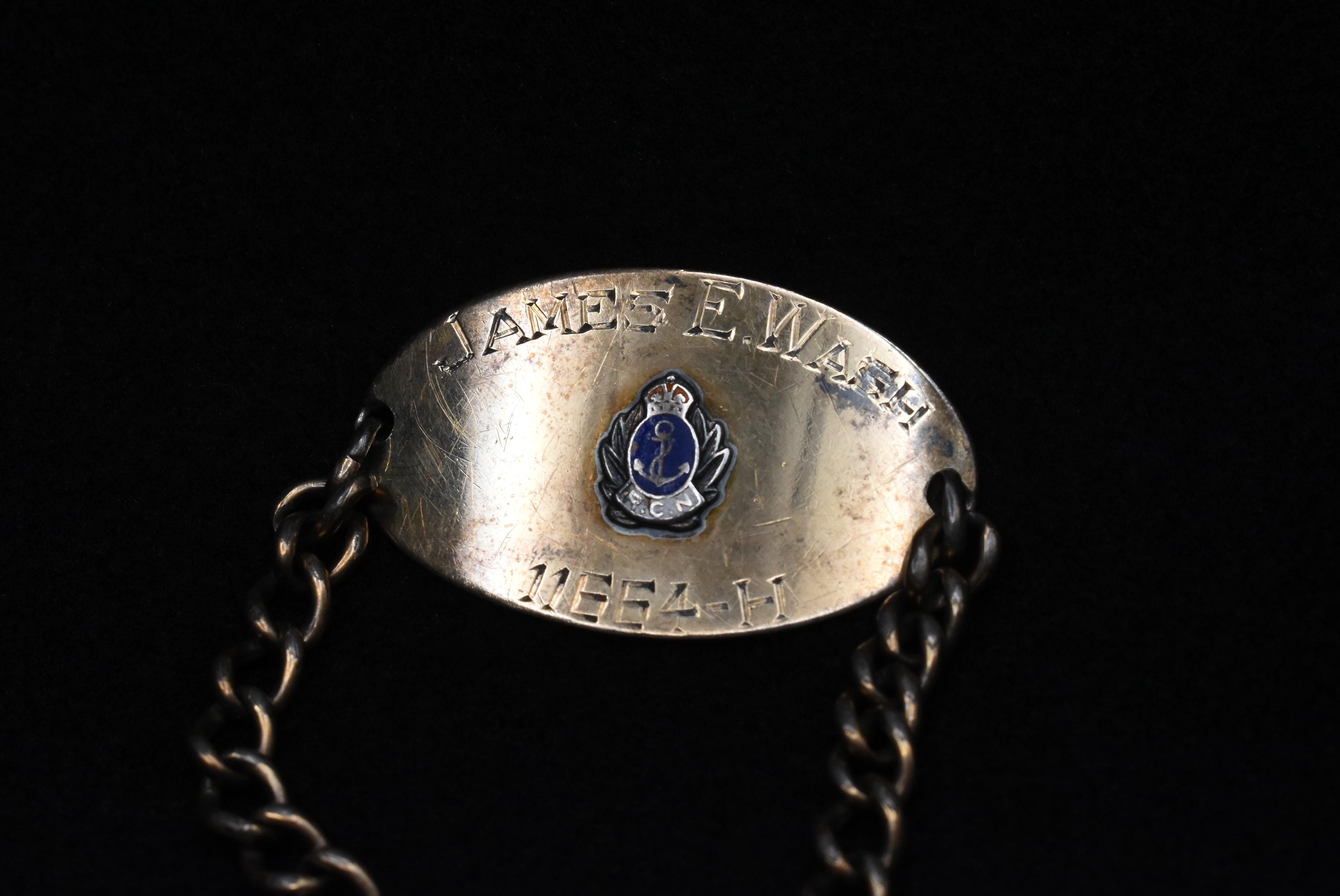
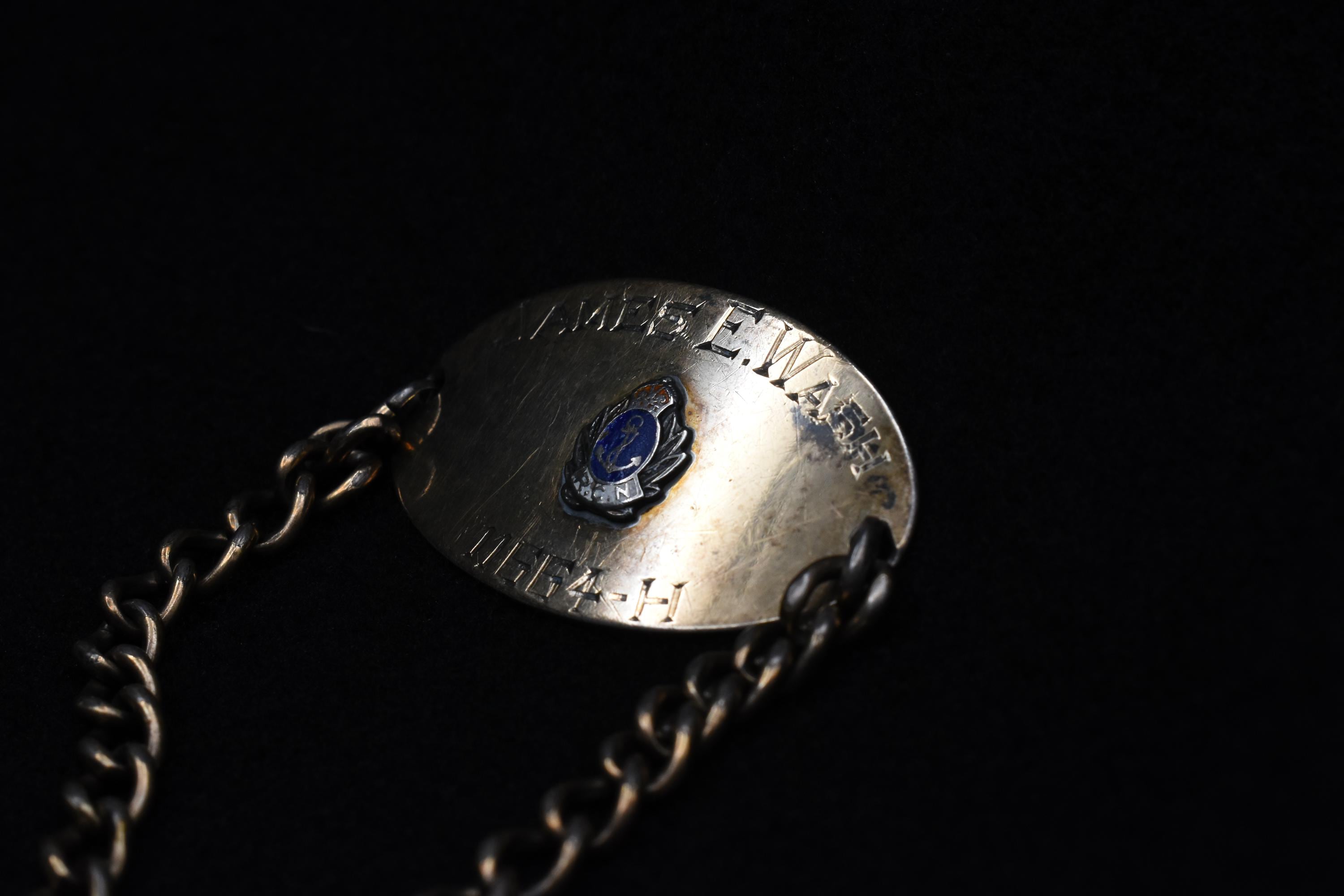
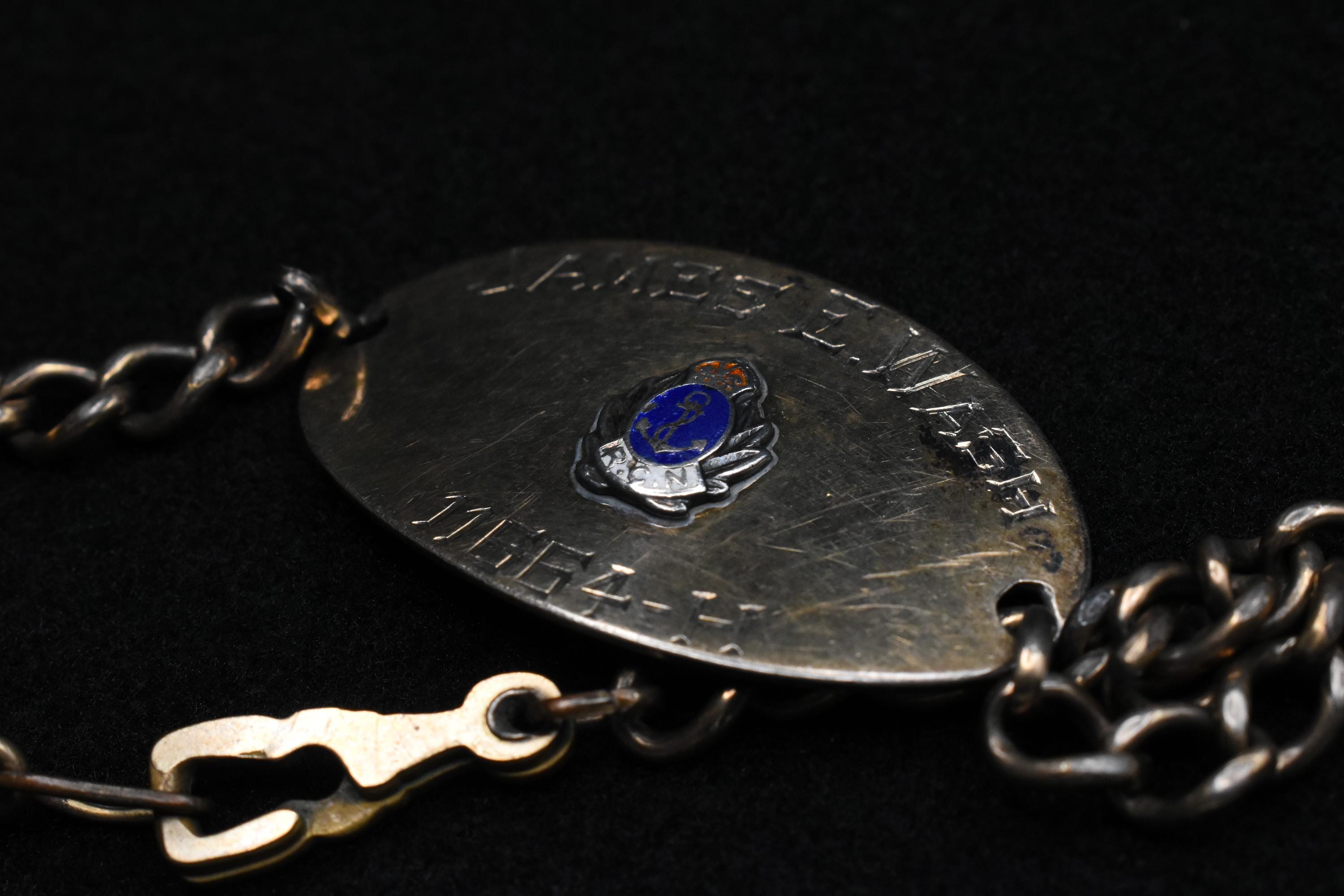
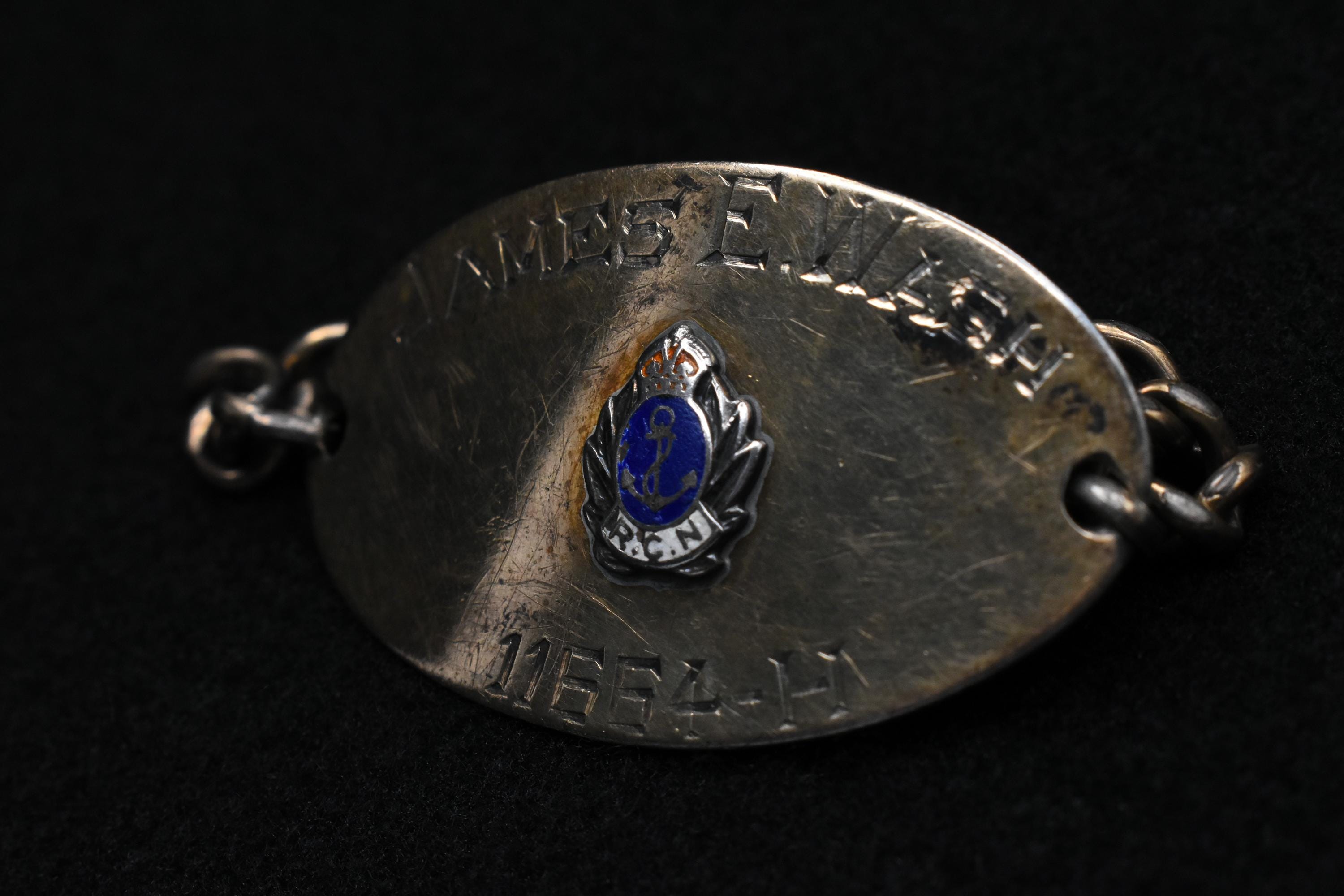
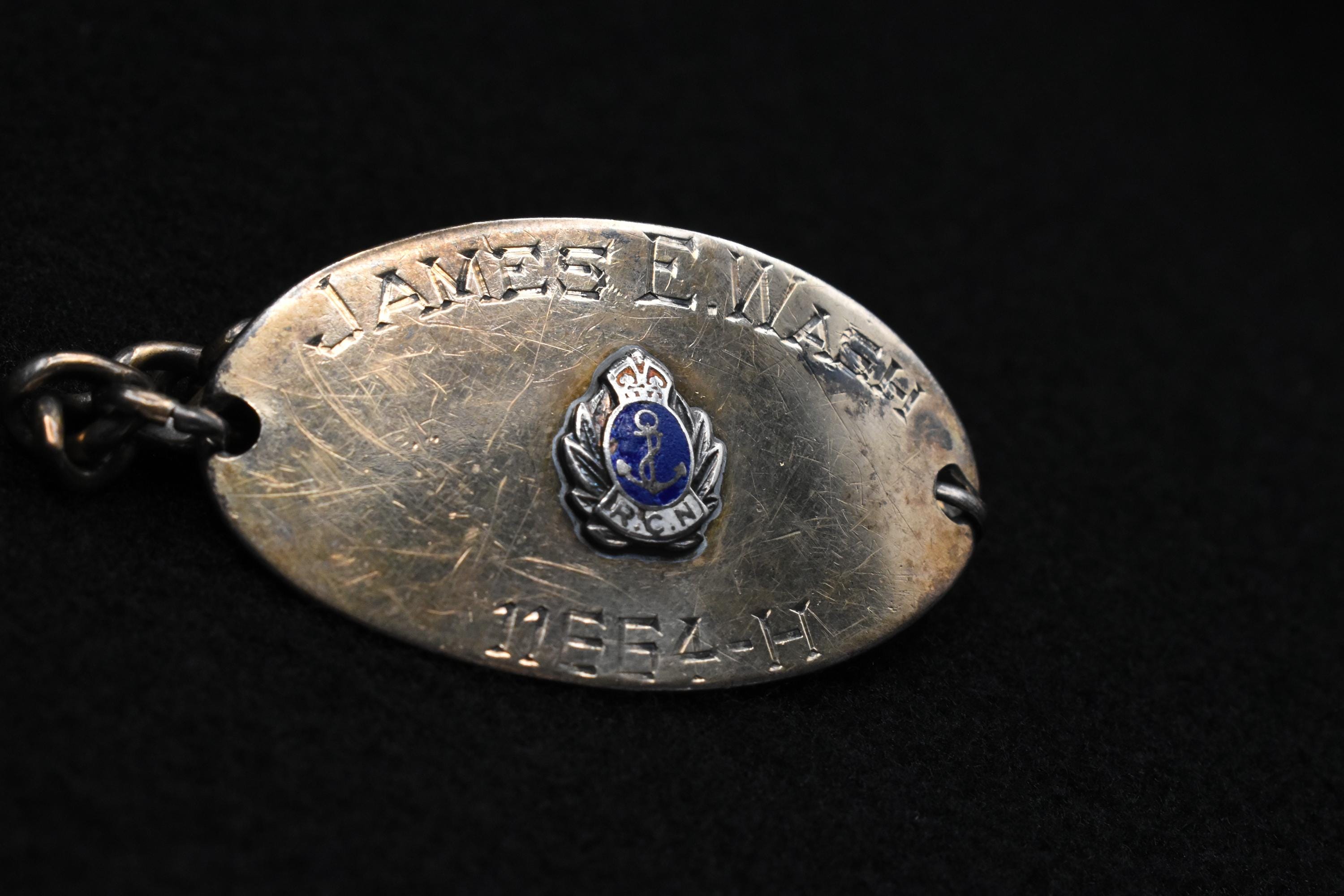
Our bracelet is just stunning. It is gold filled, which is different from gold plated. Gold-filled items are covered with a layer of gold that has been affixed (by brazing, soldering, or sweating) onto an 'inferior' base metal. In Canada, to qualify as gold-filled, the layer of gold must be at least 10K and the weight of the gold must comprise at least 1/20th of the gross weight of the entire item. Our example retains the original gold shade, albeit slightly lighter in colour, giving it a warm, handsome glow. On the front is engraved "James E Wash," and below, the sailor's service number, "11664-H." Between the engravings is the enamel-painted RCN logo (a fouled anchor, maple leaves, and the Royal Crown), with a glossy finish. On the crown, we can still see a hint of the red that once covered it. Below, the deep blue of the anchor's background remains bright and clear. The banner below, containing 'RCN' still retains most of the white of the banner. It is quite beautiful. On the reverse, the initials "E.L.M." are engraved. Perhaps these were the initials of his doting wife or girlfriend. Perhaps it was of a loving brother or cousin... we can only be let to speculate. Below, "Sterling Base" is self-explanatory, but above that, "ECCO" needs a bit of explaining. It stood for 'Electric Chain Company of Canada' (or Electric Chain Company Ltd.). They produced high-quality jewelry from 1916 to 1950, specializing in Sterling Silver and Gold-filled pieces - they remain highly collectible - and were relied upon for these particularly special items. They were always high-quality pieces, crafted with immense care and attention to detail. It's no wonder they were relied upon by the soldiers of the Canadian armed forces to adorn their wrists through the rigors of battle. 'Gold Seal,' found at the bottom of the details, indicates 'Gold Vermeil' jewelry. To technically be considered vermeil, the gold plating must be at least 10K and usually at least 2.5 microns thick, which is thicker than standard gold plating. Because the base is silver and the plating is thick, this jewelry holds higher value than standard gold-plated items and is often considered "demi-fine". This is simply a term that equates the quality of the piece with the rigors of Canadian law, with regard to gold content in filled pieces. Our example is exceedingly rare. In fact, I have yet to find its equal. The rarity comes down to dating the piece.
Most RCN identification bracelets have the enamel-adorned crest of the Royal Canadian Navy in the middle. However, if we look at WW2 examples, they show not 'RCN,' but 'RCNVR.' This stood for 'Royal Canadian Navy Volunteer Reserve.' It seems that the volunteer reserve was the predominant naval force of the Second World War. It's not that these 'RCN'-labelled bracelets weren't found during WW2, but they were very uncommon. This was my first hint that this piece does not hail from the Second World War. The soldier's service number, however, cemented the date of this particular bracelet. During WW2, all numbers consisted of a prefix letter - 'V' for Volunteer Reserve, 'A' for Naval Reserve, 'O' denoting a Commissioned Officer and 'R' for Reservists (after 1946). However, between 1946 and 1968, the numbering format was changed to a suffix-based system. The letter following the service number denoted the home port to which the soldier was commissioned. In this case, 'H' stood for Halifax and is found on almost all service numbers found East of Thunder Bay, Ontario. Our piece, therefore, hails from that post-war era, prior to the Naval reformation in 1968. Given the classic design whose cues echo strongly of WW2-era pieces, I am led to believe that this example hails from the period directly after the close of the Second World War. Sadly, I was unable to find 'James E Wash' in any military records, the only example found is a first year military cadet in 1974. This does not coincide with the other evidence of our piece and it would be very unusual for a first-year cadet to have an identification bracelet.
You'll notice the greying and patina on the piece - I have left it there on purpose. The marks and blemishes you see have been earned, each scratch and each darkened section a testament to the age and wear of this bracelet, an essential record of its storied past. I intend to leave it on the piece, but am happy to send you the materials to shine it up to your liking.
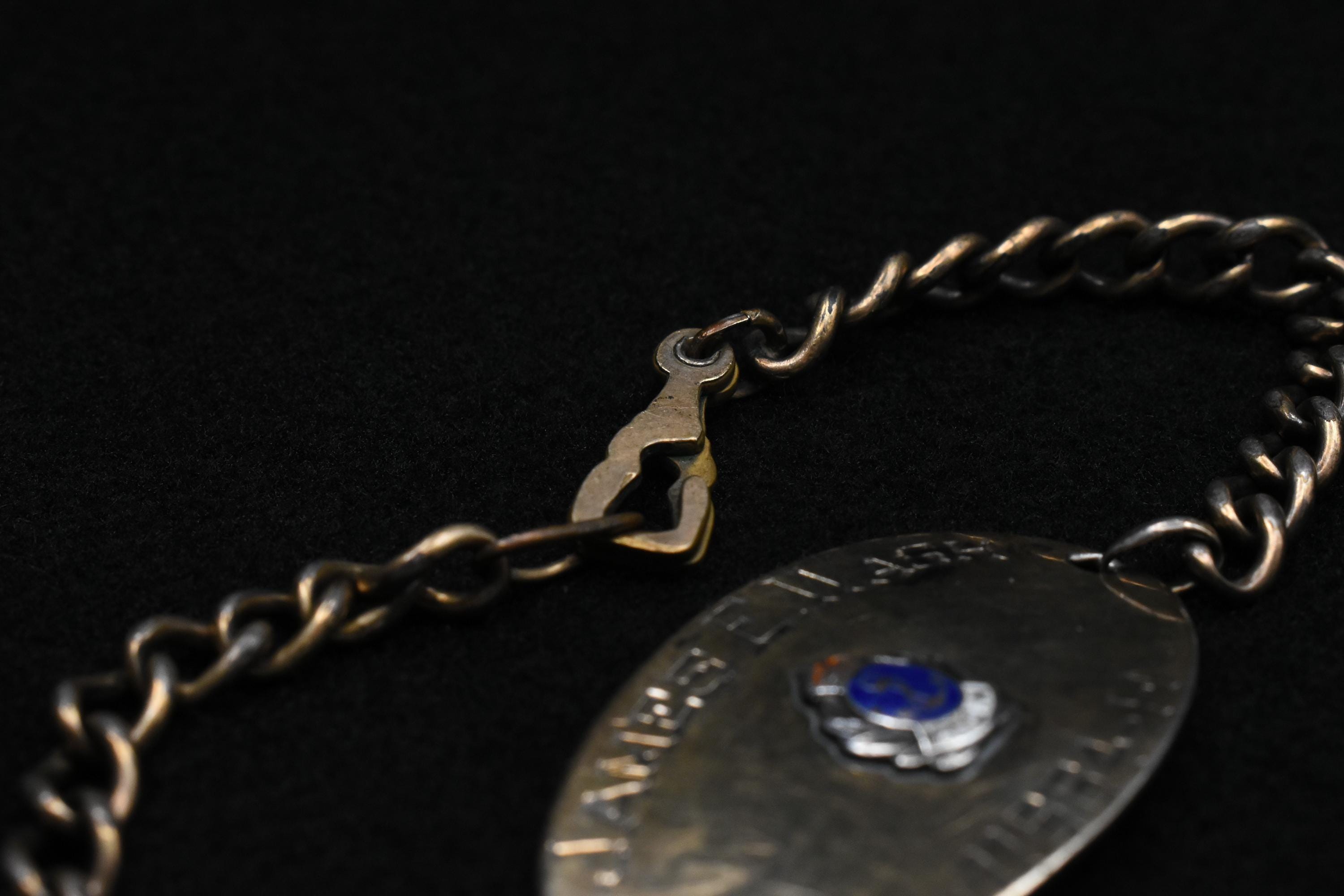
Physically, it is in remarkable condition. The clasp and chain are nearly perfect, and the plate contains no bends or dents.
Our pieces measures a full length of 22cm, with the plate accounting for just over 4cm of the total and being 2.4cm wide. It weighs 16.7g.
As always, should you have any questions, please don't hesitate to reach out. I'm always happy to respond to queries almost immediately.
Thank you for visiting C&K! -
Shipping & Policies
Shipping from Canada
Processing time
1-2 business days
Customs and import taxes
Buyers are responsible for any customs and import taxes that may apply. I'm not responsible for delays due to customs.
Payment Options
Returns & Exchanges
Returns & exchanges accepted within 14 days
Buyers are responsible for return shipping costs. If the item is not returned in its original condition, the buyer is responsible for any loss in value.
The following items can't be returned or exchanged
Because of the nature of these items, unless they arrive damaged or defective, I can't accept returns for:
- Custom or personalized orders
- Perishable products (like food or flowers)
- Digital downloads
- Intimate items (for health/hygiene reasons)
Conditions of return
Buyers are responsible for return shipping costs. If the item is not returned in its original condition, the buyer is responsible for any loss in value.
Frequently Asked Questions
Can I combine delivery on multiple items?
Of course! We'd be happy to assist. Just send us a quick message and we'll make sure to combine your items into a single package to reduce the shipping costs.