


Antiques
The Gem Postal Scale - Beautiful Example
$56.81
-
DetailsPlease note -TARIFFS PAID! US buyers need not worry about any additional charges! Order with confidence, knowing you won't be surprised with any additional fees.
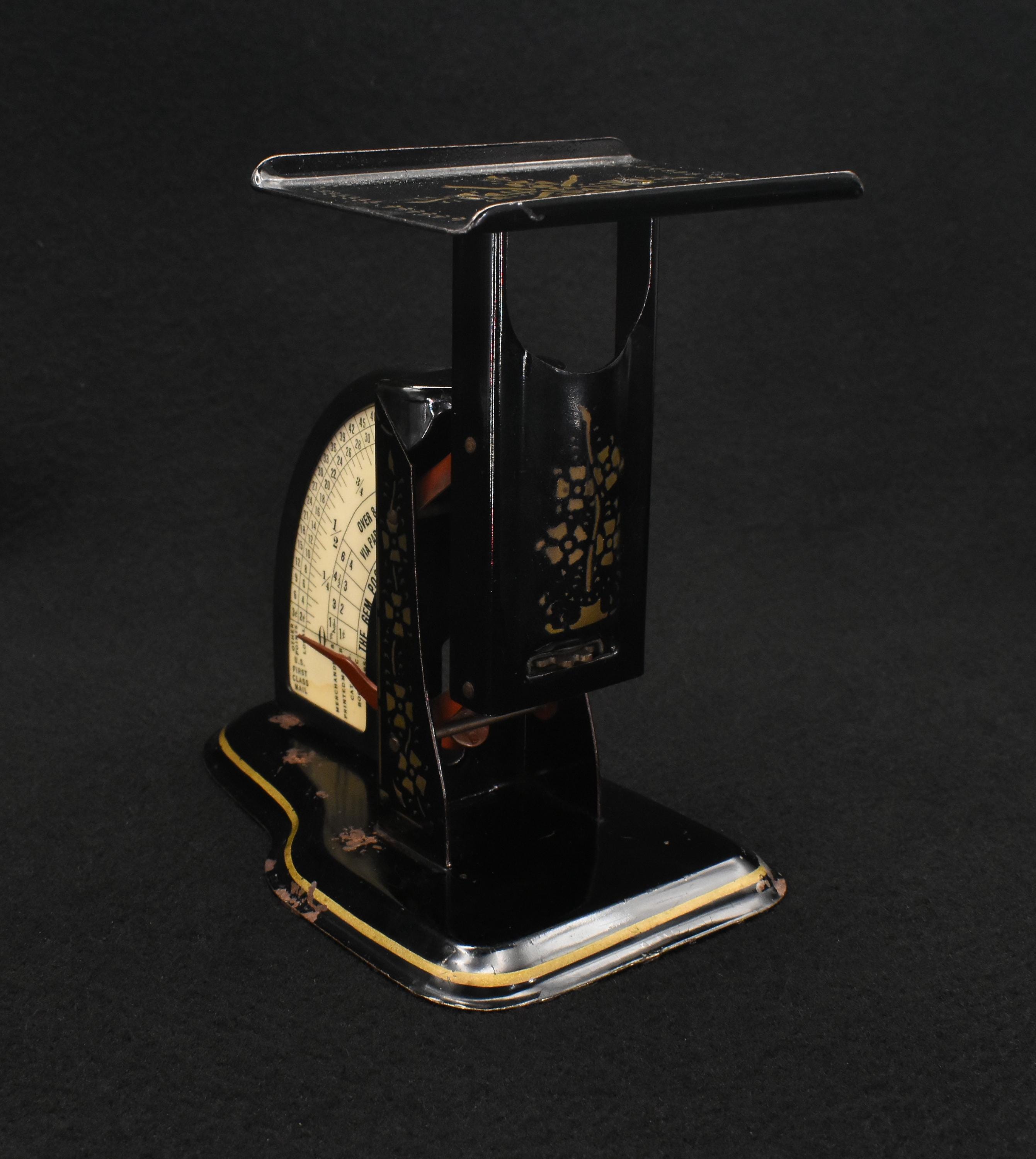
This Gem postal scale is a wonderfully-kept example of an early piece of business supply we don't really think about. But in a burgeoning world of industrial development and catalog-ordered commerce, this was no insignificant piece of kit...
The turn of the 20th century was one of unbridled industrial growth. New designs were merging with now-perfected manufacturing techniques to provide beautifully simple tools for the modern consumer and retailer. Tin and pressed steel gave us products ranging from colourful children's toys to automobile components to simple instruments designed to simplify every day functions - in this case, sending a letter or parcel. Prior to these postal scales, the cumbersome trip to the post office, lugging all your merchandise or correspondence, would not only necessitate labour but valuable time, as well. But by the mid-1800s, postal rates had made a very important change, from pages/distance to weight/distance. Instead of cumbersome and time-consuming equal-arm balances with loose weights, spring weights became the go-to method of weighing postal packages. In turn, postal services were constantly evolving to meet increasing demand.
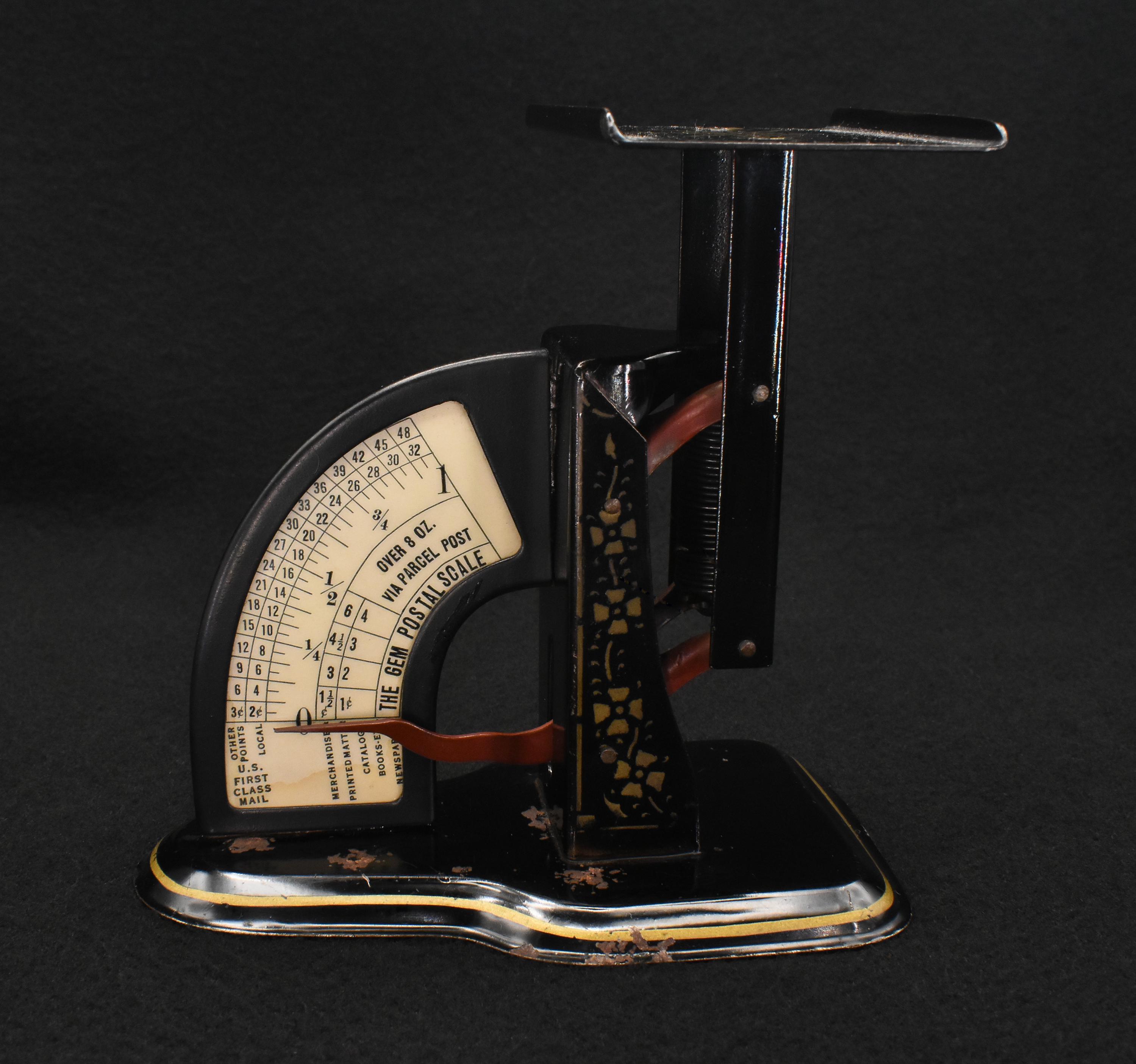
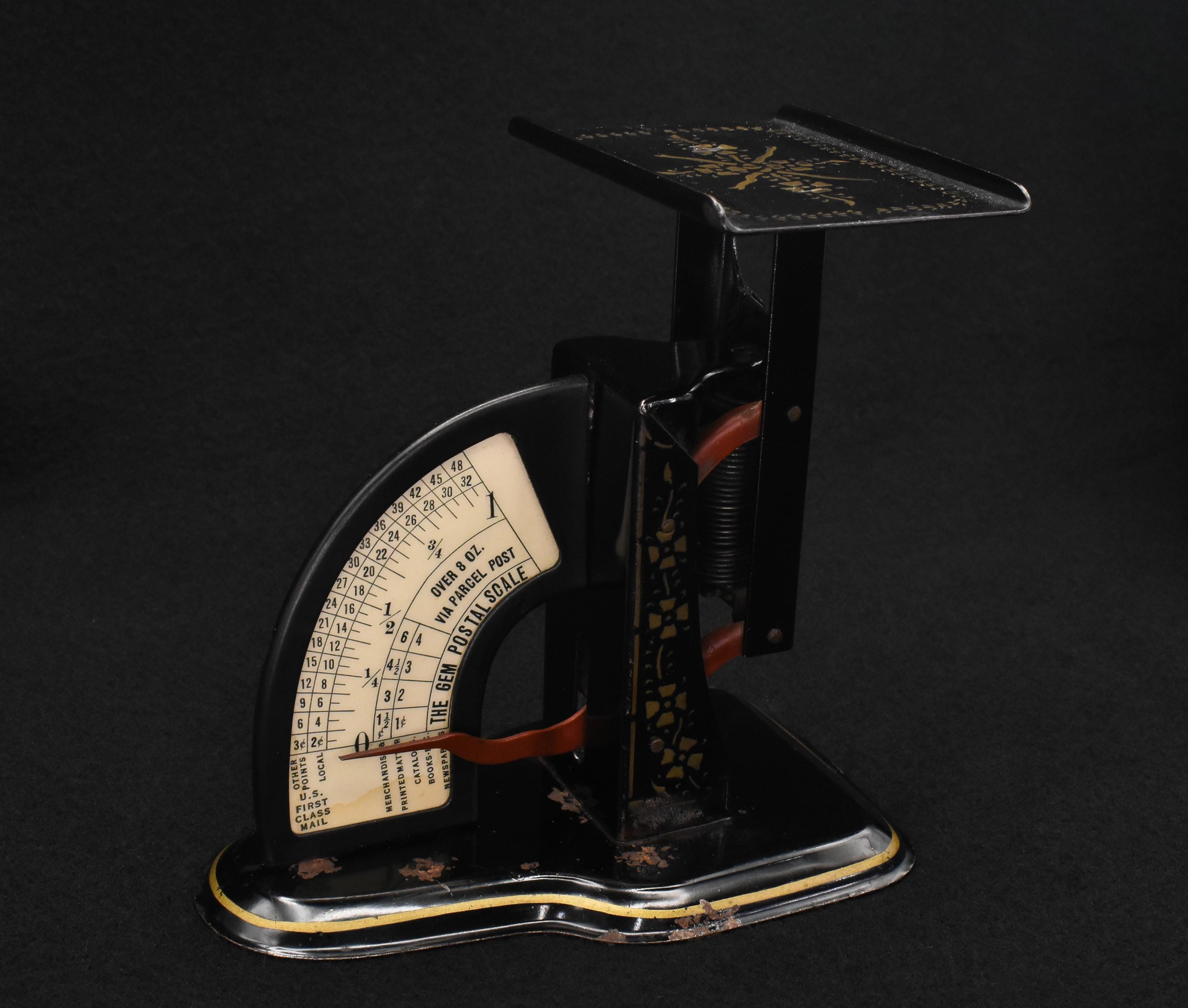
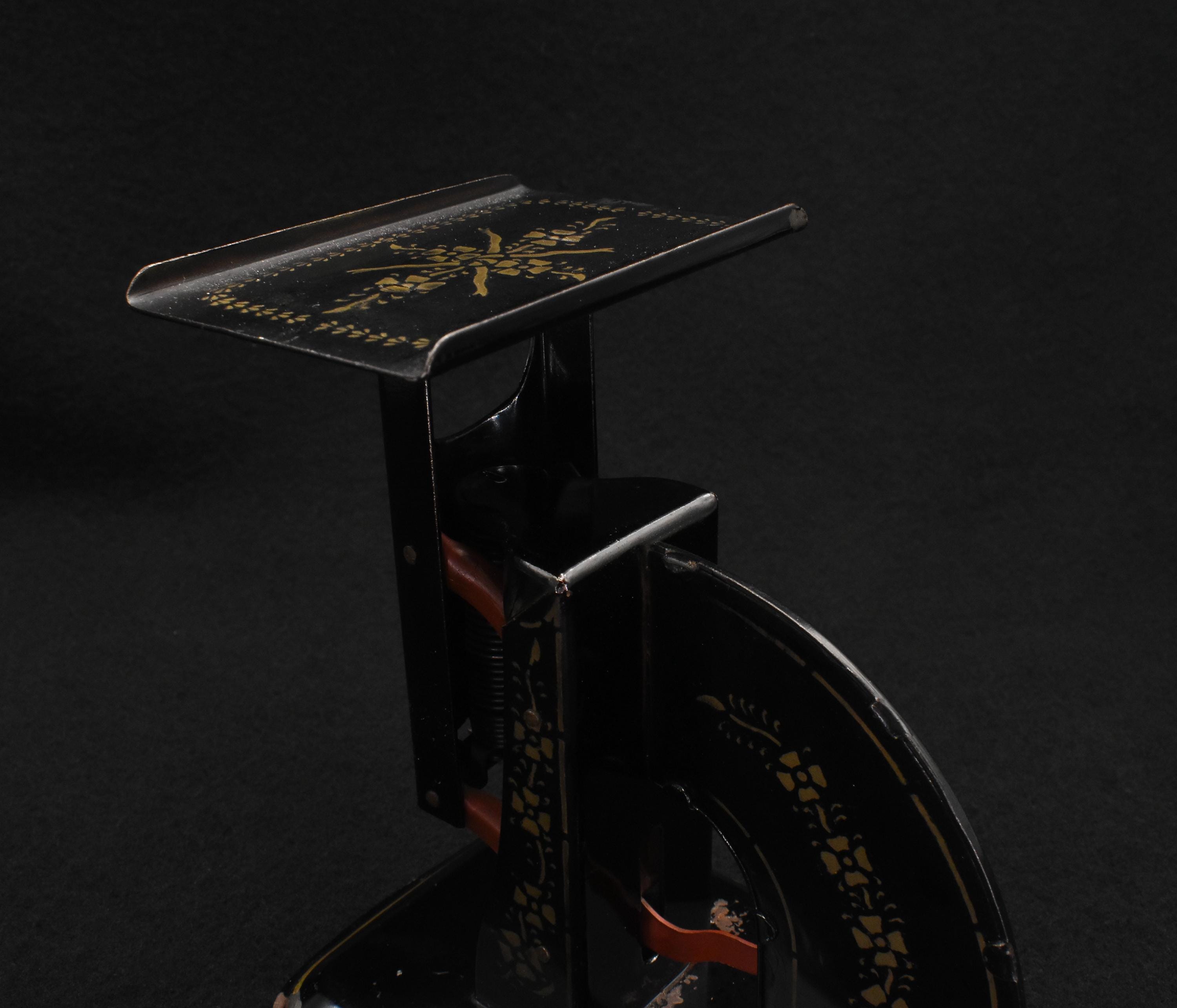
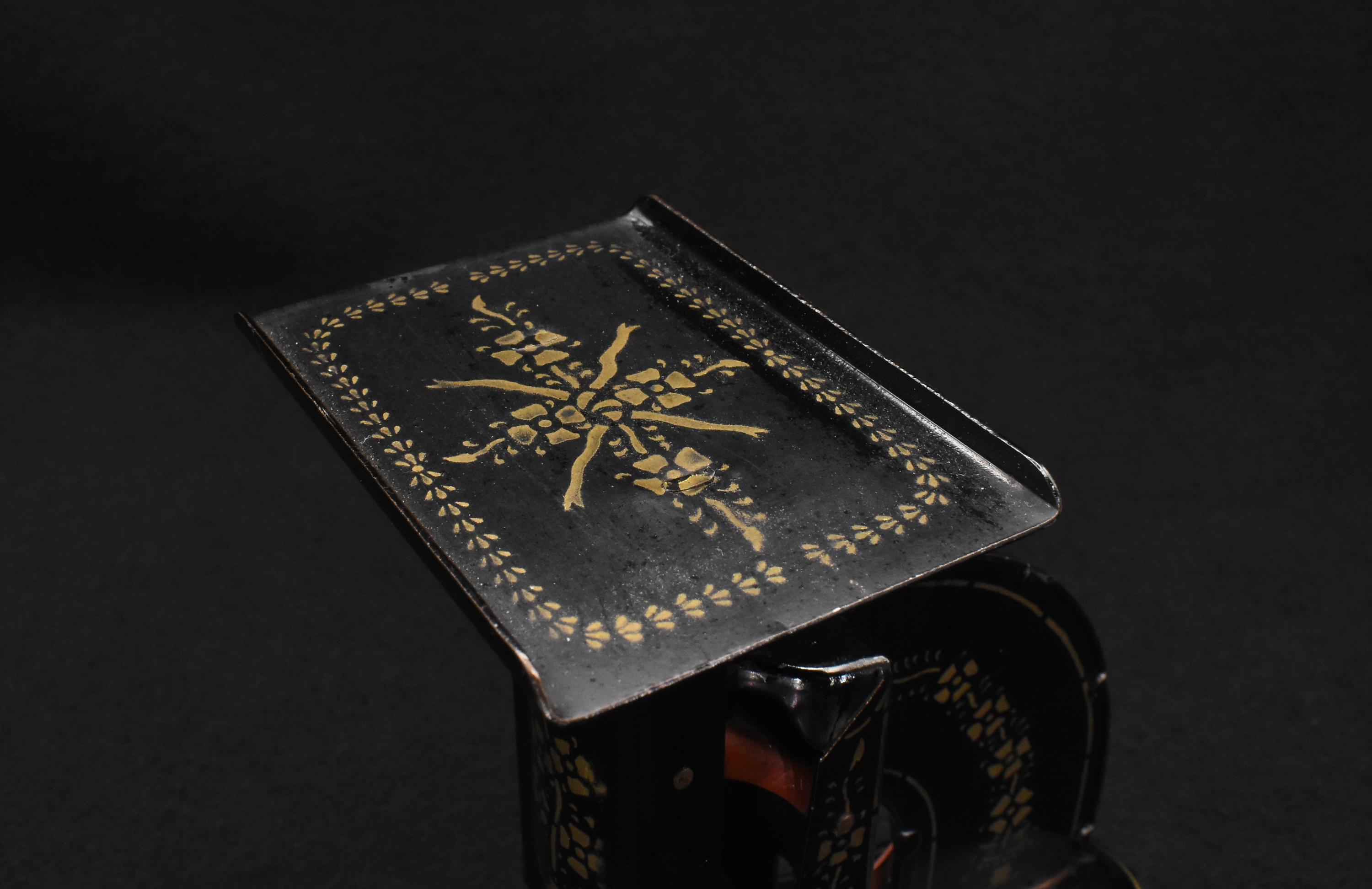
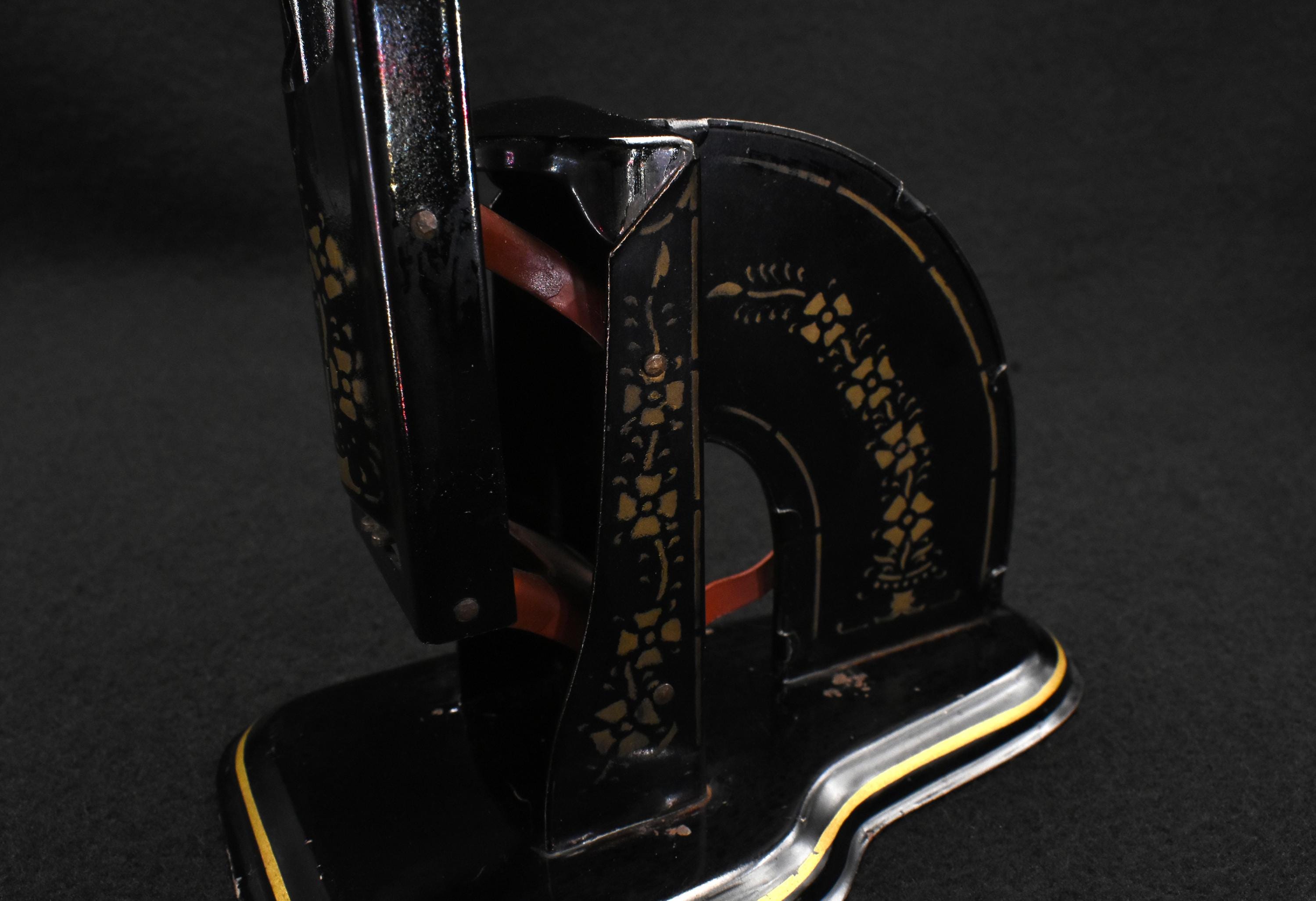
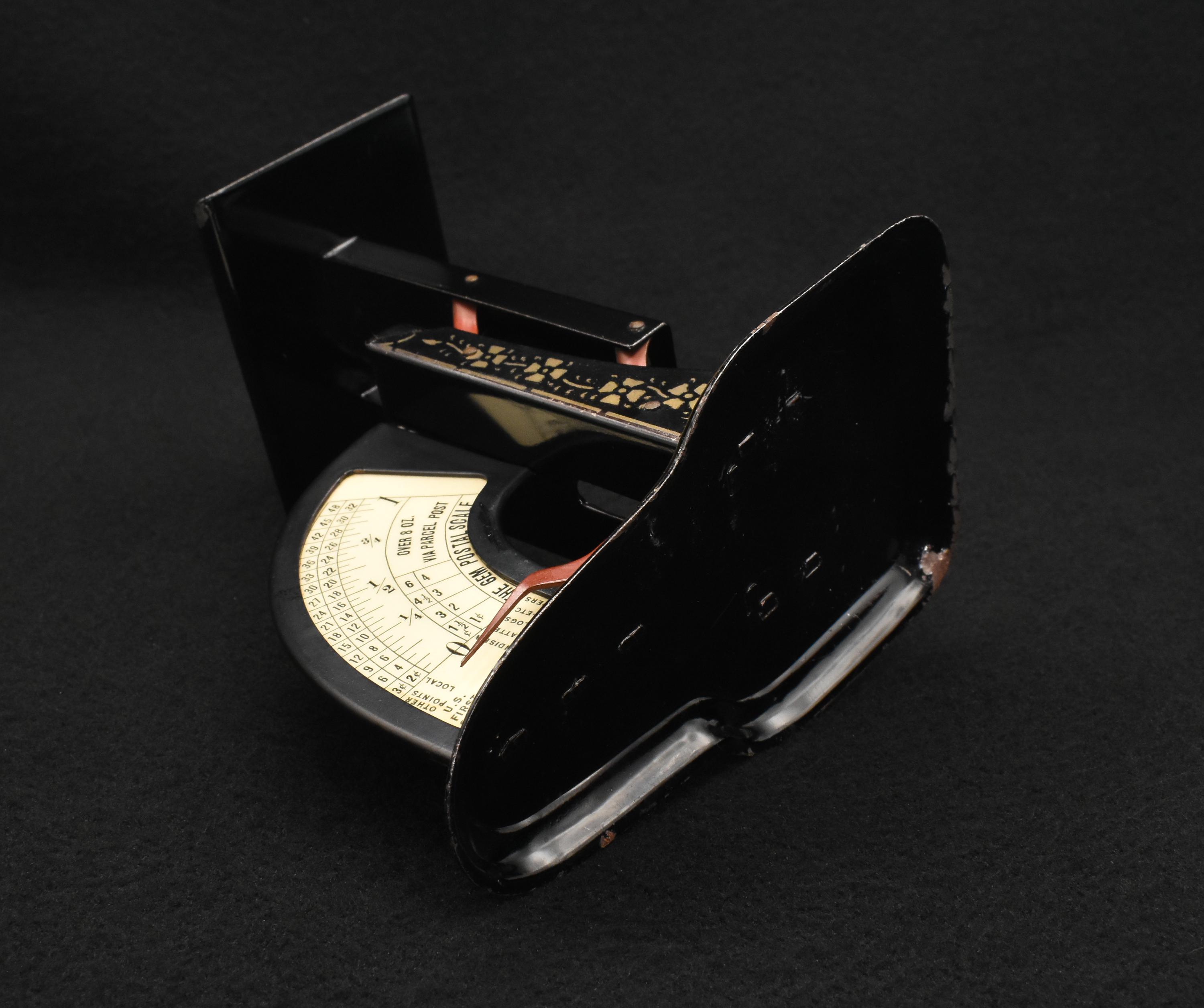
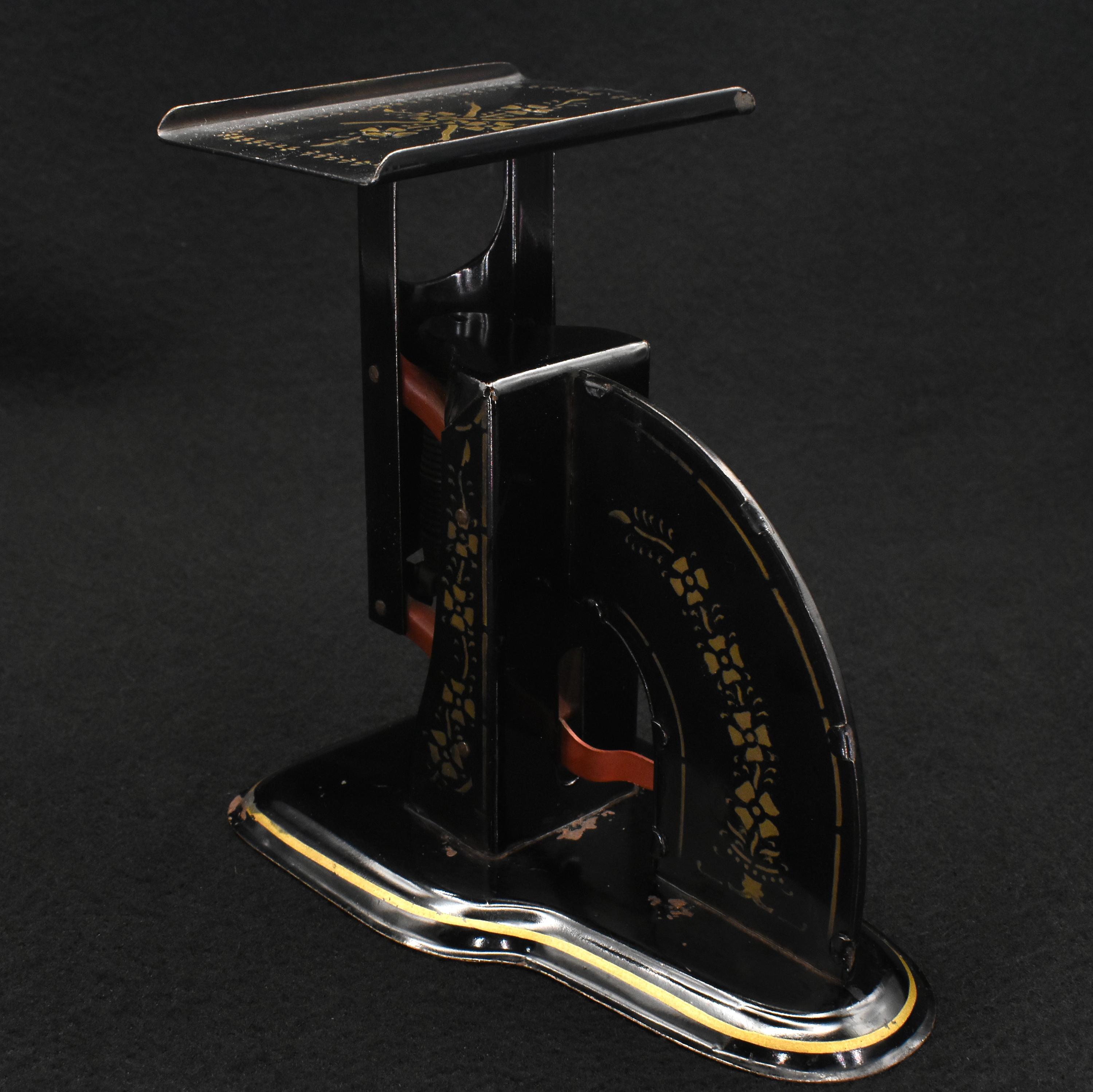
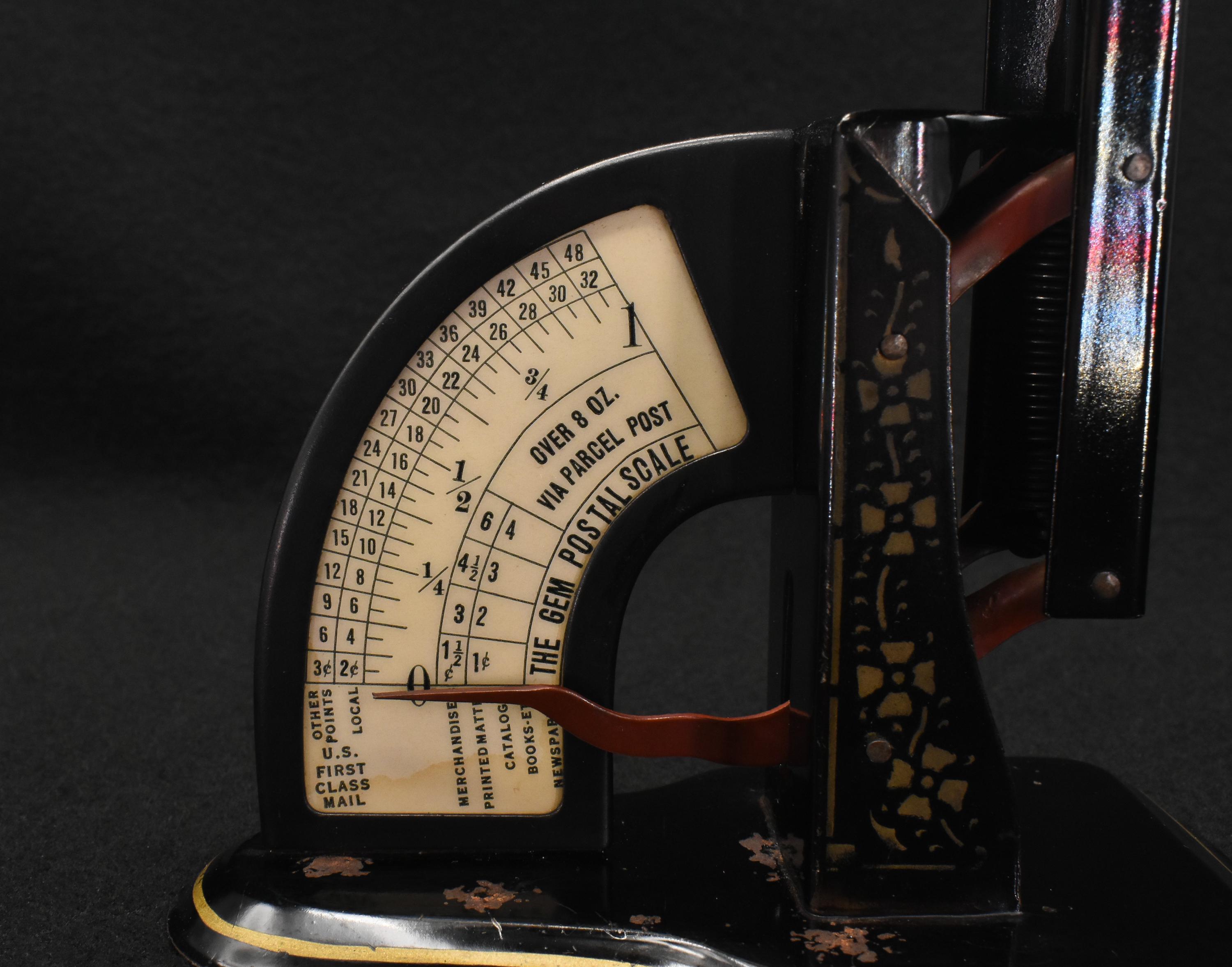
There were several companies instrumental in providing consumer-oriented spring scales for the up-and-coming business, starting as far back as the 1830s, but this particular example comes to us from a well-known maker of the early-20th century - The Triner Scale and Manufacturing Company of Chicago, Illinois. It was started in 1902 (or 1903... things are a touch unclear as to when Triner sold his first scale) by James M. Triner. However, his patent, applied for in 1901 and granted in 1904, was never actually assigned to Triner - it was owned by The Pelouze Scale and Manufacturing Company. Pelouze had started in the late 1890s and there's some evidence to suggest Triner worked for them for several years before striking out on his own. It's all a little murky, and although a little suspicious, completely inconsequential. The subsequent success of Triner scales speaks to the ingenuity, affordability and quality of these simple scales. They were provided for sale, almost completely unchanged, until the 1940s. Mainly, Triner sold 4 models of scales (the following examples reflect pricing in 1906): The Reliance – it had a half-pound capacity and cost $0.75, The Gem – one pound capacity and cost $1.25, The Ideal – two pound capacity and cost $1.50, and The Superior – four pound capacity and cost $2.00. Their designs were virtually identical, differing only in relative size and the scale of rates and weights. Their designs varied, as well, in finish. Although all made of pressed steel and painted black in a "Japanned" finish (basically a baked-on varnish mimicking enamel), some had an attractive design applied. In our case, an attractive array of gold flowers, vines and a nice pinstripe adorn the entire exterior. The needle and moving components of the weight are painted an attractive red, as well. The face of the scales, showing the weights and values of related postage is a little more difficult to comprehend. We'll gloss over the fact that there is no mention of Triner Manufacturing anywhere and instead highlight the almost incomprehensible values shown on it. There are several lines of arced values, only some of which have any symbols or indication of their correct titles. In fact, the smallest arcs show the "¢" symbol on their lowest values and it only applies to the smallest of those arcs... it's all terribly confusing. The legend signifies as follows:
The smallest arc is simple costs for letters and paper materials. These took up less room and were significantly cheaper to send. The arc next to it, that begins with 1 1/2 is not cents as it indicates, but weight, in ounces. The thickest arc, beginning with 0 and ending in 1 is the weight of the item in pounds. The needle ends at the arcs corresponding to the costs of shipping locally and abroad. It took me a fair deal of experimentation and deciphering to work that all out. I'm assuming these values would have been provided in some sort of user's manual that would accompany the scale, but I find myself wondering, 'Would it have killed them to accurately label the values?'
Regardless, it is a beautiful example of a bygone piece of simple technology. While the majority of these scales are mostly tarnished, chipped and rusted beyond use, ours retains it's shine, charming graphics and even functionality - they work beautifully. Given the simple design, they weigh as well as they ever have. Even the adjusting wheel on the base of the scales works perfectly. It's very impressive, given it is over a century old. Admirable build quality, without a doubt.
It measures 12cm in length, 7cm wide and just over 11cm tall and is a wonderful example of these whimsical and attractive, early spring scales.
Notes on condition - there is a touch of what looks like water marking on the bottom of the values face, but it has not affected the lettering in the least. There are some small spots of rust along the base, but they are very minor and I have done my best to show them in the photos. Overall, it is in excellent condition. And, as always, shipping is free!
As always, should you have any questions or concerns, please don't hesitate to reach out.
Thank you for visiting C&K! -
Shipping & Policies
Shipping from Canada
Processing time
1-2 business days
Customs and import taxes
Buyers are responsible for any customs and import taxes that may apply. I'm not responsible for delays due to customs.
Payment Options
Returns & Exchanges
Returns & exchanges accepted within 14 days
Buyers are responsible for return shipping costs. If the item is not returned in its original condition, the buyer is responsible for any loss in value.
The following items can't be returned or exchanged
Because of the nature of these items, unless they arrive damaged or defective, I can't accept returns for:
- Custom or personalized orders
- Perishable products (like food or flowers)
- Digital downloads
- Intimate items (for health/hygiene reasons)
Conditions of return
Buyers are responsible for return shipping costs. If the item is not returned in its original condition, the buyer is responsible for any loss in value.
Frequently Asked Questions
Can I combine delivery on multiple items?
Of course! We'd be happy to assist. Just send us a quick message and we'll make sure to combine your items into a single package to reduce the shipping costs.
Related Products